Get your free personalized podcast brief
We scan new podcasts and send you the top 5 insights daily.
When Zipline showed investors a real-time map of its drone fleet over Rwanda, the investors dismissed it as a simulation of a future goal. This violation of people's concept of the possible became a powerful indicator of their technological leap, forcing Zipline to add CCTV footage to prove it was real.

Related Insights
By launching in Rwanda, Zipline was forced to engineer its drones for some of the world's most volatile weather. This real-world hardening created a more robust system and provided invaluable safety data that proved critical for gaining regulatory trust and expanding into the U.S. market.
To convince executives at traditional companies of AI's potential, abstract presentations fail. Instead, provide tangible, immersive experiences. A ride in a Waymo car, for instance, serves as a powerful product demo that makes the future feel concrete and inevitable, opening minds in a way slideshows cannot.

To secure buy-in for its risky "Platform 2," Zipline built a rough prototype and held a "conviction milestone" event for the whole company. Witnessing the tangible demo converted even the most ardent skeptics on the leadership team, aligning everyone to bet the company's future on the new product.
Zipline, much like early Tesla or SpaceX, was never part of a broader investment "hype cycle." They spent a decade working on a contrarian idea that most investors thought was stupid. This obscurity allowed them to build with deep conviction, attracting only highly contrarian investors who believed in the long-term, inevitable vision.
Zipline's journey highlights a mismatch between standard VC fund timelines (10-12 years) and the longer development cycles of "real-world tech" like robotics. Founders in these spaces must be prepared for a 15-20 year journey and communicate this reality to investors from the start.
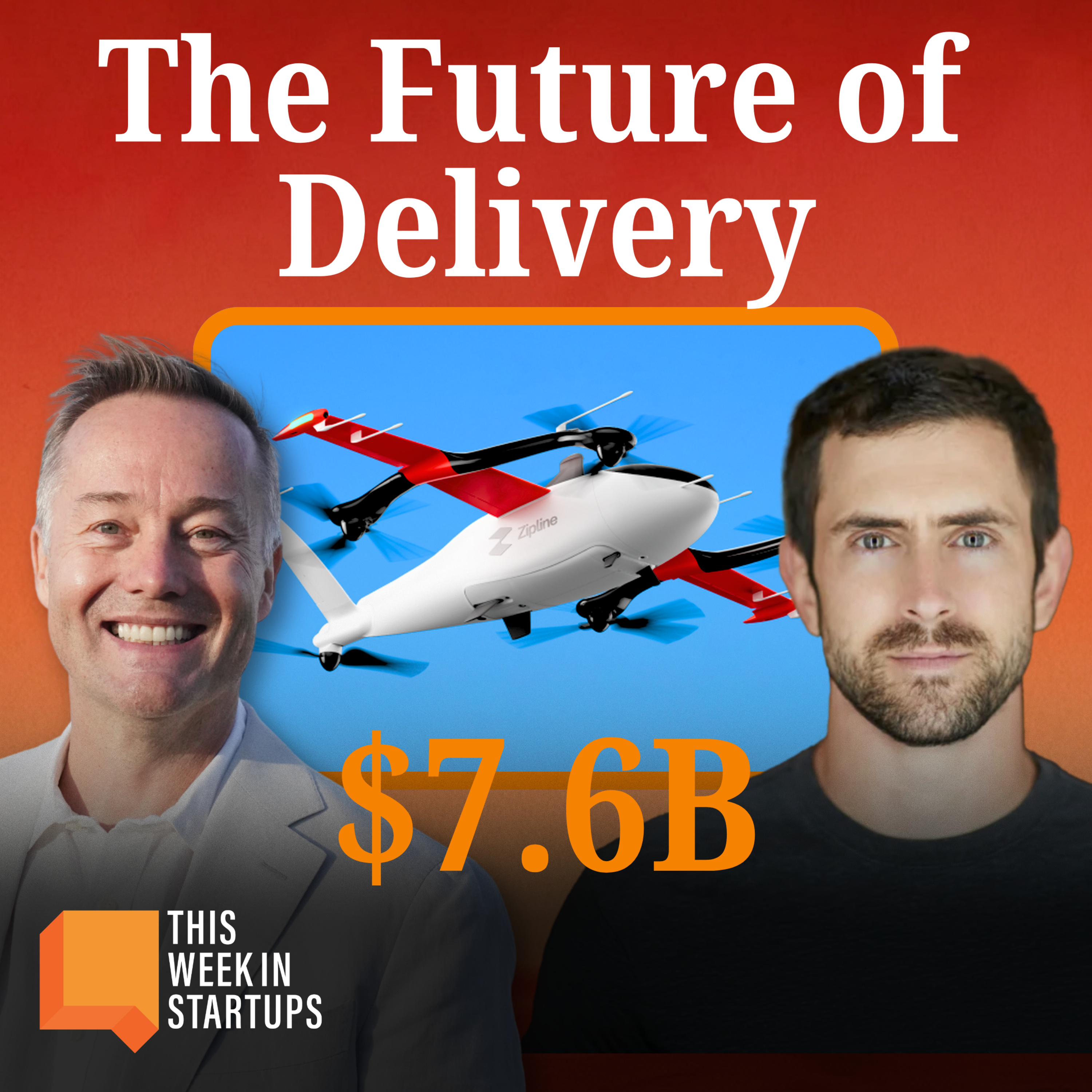
Zipline's CEO reveals the aircraft is a small part of their solution. The real challenge and value lie in the vertically integrated network: ground infrastructure, traffic management, regulatory approval, and customer-facing apps.
The goal of high-fidelity prototyping isn't just to show features, but to create an experience so real it makes people ask, "Is this real?" This suspension of disbelief elicits more genuine, emotional feedback than a simple functional demo ever could.

Zipline overcame US regulatory hurdles by launching in Rwanda, where the government's desperate need for emergency blood delivery made them willing to partner with an unproven startup. This highlights finding customers whose pain is so acute they'll accept an MVP and take risks.
Zipline's founder admits they had almost no tactical plan at the start. The high-level vision was clear, but the path was unknown and the venture was illegal in their target market. This highlights the necessary naivety to tackle moonshot projects; a full understanding of the difficulty would be paralyzing.

Zipline abstracts away all operational complexity (FAA regulations, maintenance, flight ops) and pitches a simple, powerful outcome to partners like Walmart: an instant delivery portal installed in their wall.