Get your free personalized podcast brief
We scan new podcasts and send you the top 5 insights daily.
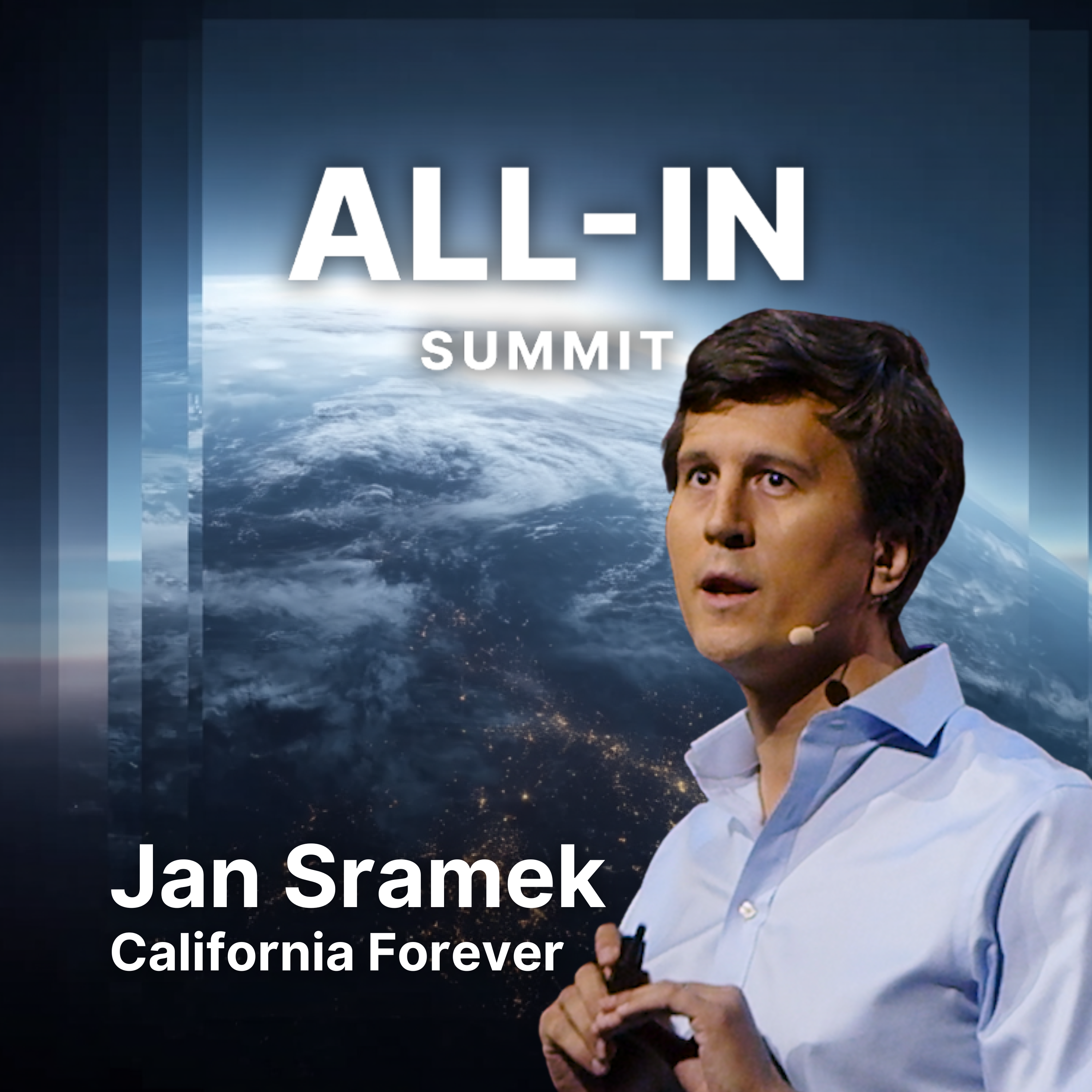
The new city project California Forever is pitching manufacturers on a key value proposition: proximity to the Bay Area's elite R&D talent. By locating factories an 80-minute drive away, it eliminates the inefficient 'three-day trip' required for engineers to visit out-of-state facilities, creating a significant competitive advantage.

Related Insights
Instead of expanding at its New Jersey headquarters, Legend Biotech opened its new R&D center in Philadelphia. This strategic move aims to attract specialized scientific talent by deliberately locating in a key innovation hub for cell therapy, demonstrating a "go to the talent" growth strategy.
Contrary to the post-COVID trend of tech decentralization, the intense talent and capital requirements of AI have caused a rapid re-centralization. Silicon Valley has 'snapped back' into a hyper-concentrated hub, with nearly all significant Western AI companies originating within a small geographic radius.

Rather than lamenting the distance from Silicon Valley, top European founders frame their location as an advantage. They become the undisputed top company for ambitious, loyal, and less-expensive talent in cities like Stockholm or Warsaw, attracting engineers eager for a generational opportunity.

To combat long commutes and encourage office presence in expensive cities, companies are offering down payment assistance or low-interest loans. This perk benefits both the employee's finances and the employer's goal of having a more engaged, local workforce.

To compete with China in manufacturing, the US can't rely on labor volume but on productivity from AI and robotics. This requires eliminating the friction of distance between R&D talent (in the Bay Area) and factory floors, making talent-proximate manufacturing parks a strategic necessity.
According to Y Combinator partners, the network effects and density of talent, capital, and customers in San Francisco are so powerful that being physically based there can double a startup's chances of reaching a billion-dollar valuation compared to other major tech hubs like New York.

The project's vision intentionally separates its industrial and residential philosophies. While manufacturing and shipbuilding will leverage cutting-edge AI, the city itself will be inspired by classic, human-scale American neighborhoods, prioritizing walkability and community over futuristic aesthetics.
Instead of creating a tech sector from scratch, the most effective path is to identify and invest in tech niches adjacent to a city's existing industries (e.g., Energy Tech for an oil town). This leverages existing talent, infrastructure, and supply chains, making the transition more natural and sustainable.

Cities like San Francisco and New York act as global talent magnets because they project a powerful and specific "whisper," or core message, about what is valued there. For S.F., it's "build a startup." This clear signal attracts ambitious individuals worldwide who are aligned with that mission.

Instead of choosing between tech hubs like Austin and San Francisco, founders can adopt a hybrid model. Spend a concentrated period (1-3 months) in a high-density talent hub like SF to build domain expertise and relationships, then apply that capital back in a lower-cost home base.
