Get your free personalized podcast brief
We scan new podcasts and send you the top 5 insights daily.
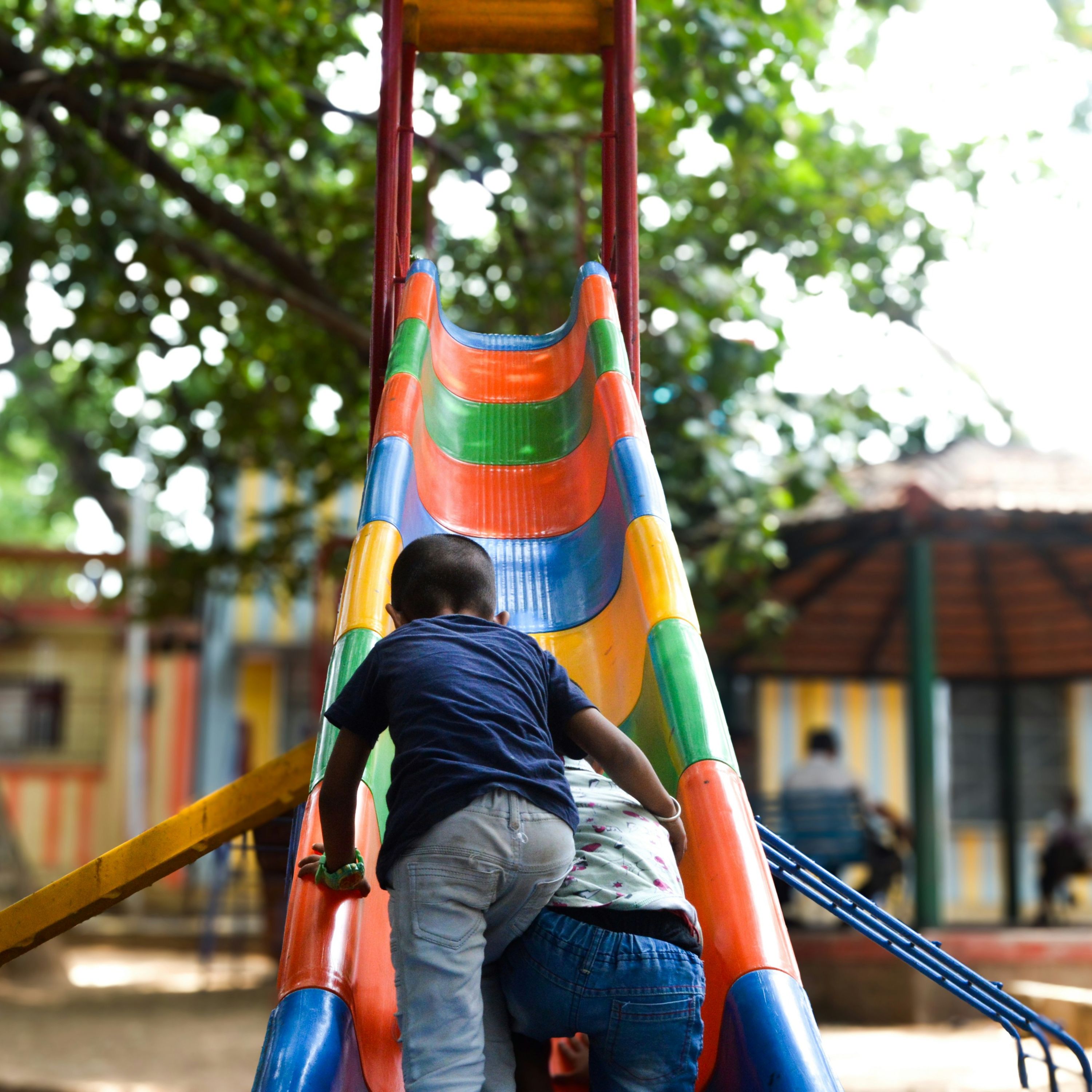
Children's imaginative play is not just fantasy; it's the physical practice of actualizing an idea. They take a dream and immediately act it out. Adults, in contrast, often let big ideas remain as fantasies. We need to rebuild this atrophied 'muscle' of putting our dreams on our feet.

Related Insights
Tabitha Brown suggests that your uninhibited childhood play, before society imposed limitations, was a pure expression of your calling. Returning to those early memories can help you identify the purpose you were meant to pursue.

The brain circuits for play are not pruned after childhood; they persist because they are vital for adult adaptation. Biology doesn't waste resources. The continued existence of these circuits is proof that play is a fundamental, non-negotiable mechanism for learning and creativity throughout our entire lives.

To develop agency, consistently engage in "making" things—from cooking a meal to tinkering with code. This process reveals that the world is built by ordinary people, empowering you to believe you can also change and create things.

Society accepts adults playing organized sports or strategic board games but overlooks the mental health benefits of unstructured, silly play like tag or hopscotch. For many adults, especially non-athletes, this lack of pure, purposeless play contributes to stress and a yearning for childhood joy.

Play is not just for children or sports; it's a critical adult activity for exploring 'if-then' scenarios in a safe environment. This process of low-stakes contingency testing expands our mental catalog of potential outcomes, directly improving creativity and adaptability in high-stakes situations.
When adults intervene in children's unstructured play to "teach" them the "right" way to do things, they often strip the activity of its imaginative joy and engagement. This transforms a creative game into a boring, adult-led lesson, diminishing learning and happiness.
Your brain processes a vividly imagined scenario and a real-life experience through similar neural pathways. This is why visualization is a powerful tool for skill acquisition and even physical change. For instance, repeatedly thinking about exercising a muscle can lead to a measurable increase in its mass, without physical movement.
Improving imagination is less like a painter adding to a blank canvas and more like a sculptor removing material. The primary task is to forget expected answers and consensus reality. This subtractive process uncovers the truly novel ideas that are otherwise obscured by convention.
![Kevin Kelly - Be Generous and Unique - [Invest Like the Best, CLASSICS] thumbnail](https://megaphone.imgix.net/podcasts/9e957b1c-b60e-11f0-8fae-c3720ebd149d/image/fe443cb4b0d58f10dbccb1cf43a6abe2.jpg?ixlib=rails-4.3.1&max-w=3000&max-h=3000&fit=crop&auto=format,compress)
The 'Wiggle Theory' suggests we are born with a natural, playful 'wiggle' that gets suppressed by the rigid structures of adulthood. Music and other creative acts give people permission to rediscover this innate, non-linear state, unlocking essential emotional channels.

Understanding dreams as private, internal phenomena is a learned developmental milestone, not an innate concept. Most preschoolers believe dreams are real events that originate outside of them and can be observed by others, revealing how our core concepts of consciousness and reality are constructed.