Get your free personalized podcast brief
We scan new podcasts and send you the top 5 insights daily.
Companies mistakenly treat AI training as a project with a completion date. In reality, AI capability is a depreciating asset with a measurable rate of decay. Budgets must shift from funding one-off "ignition" events to funding continuous maintenance to prevent inevitable skill loss and wasted investment.

Related Insights
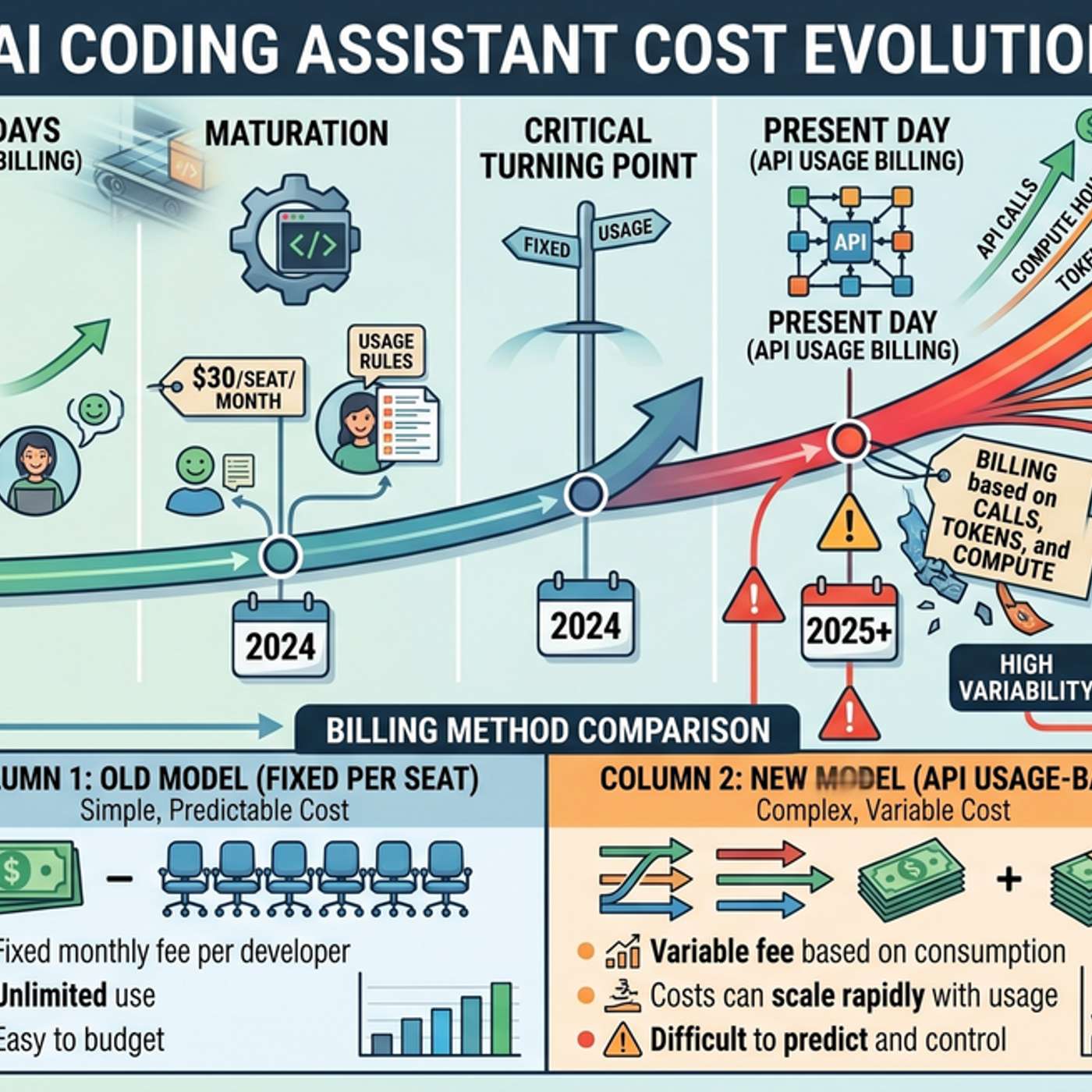
The optimal strategy for managing AI costs is neither total restriction nor a free-for-all. It's providing engineers with dedicated "learning budgets" and experimentation pools, coupled with clear visibility into costs. This fosters innovation responsibly without incurring surprise invoices and turns cost into a first-class constraint.
The primary barrier to enterprise AI adoption isn't the technology, but the workforce's inability to use it. The tech has far outpaced user capability. Leaders should spend 90% of their AI budget on educating employees on core skills, like prompting, to unlock its full potential.

Despite people being the single largest barrier to converting AI adoption into value, organizations are drastically underinvesting in them. A Deloitte study found 93% of AI spend goes to infrastructure, with a mere 7% for people-related initiatives like training, creating a significant adoption bottleneck.

The rapid pace of AI development means any new system, process, or architecture is on a path to obsolescence upon launch. Forward-thinking enterprises are building for this ephemerality, designing dynamic systems that assume frequent, fundamental changes will be required.
The current excitement around AI is fueling a “build it yourself” trend, echoing past tech cycles. This approach often overlooks the significant long-term costs of maintenance, versioning, security, and 24/7 support, which previously led companies to abandon homegrown systems for specialized vendors.

Most companies buy AI tools but fail to see returns. Priyanka Vergadia's 10-20-70 rule advises spending 10% on tools, 20% on execution, and 70% on training. This builds the "habit" of AI, which is essential for achieving long-term productivity and ROI.

The biggest mistake in corporate AI investment is buying platform licenses for everyone without first investing in the necessary training and change management. This over-investment in tech and under-investment in people leads to wasted resources, as employees lack the skills or motivation to adopt the tools.

Unlike traditional, long-lasting infrastructure, AI skills have a short half-life due to rapid model updates and changing contexts. Treat them as iterative, ephemeral assets that must be re-evaluated on a monthly basis to remain effective.
The idea that building with AI is cheap is a dangerous oversimplification. While initial creation is fast, leaders are realizing the immense long-term costs of maintenance, unwinding mistakes, and integrating with legacy systems are substantial and often dangerously overlooked.

In the new era of token shortages, inefficient use of AI tools has a direct and significant cost. The biggest risk for enterprises is no longer a lack of technology but a lack of training, making comprehensive, company-wide agent-centric education a critical and urgent investment.