Get your free personalized podcast brief
We scan new podcasts and send you the top 5 insights daily.
In the new era of token shortages, inefficient use of AI tools has a direct and significant cost. The biggest risk for enterprises is no longer a lack of technology but a lack of training, making comprehensive, company-wide agent-centric education a critical and urgent investment.

Related Insights
The primary barrier to enterprise AI adoption isn't the technology, but the workforce's inability to use it. The tech has far outpaced user capability. Leaders should spend 90% of their AI budget on educating employees on core skills, like prompting, to unlock its full potential.

Despite people being the single largest barrier to converting AI adoption into value, organizations are drastically underinvesting in them. A Deloitte study found 93% of AI spend goes to infrastructure, with a mere 7% for people-related initiatives like training, creating a significant adoption bottleneck.
Most companies are stuck on providing GenAI licenses and personalized training, which require zero IT involvement. While data and reliable agents are technical hurdles, massive productivity gains are achievable today by solving these simpler, more accessible cultural and educational challenges first.

The primary bottleneck for successful AI implementation in large companies is not access to technology but a critical skills gap. Enterprises are equipping their existing, often unqualified, workforce with sophisticated AI tools—akin to giving a race car to an amateur driver. This mismatch prevents them from realizing AI's full potential.

The biggest mistake in corporate AI investment is buying platform licenses for everyone without first investing in the necessary training and change management. This over-investment in tech and under-investment in people leads to wasted resources, as employees lack the skills or motivation to adopt the tools.

Heavy use of AI agents and API calls is generating significant costs, with some agents costing $100,000 annually. This creates a new financial reality where companies must budget for 'tokens' per employee, potentially making the AI's cost more than the human's salary.
The push for 'token maxing' to drive AI adoption has unintended consequences. Uber burned its entire 2026 AI budget in four months, driven by coding agents. This reveals the hidden financial risks and operational challenges of scaling agentic AI within large organizations without proper controls.

Companies focus on strategy (CEO pressure) and risk (regulation), but the most significant unaddressed gap is workforce AI literacy. It is seen as a long-term 'vitamin,' not an urgent 'painkiller,' yet without it, governance programs cannot effectively scale across an organization.
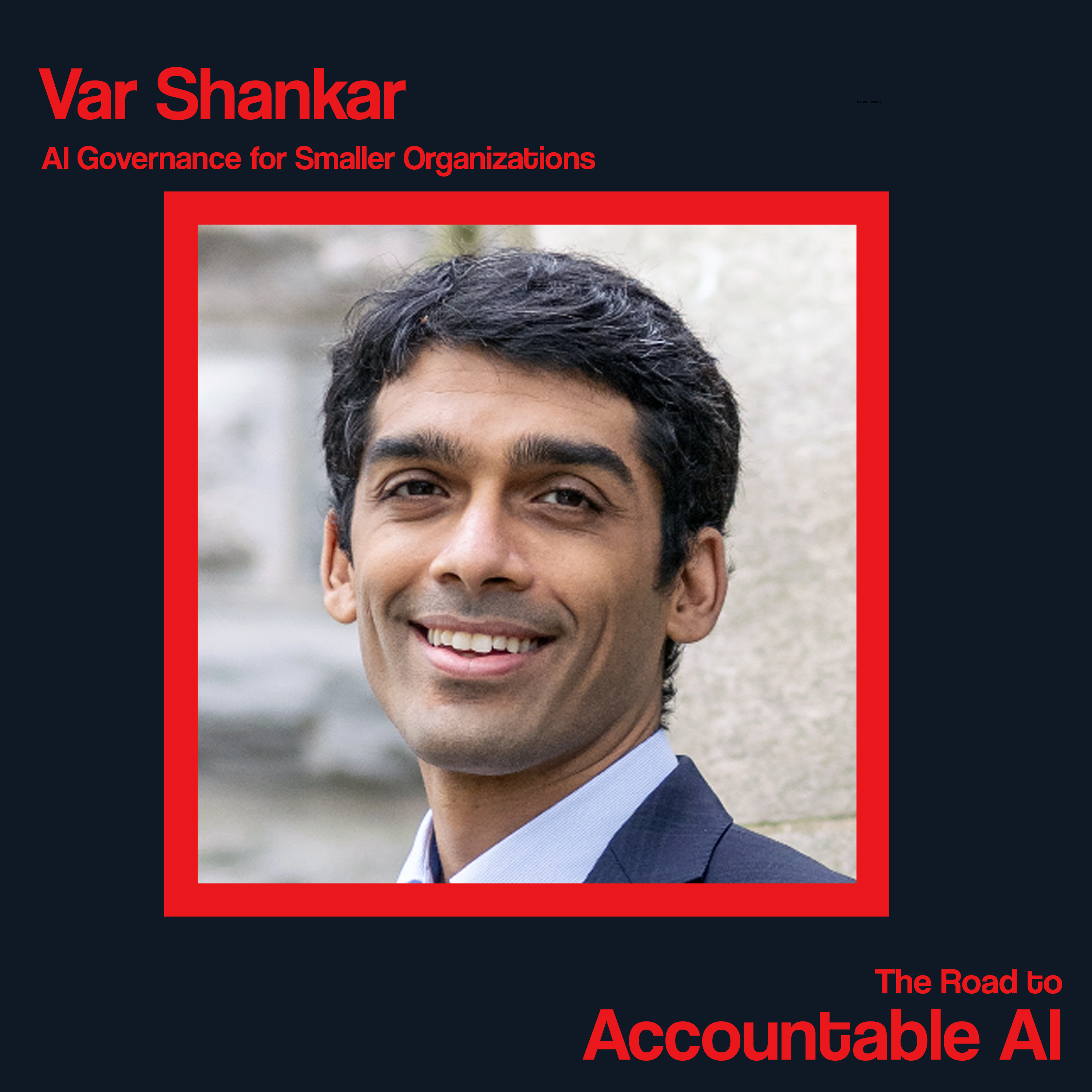
AI literacy needs to mirror mandatory cybersecurity training, which emphasizes employee duty, risk, and the potential impact of misuse on customers and reputation. This shifts the focus from "what can AI do?" to "what is my responsibility when using it?"

Encouraging high AI token usage ('token maxing') becomes actively harmful when an employee lacks fundamental skills. They use expensive tools to produce poor work faster, amplifying their negative impact instead of driving positive outcomes. This is a significant hidden risk in broad AI adoption.
