Get your free personalized podcast brief
We scan new podcasts and send you the top 5 insights daily.
Instead of copying what other successful VCs do, find what activities genuinely give you energy. True long-term value in venture comes from compounding, which is only sustainable if you enjoy the process. A competitor who is passionate about an activity will always outperform someone who is just going through the motions.

Related Insights
Venture capitalists thrive by adopting one of two distinct personas: the "in the flow" consensus-driver focused on speed and connections, or the "out of the flow" contrarian focused on deep, isolated work. Attempting to straddle both paths leads to failure.

The venture industry has outliers who seem to 'walk on water' and others who get lucky. Constantly measuring your progress against theirs leads to dissatisfaction. The better approach is to focus on executing your job, which leads to long-term, sustainable success and pride.
Many are motivated by outcomes: money, status, possessions. This leads to burnout and insecurity. The key to longevity is being intrinsically motivated by the process and challenges of business itself. When you love the game more than its rewards, you become immune to fear of failure.

Many chase the fruits of success (money, status) but burn out because they don't enjoy the daily grind. True winners love the process itself, the 'dirt.' The desire for the outcome alone is a vulnerability that leads to giving up.
Entrepreneurs who frequently pivot to chase the latest money-making trend—be it crypto, cannabis, or real estate—cannot win long-term. They will always be outworked by competitors who genuinely love the industry and the process, making passion a prerequisite for sustainable success.
True entrepreneurial success isn't about chasing hot topics like AI. It's about finding a niche, boring problem and developing a deep, multi-decade obsession with it. This requires a unique ability to find interest where others see none, which is a powerful competitive moat.
![William Hockey - Building the Operating System for the Dollar and Silicon Valley Heresy - [Invest Like the Best, EP.463] thumbnail](https://megaphone.imgix.net/podcasts/fafd11c6-2198-11f1-9f4c-331b7fdffb5f/image/c8ee4ccf34b48dd3ef4ded6a34c1f70c.jpg?ixlib=rails-4.3.1&max-w=3000&max-h=3000&fit=crop&auto=format,compress)
The key to long-term entrepreneurial success is building a business that aligns with your natural disposition. Michael Dell thrived on the pressure of competing with IBM, while his more experienced partner burned out. The challenges energized Dell because the business was a natural extension of who he was, not a constant struggle.

The best long-term strategy isn't the one with the highest short-term growth, but the one you're genuinely passionate about. This intrinsic motivation leads to sustained effort and eventual success, even if it seems suboptimal initially. It's about playing the long game fueled by passion, not just metrics.
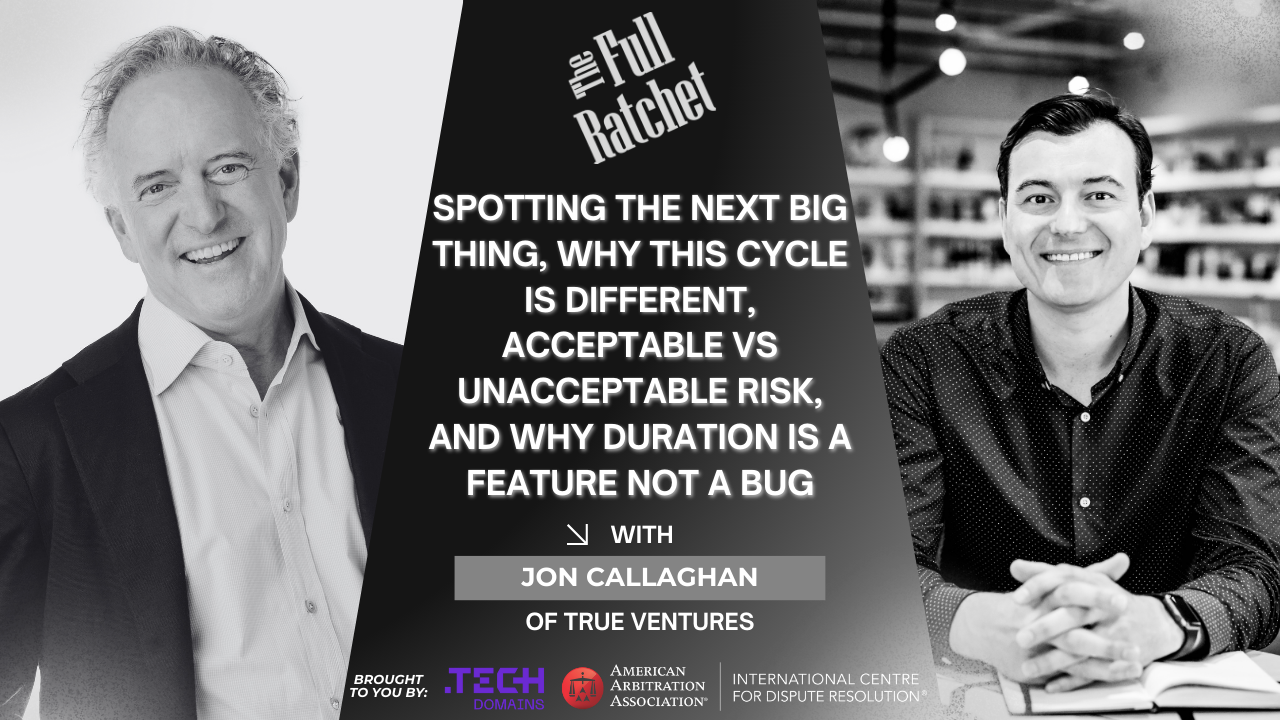
In VC, where being wrong is the norm (80%+ of the time), the most critical trait is not righteousness but deep curiosity. This learning-first mindset is what uncovers non-obvious opportunities and allows investors to see future market shifts before they become mainstream, according to True Ventures' Jon Callaghan.
Successful entrepreneurs often don't perceive their numerous small projects as failures or formal business attempts. By framing them as hobbies or experiments, they lower the psychological stakes. This allows them to generate the high quantity of ideas necessary to eventually land on a successful one.
