Get your free personalized podcast brief
We scan new podcasts and send you the top 5 insights daily.
Analysts monitoring Xi Jinping's succession plan should ignore most political appointments and focus on a specific indicator: the placement of a second civilian leader onto the Central Military Commission. This body, which controls the armed forces, has only one civilian member—Xi himself. A second civilian appointment would be the concrete signal that a successor is being prepared.

Related Insights
The ongoing purges in China's military are likely more than just power consolidation. Bill Bishop suggests Xi Jinping may be intentionally removing entire generations of senior officers who rose by buying their promotions. This radical "decapitation" aims to clear the way for a younger, more meritocratic officer class.

In authoritarian systems like China's, naming a successor creates an immediate alternative power center, leading to tension. Not naming one, however, risks a chaotic power struggle later. Xi Jinping appears to be choosing the latter risk, consolidating power now at the expense of future stability, a classic 'damned if you do, damned if you don't' scenario for autocratic rulers.
The unprecedented removal of top generals, including longtime confidants, suggests Xi feels his grip on the military is fragile. This is seen as a sign of weakness and concern over the loyalty and combat readiness of his top commanders.
The era following Xi Jinping's rule could be more dangerous than his tenure itself. A successor, potentially from a military junta, might launch a conflict—mirroring Deng Xiaoping's 1979 Vietnam War—to assert their legitimacy and consolidate power over the party and the PLA, creating a highly volatile situation.

The purge's focus is on generals who "trampled on the chairman responsibility system," indicating a crackdown on challenges to Xi's direct, supreme command over the military, rather than a standard anti-graft campaign.
The official narrative of China's top general leaking nuclear secrets is likely a cover for a deeper power struggle between President Xi and the military establishment. The ongoing purges are a sign of internal conflict for control, making an invasion of Taiwan less likely due to a destabilized command structure.

Xi Jinping's willingness to decapitate his military leadership suggests he feels secure about the external environment. He perceives no immediate crisis over Taiwan, giving him the political space to conduct a thorough and disruptive internal consolidation.
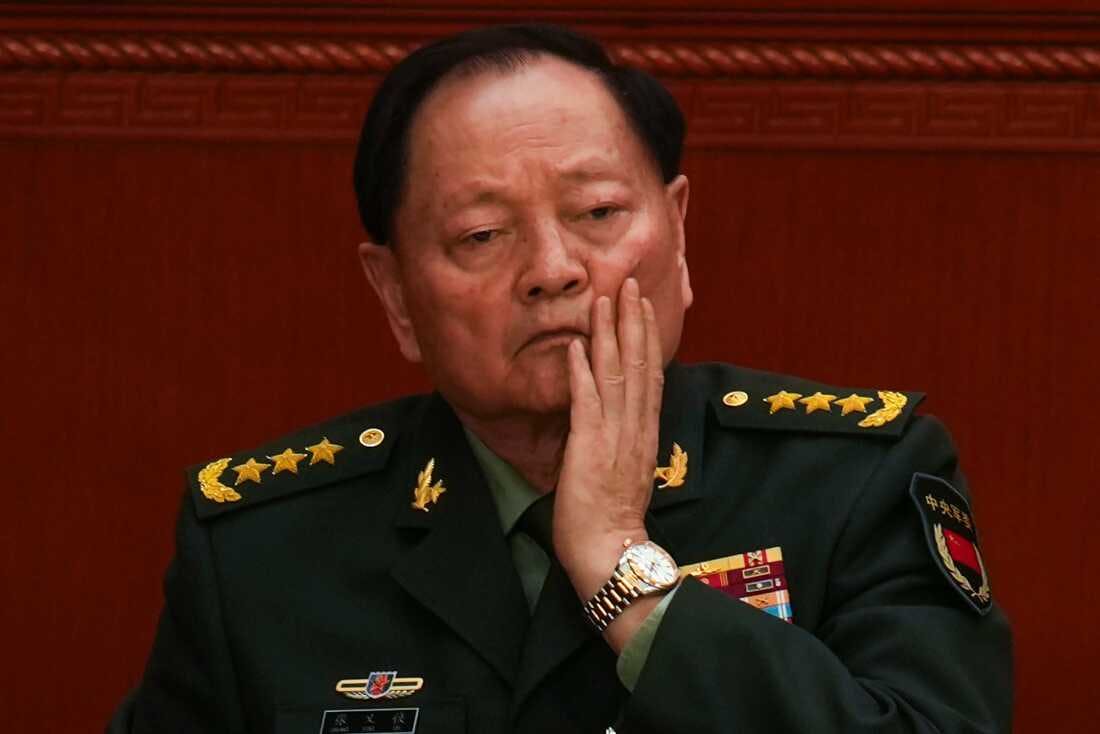
The PLA is the armed wing of the Chinese Communist Party, not the state. Xi Jinping is the only civilian on the Central Military Commission, making it the sole locus of party (and civilian) control, unlike Western models with extensive civilian oversight.
The recent purges have wiped out an entire generational cohort of PLA leaders, not just individuals. This creates a significant succession crisis and leadership vacuum, forcing Xi to promote a new, untested generation of officers with whom he has no established trust.
Recent purges in China's military mark a seismic shift as Xi targets his own appointees and longtime allies, not just rival factions. The removal of figures like Zhang Yuxia signals either Xi's ultimate ruthlessness or a potential shift toward paranoia.
