Get your free personalized podcast brief
We scan new podcasts and send you the top 5 insights daily.
Healthcare has historically been a service, with costs tied to licensed professionals. AI models like Gemini and ChatGPT are changing this by providing medical advice, effectively turning healthcare into a product. This shift, currently tolerated by regulators, could dramatically lower costs and increase access, just like software products.

Related Insights
The future of healthcare will see AI handling initial patient consultations, effectively becoming the primary care doctor. This will streamline the process, sending patients directly to specialized clinics for diagnostic tests, bypassing traditional, inefficient doctor visits.
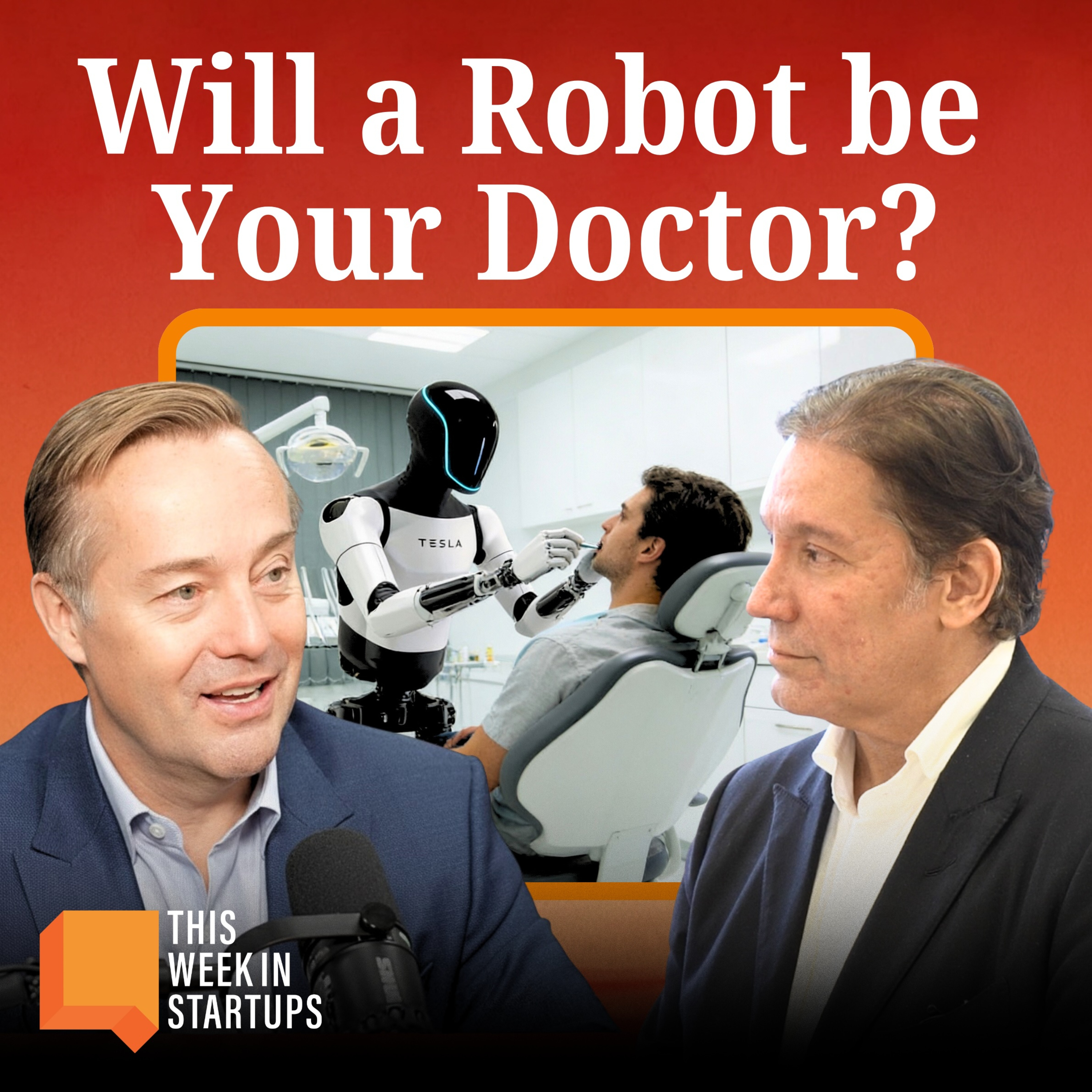
AI's most significant impact won't be on broad population health management, but as a diagnostic and decision-support assistant for physicians. By analyzing an individual patient's risks and co-morbidities, AI can empower doctors to make better, earlier diagnoses, addressing the core problem of physicians lacking time for deep patient analysis.

The most significant opportunity for AI in healthcare lies not in optimizing existing software, but in automating 'net new' areas that once required human judgment. Functions like patient engagement, scheduling, and symptom triage are seeing explosive growth as AI steps into roles previously held only by staff.
Current healthcare is a 'sick care' system that reacts to problems after they arise. AI health agents, by continuously integrating data from wearables, environment, and even smart appliances, can identify baseline health and prompt proactive behaviors to optimize wellness and prevent disease from occurring.
An effective AI strategy in healthcare is not limited to consumer-facing assistants. A critical focus is building tools to augment the clinicians themselves. An AI 'assistant' for doctors to surface information and guide decisions scales expertise and improves care quality from the inside out.

The widespread use of AI for health queries is set to change doctor visits. Patients will increasingly arrive with AI-generated analyses of their lab results and symptoms, turning appointments into a three-way consultation between the patient, the doctor, and the AI's findings, potentially improving diagnostic efficiency.

Instead of replacing experts, AI can reformat their advice. It can take a doctor's diagnosis and transform it into a digestible, day-by-day plan tailored to a user's specific goals and timeline, making complex medical guidance easier to follow.
AI is improving medical imaging accuracy and speed by nearly 70%, enabling earlier detection of chronic diseases. This leads to more effective preventive care, which is crucial for an aging global population and offers a promising path to making overall healthcare more cost-effective.

AI assistants can democratize medical knowledge for patients. By processing personal health data and doctor's notes, these tools can explain complex conditions in simple terms and suggest specific questions to ask medical professionals, improving collaboration.
Approximately 30% of U.S. healthcare costs are administrative. AI tools like ChatGPT Health can dramatically reduce this bloat for both providers (paperwork automation) and patients (avoiding unnecessary visits for false alarms), effectively slimming down systemic expenses like the popular weight-loss drug.
