Get your free personalized podcast brief
We scan new podcasts and send you the top 5 insights daily.
The threat of AI to enterprise software vendors is nuanced. Customers are not terminating entire contracts with platforms like ServiceNow. Instead, they are opting out of pricey AI-powered feature add-ons, choosing to use cheaper cloud alternatives or build their own solutions for specific automation tasks.

Related Insights
While AI expands software's capabilities, vendors may not capture the value. Companies could use AI to build solutions in-house more cheaply. Furthermore, traditional "per-seat" pricing models are undermined when AI reduces the number of employees required, potentially shrinking revenue even as the software delivers more value.

While AI can easily replicate simple SaaS features (e.g., a server alert), it poses little threat to deeply embedded enterprise systems. The complexity, integrations, and "dark matter" of these platforms create a "hostage" dynamic where ripping them out is impractical, regardless of cloning capabilities.
Frustration with a mediocre, AI-lacking vendor drove the decision to build a custom replacement, even when a commercial option existed. This signals a major vulnerability for incumbent SaaS players who fail to innovate with AI, as customers may choose to build rather than renew.
Enterprise software budgets are growing, but the money is being reallocated. CIOs are forced to cut functional, "good-to-have" apps to pay for price increases from core vendors and to fund new AI tools. This means even happy customers of non-mission-critical software may churn as budgets are redirected to top priorities.
The mere existence of powerful AI development tools shifts negotiating power to enterprise software buyers. Even if they have no intention of replacing an incumbent SaaS vendor, procurement teams can now plausibly bluff about building an in-house alternative with AI, creating significant downward pressure on pricing and renewals.

The primary AI threat to enterprise software isn't solo developers creating clones. It's established platforms like Rippling rapidly expanding into adjacent markets and, more importantly, enterprise customers shifting to shorter one-year contracts due to uncertainty about their future needs.

The ability for customers to build their own software features using AI agents directly threatens the traditional SaaS upsell model. During negotiations, customers can now credibly threaten to "roll their own" features instead of paying for higher-priced tiers, weakening the vendor's pricing power.

The fear that AI agents will kill SaaS is overblown. Corporations will not replace mission-critical, supported software with AI-generated code from junior employees. The need for vendor accountability, reliability, and support creates a durable moat for enterprise software companies.
The idea that AI will eliminate SaaS is overblown because it incorrectly projects small startup behavior onto large enterprises. Fortune 100s face immense change management, security, and maintenance challenges, making replacing established vendors with internal AI-coded tools impractical.
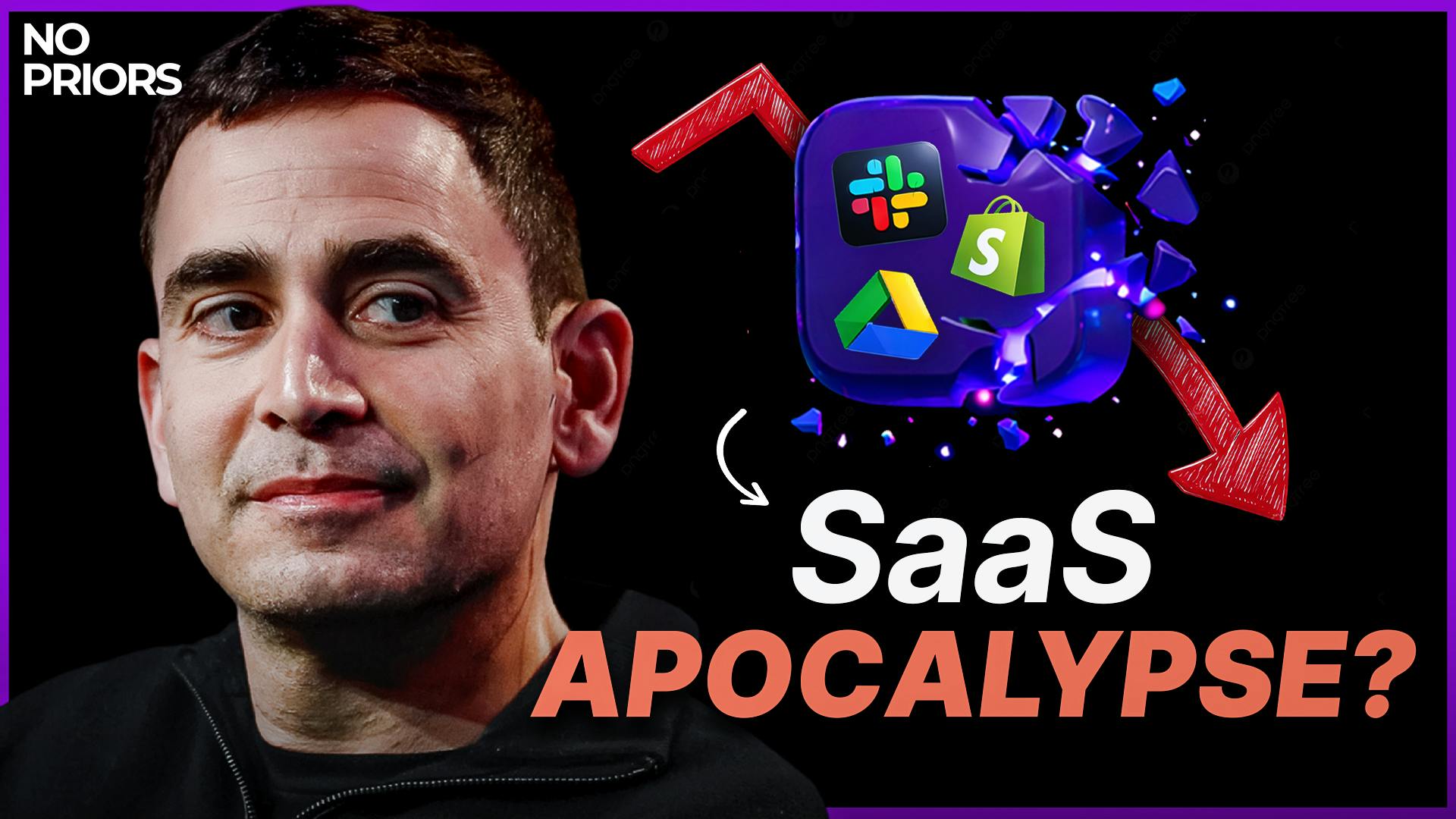
The existential threat from large language models is greatest for apps that are essentially single-feature utilities (e.g., a keyword recommender). Complex SaaS products that solve a multifaceted "job to be done," like a CRM or error monitoring tool, are far less likely to be fully replaced.
