Get your free personalized podcast brief
We scan new podcasts and send you the top 5 insights daily.
The fear that AI agents will kill SaaS is overblown. Corporations will not replace mission-critical, supported software with AI-generated code from junior employees. The need for vendor accountability, reliability, and support creates a durable moat for enterprise software companies.

Related Insights
The idea that companies will use AI to build their own enterprise software is flawed. It ignores the vast number of non-obvious edge cases (e.g., state-specific labor laws) that mature SaaS products have codified over years. This accumulated, deterministic logic is a powerful, hard-to-replicate moat.

While AI can easily replicate simple SaaS features (e.g., a server alert), it poses little threat to deeply embedded enterprise systems. The complexity, integrations, and "dark matter" of these platforms create a "hostage" dynamic where ripping them out is impractical, regardless of cloning capabilities.
When asked if AI commoditizes software, Bravo argues that durable moats aren't just code, which can be replicated. They are the deep understanding of customer processes and the ability to service them. This involves re-engineering organizations, not just deploying a product.
Established SaaS companies can defend against AI disruption by leaning into their role as secure, compliant systems of record. While AI can replicate features, it cannot easily replace the years of trust, security protocols, and enterprise-grade support that large companies pay for. Their value shifts from UI to being a trusted database.

Investor Mitchell Green argues that the fear of AI "vibe coding" away SaaS businesses is overblown. Incumbents like Workday spent decades building trust and deep enterprise integrations, a moat that can't be easily replicated with code alone, regardless of AI's power.

The "SaaSpocalypse" narrative misses a key reason large enterprises buy from vendors like Salesforce. It's not just about features, but accountability—like hiring McKinsey, it provides "air cover" and "a throat to choke." This institutional trust is a powerful moat against nascent, AI-generated tools.
With AI commoditizing code creation, the sustainable value for software companies shifts. Customers pay for reliability, support, compliance, and security patches—the 'never ending maintenance commitment'—which becomes the key differentiator when anyone can build an initial app quickly.
AI can generate code, but the real value of enterprise software is its integration into complex human workflows, the massive costs of change management, and network effects. These human-centric problems create a durable moat that code generation alone cannot overcome.
The idea that AI will eliminate SaaS is overblown because it incorrectly projects small startup behavior onto large enterprises. Fortune 100s face immense change management, security, and maintenance challenges, making replacing established vendors with internal AI-coded tools impractical.
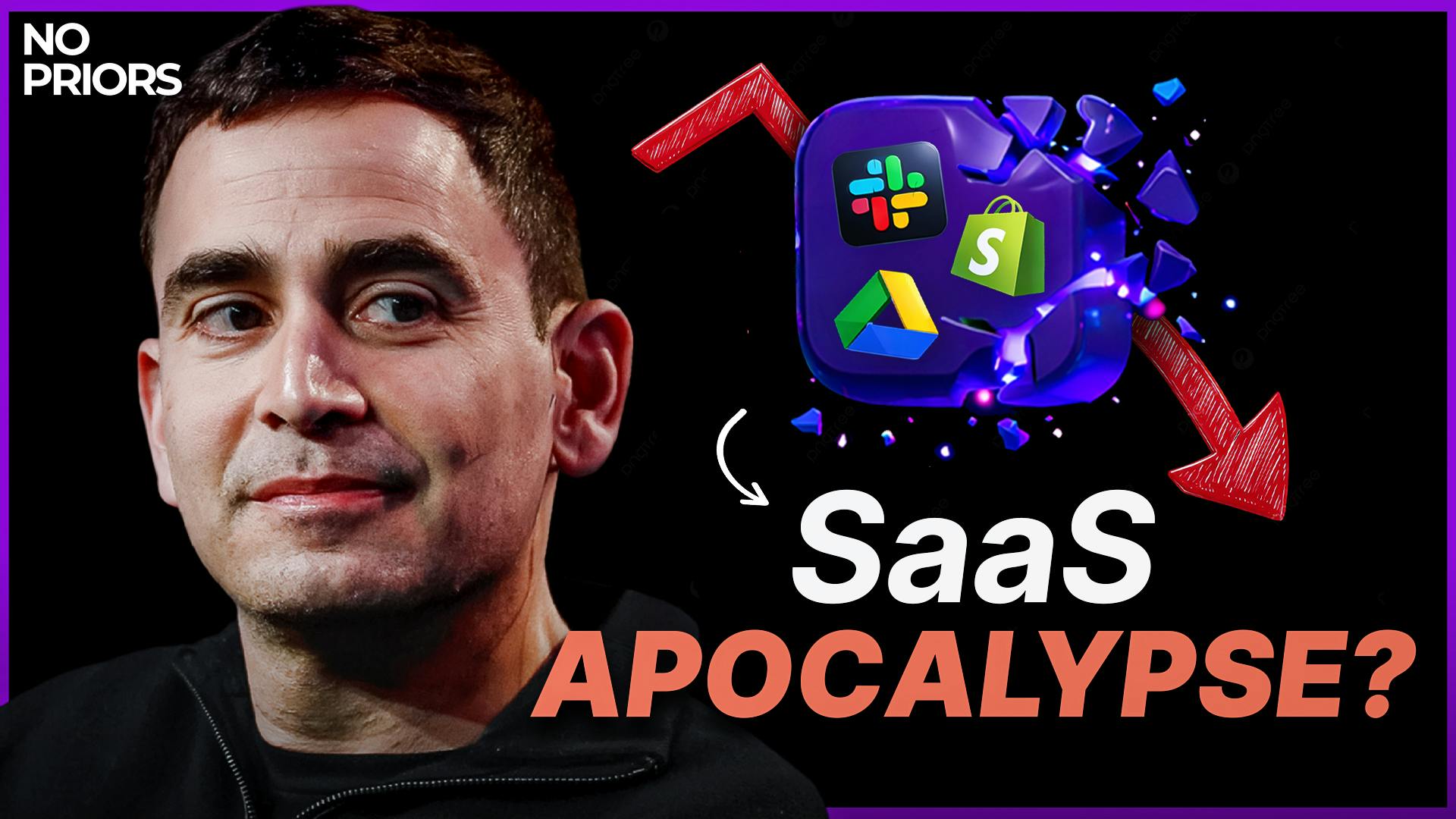
The threat of AI to SaaS is overstated for companies that own either a deep relationship with the user or a critical system of record. "Glue layer" SaaS companies without these moats are most at risk, while those like Salesforce (owning the customer relationship) are more durable.