Get your free personalized podcast brief
We scan new podcasts and send you the top 5 insights daily.
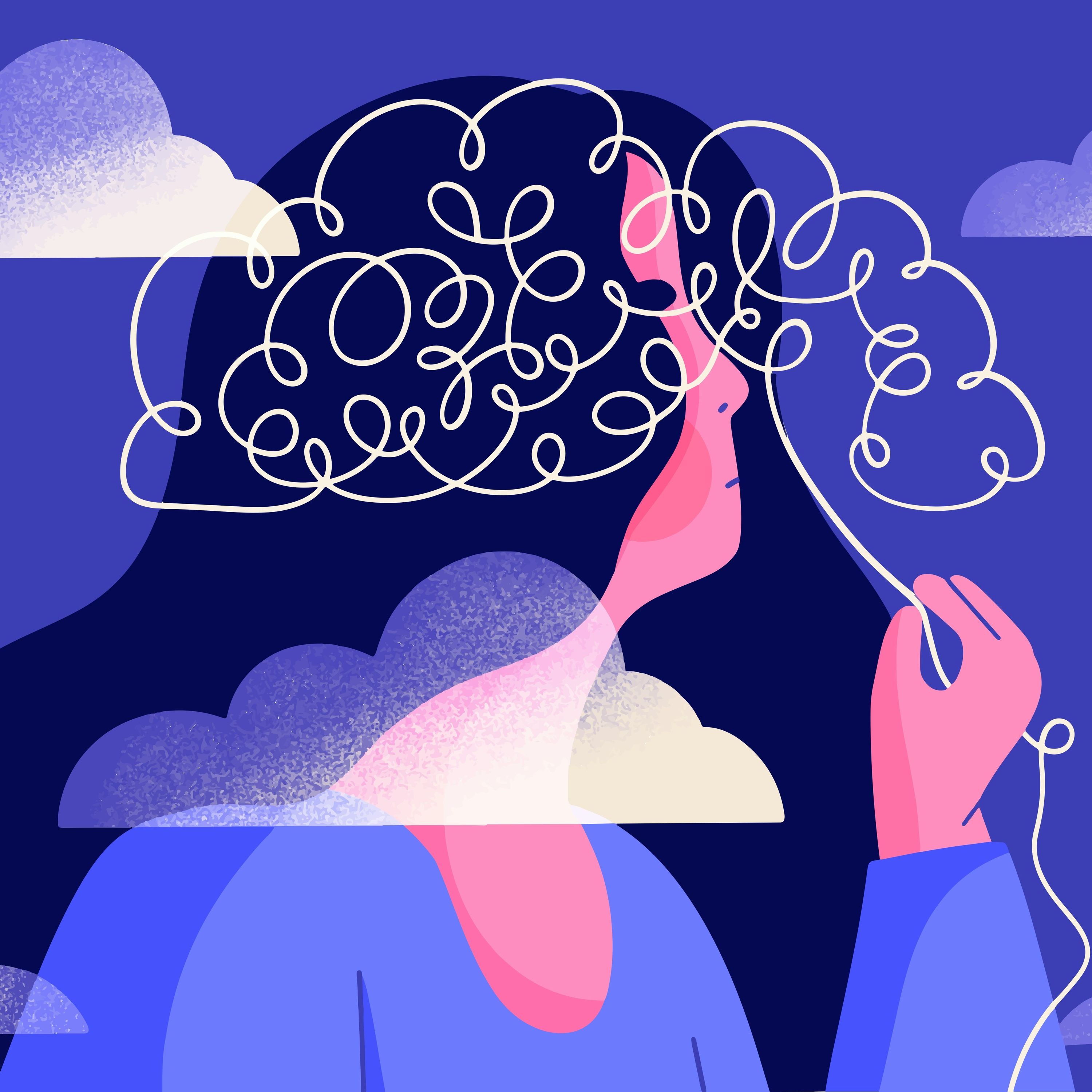
Cognitive science shows our brains can't effectively remember or prioritize more than four items. Offloading tasks into an external system is a biological necessity to free up cognitive resources for creative, high-level thinking.

Related Insights
Our brains are wired to follow the path of least resistance. Imposing constraints, such as limiting resources or blocking familiar solutions, is the only way to force the brain to abandon convenience and engage in truly creative problem-solving.

Rather than causing mental atrophy, AI can be a 'prosthesis for your attention.' It can actively combat the natural human tendency to forget by scheduling spaced repetitions, surfacing contradictions, and prompting retrieval. This enhances cognition instead of merely outsourcing it.

People struggle to retain information because they lack a regular outlet to apply it. A creative practice (podcast, blog, art) provides the motivation to actively 'scavenge' for insights and a structure to synthesize them, improving retention.

Constant productivity keeps the brain in a high-frequency "beta" state, which stifles creativity. To solve complex problems, you must intentionally shift to a slower "alpha" state by disconnecting. This is achieved through simple, non-distracting activities like walking in nature without your phone.

Instead of treating notebooks as a sacred archive, use them as a disposable tool for offloading short-term memory. This approach, focusing on capturing ideas in the moment and stream-of-consciousness writing, reduces the pressure to be perfect and increases daily utility.

The brain is designed to avoid costly thinking by defaulting to the "path of least resistance." To generate novel ideas, intentionally create a "preclude constraint" by blocking the most obvious or habitual solution. This forces your brain to explore new, more inventive pathways it would otherwise ignore.

Technology doesn't change the brain's fundamental mechanism for memory. Instead, it acts as an external tool that allows us to strategically choose what to remember, freeing up limited attentional resources. We've simply offloaded rote memorization (like phone numbers) to focus our mental bandwidth elsewhere.

The most crucial part of creativity is letting ideas "simmer" in the unconscious. After gathering information, step away from the problem completely. Engage in unrelated activities. This allows your mind to make novel connections you can't force through active thought.

Modern tools like email clutter our minds with external priorities, preventing the free mental space needed for our unconscious to work on our own important goals. To be creative, one must deliberately carve out time away from these reactive inputs and 'clean your mind'.
The perceived rigidity of a system like GTD is what enables creativity. By creating structure for the mundane (e.g., a calendar), you free up mental bandwidth for high-level, spontaneous work—much like a road's centerline allows you to drive without constantly fearing a collision.