Get your free personalized podcast brief
We scan new podcasts and send you the top 5 insights daily.
Major scientific leaps, such as CRISPR (from bacterial defense) or cancer immunotherapy (from basic T-cell biology), rarely come from direct attempts to solve the problems they ultimately fix. They are "orthogonal" discoveries born from fundamental research into seemingly unrelated questions.

Related Insights
A convergence of DNA sequencing, CRISPR, and AI allows scientists to move beyond just understanding biology to actively intervening. Medicine is now programming cellular behavior by rewriting DNA, representing a "step function" leap in what's achievable for treating disease at its root cause.
Landmark discoveries, like EGFR mutations, didn't start in a lab but with astute oncologists noticing patterns in how some patients responded to treatment while others didn't. This highlights that every patient interaction is a research opportunity, offering clues that can lead to the next scientific breakthrough.

Dr. Radvanyi emphasizes that foundational discoveries in immunotherapy arose from basic immunology and serendipitous observations, like his own unexpected T-cell proliferation with an anti-CTLA-4 antibody. This highlights the risk of over-prioritizing translational research at the expense of fundamental, curiosity-driven science.

Pure, curiosity-driven research into quantum physics over a century ago, with no immediate application in sight, became the foundation for today's multi-billion dollar industries like lasers, computer chips, and medical imaging. This shows the immense, unpredictable ROI of basic science.
Major scientific discoveries don't just solve problems; they empower us to ask deeper, more ambitious questions that were previously inconceivable. Our expanding knowledge creates a larger frontier of ignorance, turning yesterday's breakthroughs into tomorrow's foundational tools for asking what's next.

CRISPR's origins lie in basic microbiology. Scientists studying unusual repeating DNA sequences in bacteria discovered they were part of an adaptive immune system. Bacteria use CRISPR to recognize and cut the DNA of invading viruses (bacteriophage), a mechanism that was then repurposed for gene editing.
George Church argues that the primary barrier to advancing multiplex gene editing wasn't a specific technological breakthrough like CRISPR, but rather the imagination to find medically and ecologically significant applications for pre-existing capabilities.

True scientific advancement happens when researchers refuse to accept 'no' as an answer. When immunotherapy was dismissed for lung cancer, pioneers investigated why it worked in melanoma but not other cancers. This mindset—questioning failures and studying successes—is key to turning scientific impossibilities into standard treatments.
The innovation pipeline in biotech often starts in academia with fundamental breakthroughs like CRISPR or single-cell sequencing. Industry then provides the resources and engineering mindset to scale these technologies, robustify them, and generate the massive, high-quality datasets required to power AI-driven discovery.
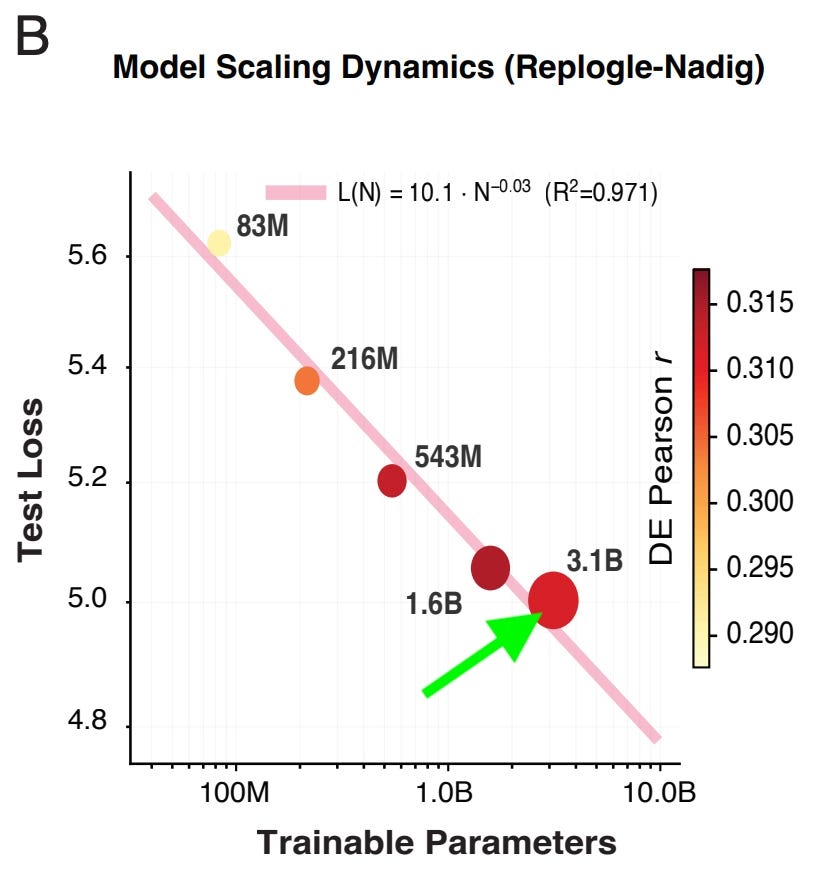
Patrick Collison believes we can finally cure complex diseases because biology now has a complete 'Turing loop': advanced sequencing to 'read' biological data, neural networks to 'think' about it, and CRISPR to 'write' changes by perturbing cells. This combination provides the necessary toolset for breakthroughs.
