Get your free personalized podcast brief
We scan new podcasts and send you the top 5 insights daily.
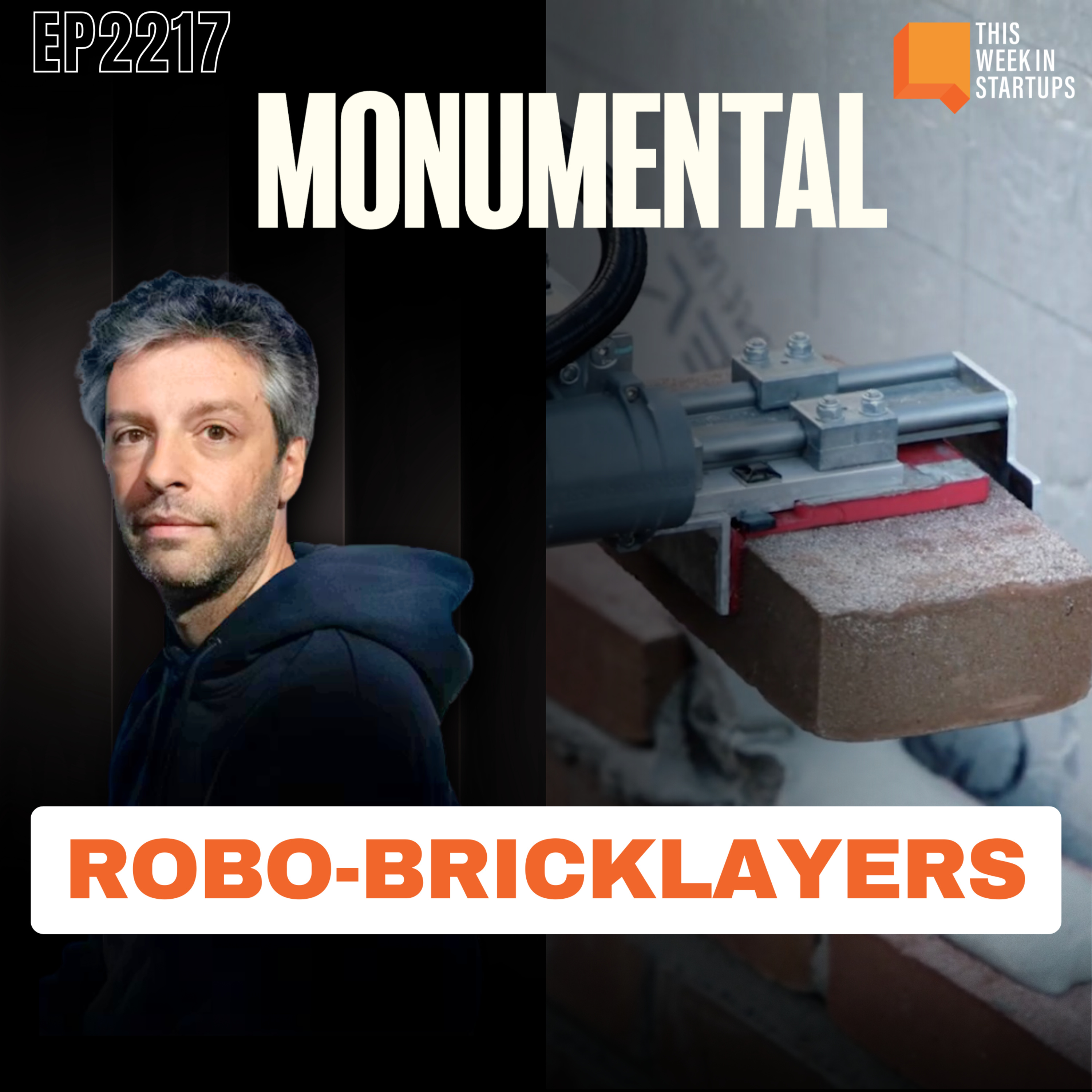
To overcome the construction industry's conservatism, Monumental operates as a subcontractor. This model is easier to sell than a large capital expenditure like a robot, as it fits existing project budgets and workflows, de-risking adoption for general contractors.
Related Insights
To shift a services-oriented company to a product mindset, frame productization as a competitive advantage. Repeatable, productized solutions offer greater market differentiation than purely custom builds, leading to more effective competition and new deal wins. This tangible benefit helps secure buy-in from sales and leadership.

Successful "American Dynamism" companies de-risk hardware development by initially using off-the-shelf commodity components. Their unique value comes from pairing this accessible hardware with sophisticated, proprietary software for AI, computer vision, and autonomy. This approach lowers capital intensity and accelerates time-to-market compared to traditional hardware manufacturing.

Instead of selling software to traditional industries, a more defensible approach is to build vertically integrated companies. This involves acquiring or starting a business in a non-sexy industry (e.g., a law firm, hospital) and rebuilding its entire operational stack with AI at its core, something a pure software vendor cannot do.

Contrary to the belief that hardware is inherently capital-intensive, Monumental's founder argues their biggest expense is salaries for high-quality talent, much like a software startup. The cost of the robots is manageable and their payback time is good, challenging typical VC perceptions of the business model.
Service businesses like landscaping and roofing can radically improve sales efficiency by automating quotes. Instead of costly site visits for measurements, use satellite imagery and AI to generate instant, accurate designs and pricing. This solves a major pain point for contractors and increases their win rate by being the first to respond.

Enterprises are comfortable buying services. Sell a service engagement first, powered by your technology on the back end, to get your foot in the door. This builds trust and bypasses procurement hurdles associated with new software. Later, you can transition them to a SaaS product model.
The Netherlands was an ideal starting market due to high construction density (short travel to pilot sites) and a single, nationwide building code. This homogeneity simplified product development and testing, unlike fragmented markets like the US or Germany, accelerating learning loops.
Automation in construction can do more than just lower costs for basic structures. Monumental's robots can create complex, artistic brick patterns and designs at the same speed and cost as a standard wall, potentially democratizing access to beautiful and diverse housing aesthetics.
Move beyond selling features by offering a "Business Process as a Service" (BPaaS) solution. This involves contracting directly on the business outcomes clients care about, such as cost savings or revenue optimization. This model delivers an end-to-end capability and aligns your success directly with your customer's, creating a powerful value proposition.
Previously, building 'just a feature' was a flawed strategy. Now, an AI feature that replaces a human role (e.g., a receptionist) can command a high enough price to be a viable company wedge, even before it becomes a full product.