Get your free personalized podcast brief
We scan new podcasts and send you the top 5 insights daily.
Rather than discarding legacy software, incumbent SaaS platforms should insert AI steps into established user flows. Atlassian found that embedding agents into Jira automations immediately drove high adoption because customers already relied on those structures.

Related Insights
Users rarely seek out separate AI functionality. Adoption becomes natural when AI assistance appears contextually within existing workflows, addressing friction points directly where the user is already working. This embedded approach is far more effective than adding AI as a separate, layered-on tool.

n8n successfully pivoted to AI by recognizing its core product already provided the data I/O and action capabilities that LLMs need. Instead of adding superficial AI features, they integrated agentic logic as the central missing piece, turning their automation tool into a powerful AI application builder.

Contrary to the "SaaSpocalypse" narrative, AI agents accelerate business processes. This increased volume and speed amplify the need for platforms like Atlassian's to provide legibility and manage the more complex, human-judgment-based tasks that remain.

Atlassian's CEO argues that AI tools should not just focus on novel capabilities. They must also improve users' current processes (e.g., AI-assisted writing). This dual approach brings the existing user base along while simultaneously showing them new, transformative ways to work, ensuring broader and faster adoption.

Instead of forcing teams to adopt entirely new processes, Atlassian is integrating agentic capabilities into familiar tools like Jira. Allowing users to assign a standard work item to an AI agent minimizes disruption and friction, accelerating adoption by enhancing, rather than replacing, established workflows.
Joe Lonsdale advises established SaaS companies to go on offense with AI. Instead of merely defending their core product, they should build AI agents on top of their platforms to automate customer workflows. This creates new, high-margin revenue streams by helping customers reduce headcount and increase efficiency.

Instead of building a new platform for AI agents, integrate them directly into the systems employees already use daily, like Salesforce or Slack. This avoids retraining, overcomes massive resistance to new software, and provides the path of least resistance to adoption and utilization.

To get mainstream users to adopt AI, you can't ask them to learn a new workflow. The key is to integrate AI capabilities directly into the tools and processes they already use. AI should augment their current job, not feel like a separate, new task they have to perform.

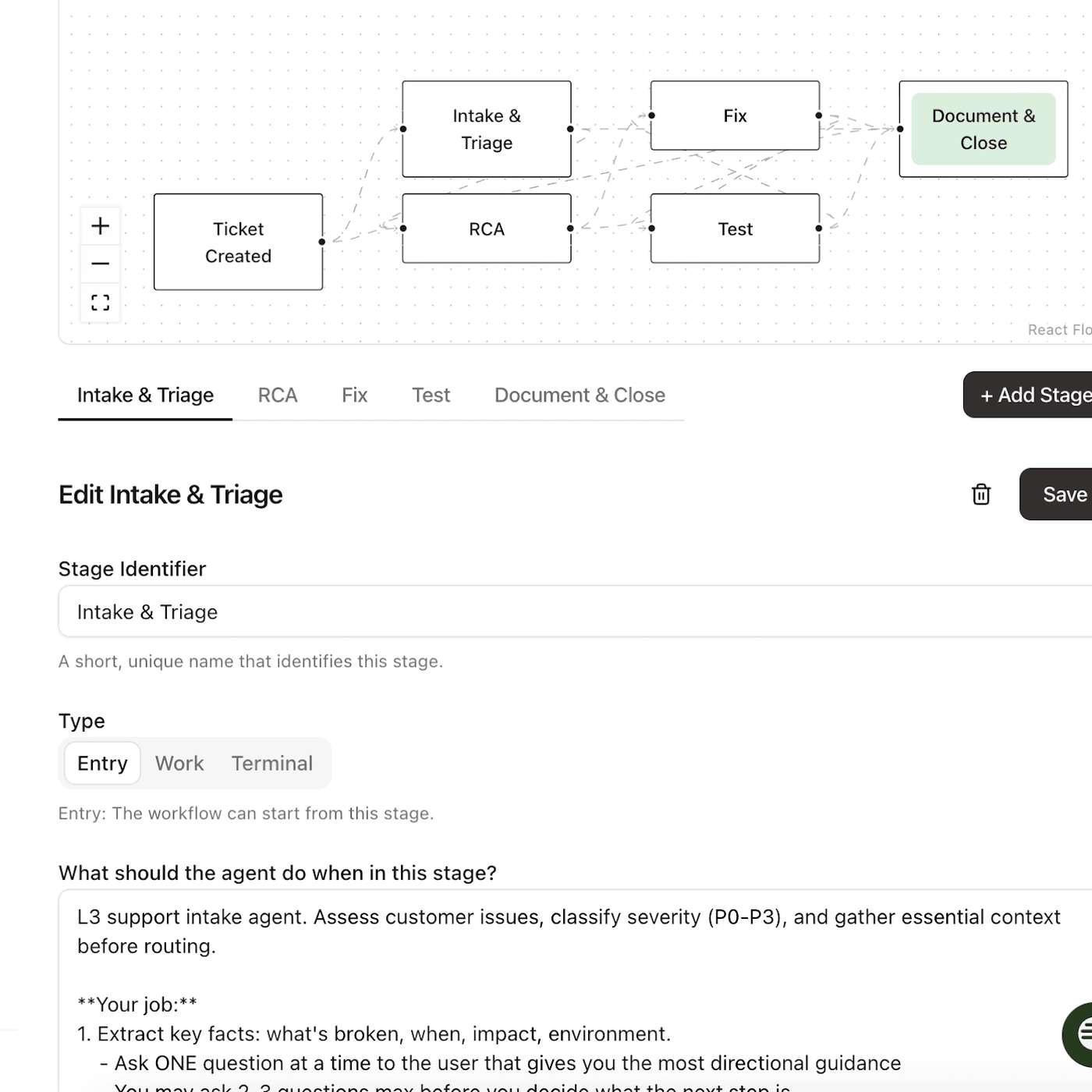
The AI agent is designed to act like a human team member within existing systems. It performs bi-directional updates in tools like Jira or Linear—adding comments, changing statuses, and assigning tickets. This seamless integration ensures human teams maintain visibility and that established processes aren't disrupted.
To drive adoption of AI agents, don't force users into a new application. Instead, integrate the agent directly into their existing collaboration tools like Slack. This approach reduces friction and makes the agent feel like a natural part of the team, leading to higher engagement and user satisfaction.
