Get your free personalized podcast brief
We scan new podcasts and send you the top 5 insights daily.
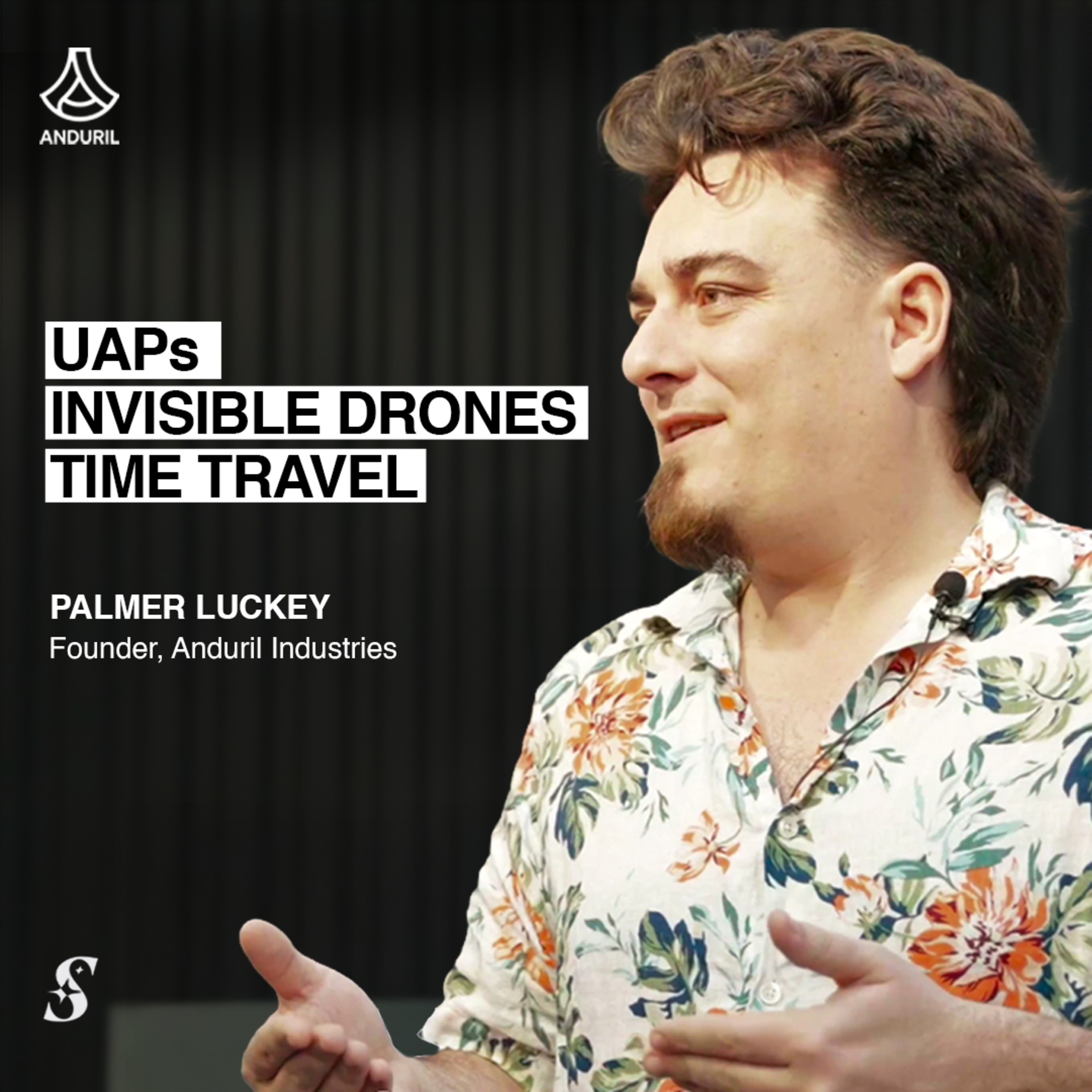
Palmer Luckey states that if UAP technology is real and can be understood, it will obsolete all current defense systems. Therefore, until that breakthrough occurs, military development must proceed on a completely independent track, treating the UAP phenomenon as a separate universe that cannot influence current strategy.
Related Insights
Warfare has evolved to a "sixth domain" where cyber becomes physical. Mass drone swarms act like a distributed software attack, requiring one-to-many defense systems analogous to antivirus software, rather than traditional one-missile-per-target defenses which cannot scale.

It's futile to debate *whether* transformative technologies like AI and robotics should be developed. If a technology offers a decisive advantage, it *will* be built, regardless of the risks. The only rational approach is to accept its inevitability and focus all energy on managing its implementation to stay ahead.

The conflict in Ukraine exposed the vulnerability of expensive, "exquisite" military platforms (like tanks) to inexpensive technologies (like drones). This has shifted defense priorities toward cheap, mass-producible, "attritable" systems. This fundamental change in product and economics creates a massive opportunity for startups to innovate outside the traditional defense prime model.

The justification for accelerating AI development to beat China is logically flawed. It assumes the victor wields a controllable tool. In reality, both nations are racing to build the same uncontrollable AI, making the race itself, not the competitor, the primary existential threat.

Society rarely bans powerful new technologies, no matter how dangerous. Instead, like with fire, we develop systems to manage risk (e.g., fire departments, alarms). This provides a historical lens for current debates around transformative technologies like AI, suggesting adaptation over prohibition.

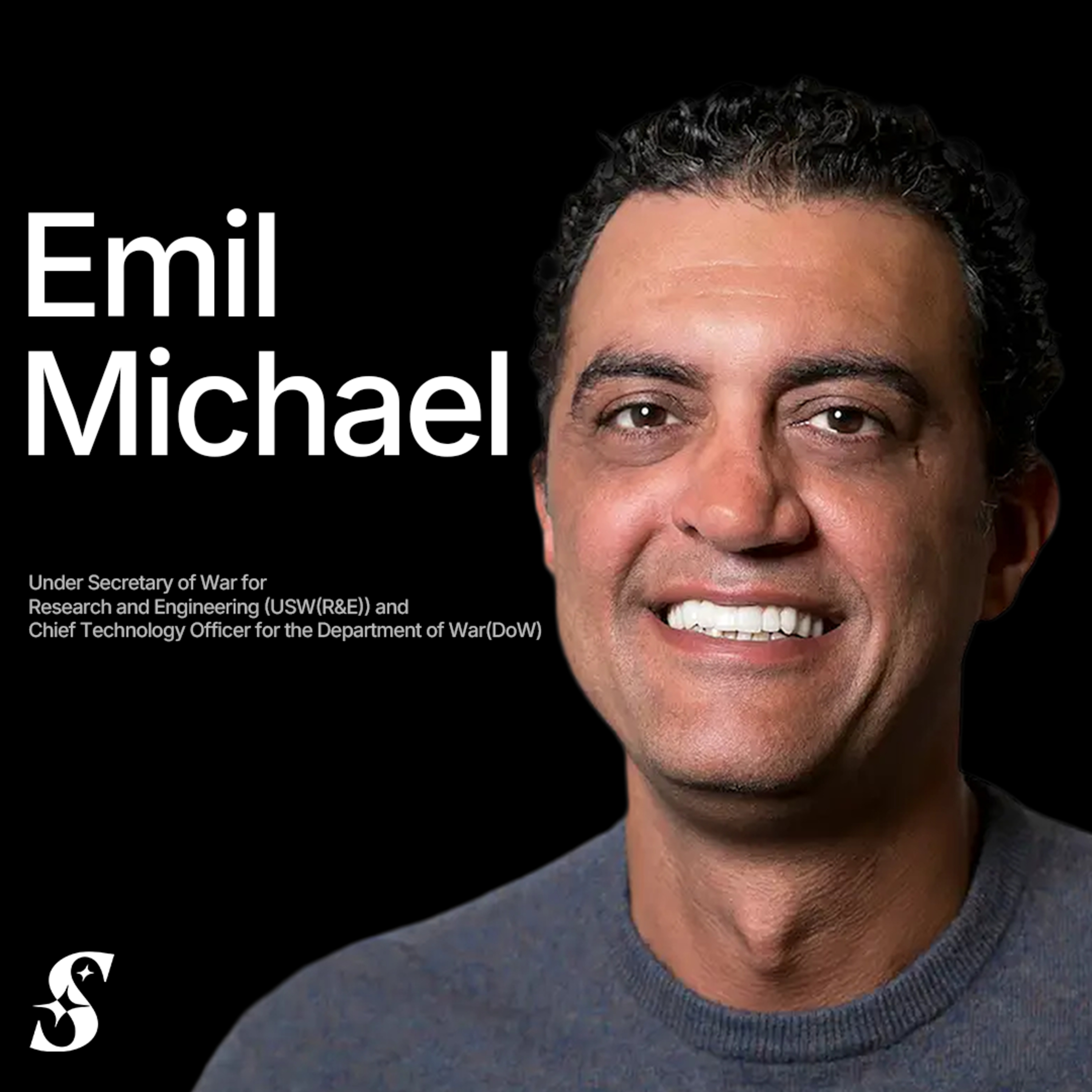
The Under Secretary of War's primary job is not just to fund technology, but to actively cultivate an ecosystem of new defense contractors. The stated goal is to create five more major companies capable of challenging established primes like Lockheed Martin, fostering competition and bringing new capabilities into the defense sector.
Combat in space or on the moon will be swift and catastrophic because spaceships and habitats are inherently fragile. Due to severe mass and volume constraints, they cannot be armored effectively. The winning strategy is not to withstand a hit, but to avoid detection, targeting, and being fired upon entirely.
While optical camouflage to trick the human eye is a solved technology, it's irrelevant on the modern battlefield. Adversaries rely on a wide spectrum of sensors like infrared, thermal, and radar, which can easily detect optically-cloaked objects, making the technology strategically impractical for Anduril's customers.

The reason we don't see aliens (the Fermi Paradox) is not because they are distant, but because our spacetime interface is designed to filter out the overwhelming reality of other conscious agents. The "headset" hides most of reality to make it manageable, meaning the search for physical extraterrestrial life is fundamentally limited.

The war in Ukraine has evolved from a traditional territorial conflict into a "robot war," with drones dominating the front lines. This real-world battlefield is accelerating innovation at an "unbelievable" pace, driving new solutions for secure communications and autonomous targeting, providing critical lessons for US drone strategy.