Get your free personalized podcast brief
We scan new podcasts and send you the top 5 insights daily.
Drawing on René Girard's theory of 'memetic desire,' human want is driven by scarcity and social status. Experiments show AI-generated goods are perceived as inherently reproducible and non-unique, even when artificially limited. This lack of 'aura' or provenance caps their value, making them less desirable than human-made equivalents.

Related Insights
Copywriter Alex Cattoni applies basic economics to AI content: as a tool becomes more available, its output becomes less valuable. This flood of generic, AI-generated content creates a market premium for unique, human-driven creativity and critical thinking, which are now comparatively scarcer.

While AI agents promising perfect information sound beneficial, they may over-optimize for measurable specs. This devalues unquantifiable aspects like design, feel, and brand—the "soul" of a product. The result could be a marketplace of highly utilitarian but ultimately less human and desirable goods.

Studies show people often prefer AI-generated art based on quality alone, but their preference flips to the human-created version once they know the source. This reveals a deep-seated bias for human effort, posing a significant "Catch-22" for marketers who risk losing audience appreciation if their AI usage is discovered.
As AI makes code, content, and design infinitely available, scarcity shifts to what AI cannot replicate: creative judgment, original "weird" thinking, and in-person physical experiences. This creates an opportunity for premium, human-centric brands to market themselves as "AI-Free," similar to organic food certifications.

While AI lowers the barrier to content creation for everyone, it simultaneously increases the value of uniquely human contributions. As AI-generated content becomes commoditized, attributes like lived experience, distinct perspective, and true originality will become the key differentiators for creators.

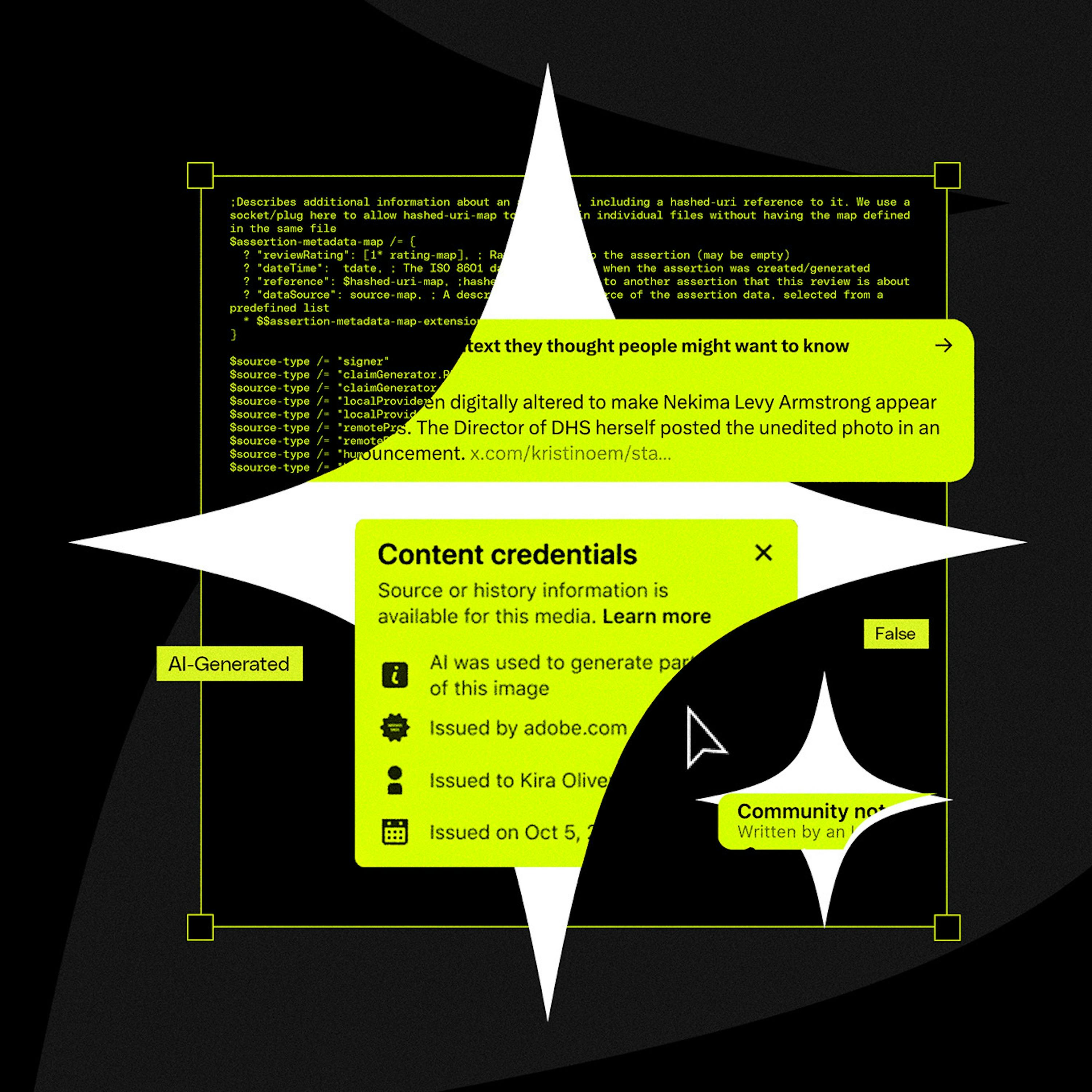
The "AI-generated" label carries a negative connotation of being cheap, efficient, and lacking human creativity. This perception devalues the final product in the eyes of consumers and creators, disincentivizing platforms from implementing labels that would anger their user base and advertisers.
Because AI can generate content in seconds, it is perceived as low-effort. This violates the "labor illusion," where effort signals quality. A study showed that when a poster was labeled "AI-powered" instead of "hand-drawn," purchase intent dropped by 61%. Brands using AI must reframe the narrative around the effort of building the system.

Humans subconsciously assign greater value to things perceived as requiring significant effort. This 'effort phenomenon' explains why a natural diamond is prized over an identical lab-grown one, and why low-effort, AI-generated content can feel irritating and valueless to consumers.

Even if AI can perfectly replicate all goods and services, human desire for authenticity, connection, and imperfection will create a premium for human-provided labor. This suggests new economies will emerge based not on efficiency, but on providing what is uniquely and quirkily human.
As AI-generated content becomes ubiquitous, a counter-movement will establish "100% human-generated" as a premium, luxury status symbol. This "artisanal anti-AI" trend will manifest as certifications and exclusive networks, appealing to consumers who value authenticity and human craftsmanship.