Get your free personalized podcast brief
We scan new podcasts and send you the top 5 insights daily.
The introduction of scheduled tasks in platforms like Anthropic's Cowork represents a fundamental shift. AI is no longer just a conversational tool that responds to prompts ("chat was a toy"). It is becoming an autonomous worker that can execute recurring tasks without supervision ("a labor primitive"), fundamentally changing its role and value proposition in the workplace.

Related Insights
Unlike standard chatbots where you wait for a response before proceeding, Cowork allows users to assign long-running tasks and queue new requests while the AI is working. This shifts the interaction from a turn-by-turn conversation to a delegated task model.

The latest AI models represent an inflection point, shifting from being productivity boosters to autonomous agents. Unlike prior versions requiring human intervention, models like OpenAI's GPT 5.3 Codex can execute complex, multi-hour tasks from a single prompt, signaling a new era of automation.

Tools like ChatGPT are AI models you converse with, requiring constant input for each step. Autonomous agents like OpenClaw represent a fundamental shift where users delegate outcomes, not just tasks. The AI works autonomously to manage calendars, send emails, or check-in for flights without step-by-step human guidance.

Recent updates from Anthropic's Claude mark a fundamental shift. AI is no longer a simple tool for single tasks but has become a system of autonomous "agents" that you orchestrate and manage to achieve complex outcomes, much like a human team.
The future of software isn't just AI-powered features. It's a fundamental shift from tools that assist humans to autonomous agents that perform tasks. Human roles will evolve from *doing* the work to *orchestrating* thousands of these agents.
Non-technical users are accustomed to a "prompt, wait, respond" cycle. Cowork's design encourages a new paradigm where users "hand off" significant work, let the AI run for hours, and check back on results, much like delegating to a human assistant.
The next evolution of enterprise AI isn't conversational chatbots but "agentic" systems that act as augmented digital labor. These agents perform complex, multi-step tasks from natural language commands, such as creating a training quiz from a 700-page technical document.

The paradigm shift with AI agents is from "tools to click buttons in" (like CRMs) to autonomous systems that work for you in the background. This is a new form of productivity, akin to delegating tasks to a team member rather than just using a better tool yourself.
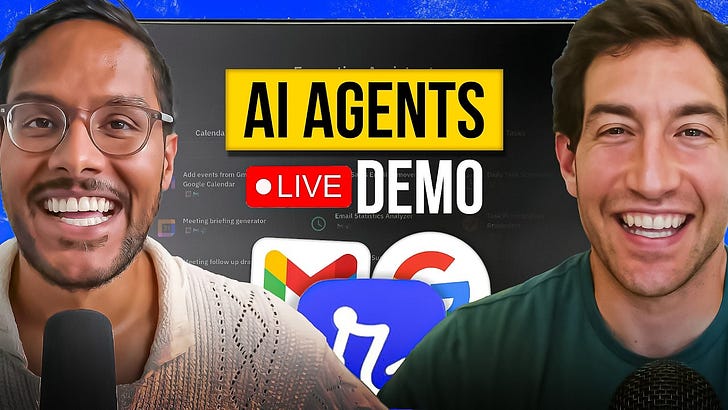
Anthropic's upcoming 'Agent Mode' for Claude moves beyond simple text prompts to a structured interface for delegating and monitoring tasks like research, analysis, and coding. This productizes common workflows, representing a major evolution from conversational AI to autonomous, goal-oriented agents, simplifying complex user needs.

Anthropic's data reveals users are moving beyond AI as a creative partner and are now delegating entire tasks. This "directive automation" behavior jumped from 27% to 39% of conversations in just nine months, signaling rapidly growing trust in AI for autonomous work completion.