Get your free personalized podcast brief
We scan new podcasts and send you the top 5 insights daily.
When confronting AI-driven job loss from technologies like Waymo's driverless cars, the policy framework is not to block innovation. Instead, it prioritizes managing the "collateral damage" by proactively developing retraining and alternative career paths before workers are fully displaced.

Related Insights
With over half of new startup pitches focusing on AI automating existing jobs, the primary solution to this massive displacement is not retraining, but fostering an ecosystem that aggressively creates new companies, new industries, and consequently, new roles.

To manage AI's labor impact, former Commerce Secretary Gina Raimondo proposes a "grand bargain." This includes tax code reforms to reward companies that reinvest AI-driven savings into job creation, worker retention, and entry-level hiring, shifting focus from pure efficiency to opportunity.

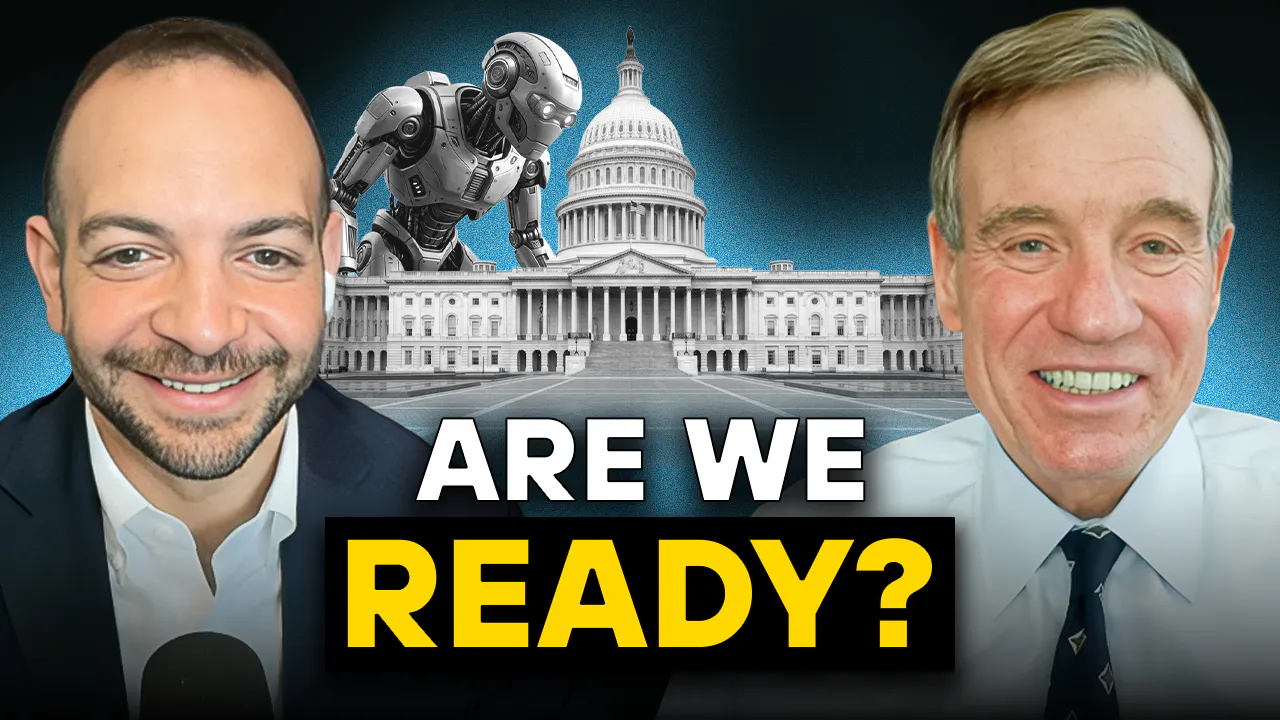
Senator Warner is challenging AI companies to help define and pay for the economic transition their technology is causing. He argues that if the industry doesn't take the lead with specific policy ideas and funding for reskilling, they risk a ham-handed government response driven by populist anger.
The correct response to AI-driven job displacement is counterintuitive: make labor markets more flexible. This allows workers to quickly reallocate to tasks where humans still hold a comparative advantage. Protecting old jobs with rigid regulations only makes firms uncompetitive, leading to worse economic outcomes.

When introducing AI automation in government, directly address job security fears. Frame AI not as a replacement, but as a partner that reduces overwhelming workloads and enables better service. Emphasize that adopting these new tools requires reskilling, shifting the focus to workforce evolution, not elimination.

The Pope's encyclical advocates for establishing 'social criteria for innovation' before AI is widely deployed. It calls for verifiable measures to protect employment and retrain workers *alongside* the introduction of automation, shifting the policy focus from reacting to job losses to proactively shaping technology for human benefit.

The potential rise in unemployment from AI will not happen in a vacuum. Central banks and governments are expected to use tools like interest rate cuts, unemployment benefits, and targeted spending to stimulate the economy, thereby shortening and reducing the severity of any labor disruption.

Instead of laying off employees due to AI efficiencies, companies should reallocate them to new, critical roles. These experienced employees, including AI skeptics, possess the institutional knowledge to vet new AI workflows, test for vulnerabilities, and build the guardrails needed to prevent costly failures like Amazon's recent outage.

The consensus in Congress is not to regulate AI to prevent job loss, which is seen as implausible. Instead, the focus is on proactive investments to manage the transition and ensure people have financial stability, with ideas like universal healthcare emerging as alternatives to UBI.
To prepare for potential mass displacement of white-collar jobs by AI, California is experimenting with "employment insurance," a Danish model where the state pays employers to retain workers during transitions. This proactive approach focuses on preventing unemployment rather than just providing benefits after a layoff.