Get your free personalized podcast brief
We scan new podcasts and send you the top 5 insights daily.
Instead of laying off employees due to AI efficiencies, companies should reallocate them to new, critical roles. These experienced employees, including AI skeptics, possess the institutional knowledge to vet new AI workflows, test for vulnerabilities, and build the guardrails needed to prevent costly failures like Amazon's recent outage.

Related Insights
Business owners should view AI not as a tool for replacement, but for multiplication. Instead of trying to force AI to replace core human functions, they should use it to make existing processes more efficient and to complement human capabilities. This reframes AI from a threat into a powerful efficiency lever.

Frame internal AI initiatives not as a way to replace employees, but to automate their chores. This frees them to move 'up the stack' to perform higher-value functions like client relations, creative strategy, and founder meetings, ultimately increasing overall output.
Career security in the age of AI isn't about outperforming machines at repetitive tasks. Instead, it requires moving 'up the stack' to focus on human-centric oversight that AI cannot replicate. These indispensable roles include validation, governance, ethics, data integrity, and regulatory AI strategy, which will hold the most influence and longevity.

Don't hire based on today's job description. Proactively run AI impact assessments to project how a role will evolve over the next 12-18 months. This allows you to hire for durable, human-centric skills and plan how to reallocate the 30%+ of their future capacity that will be freed up by AI agents.
Companies are using AI hype as a justifiable narrative to cut headcount. These decisions are often driven by peer pressure and a desire to please shareholders, not by proven automation replacing specific tasks. AI has become a permission slip for layoffs that might have happened anyway.

The most effective career strategy for employees facing automation is not resistance, but mastery. By learning to operate, manage, and improve the very AI systems that threaten their roles, individuals can secure their positions and become indispensable experts who manage the machines.
Despite powerful new models, enterprises struggle to integrate them. OpenAI is hiring hundreds of 'forward-deployed engineers' to help corporations customize models and automate tasks. This highlights that human expertise is still critical for unlocking the business value of advanced AI, creating a new wave of high-skill jobs.

The critical barrier to AI adoption isn't technology, but workforce readiness. Beyond a business need, leaders have a moral—and in some regions, legal—responsibility to retrain every employee. This ensures people feel empowered, not afraid, and can act as the human control layer for AI systems.

With AI tools being so new, no external "experts" exist. OpenAI's Chairman argues that the individuals best positioned to lead AI adoption are existing employees. Their deep domain knowledge, combined with a willingness to learn the new technology, makes them more valuable than any outside hire. Call center managers can become "AI Architects."
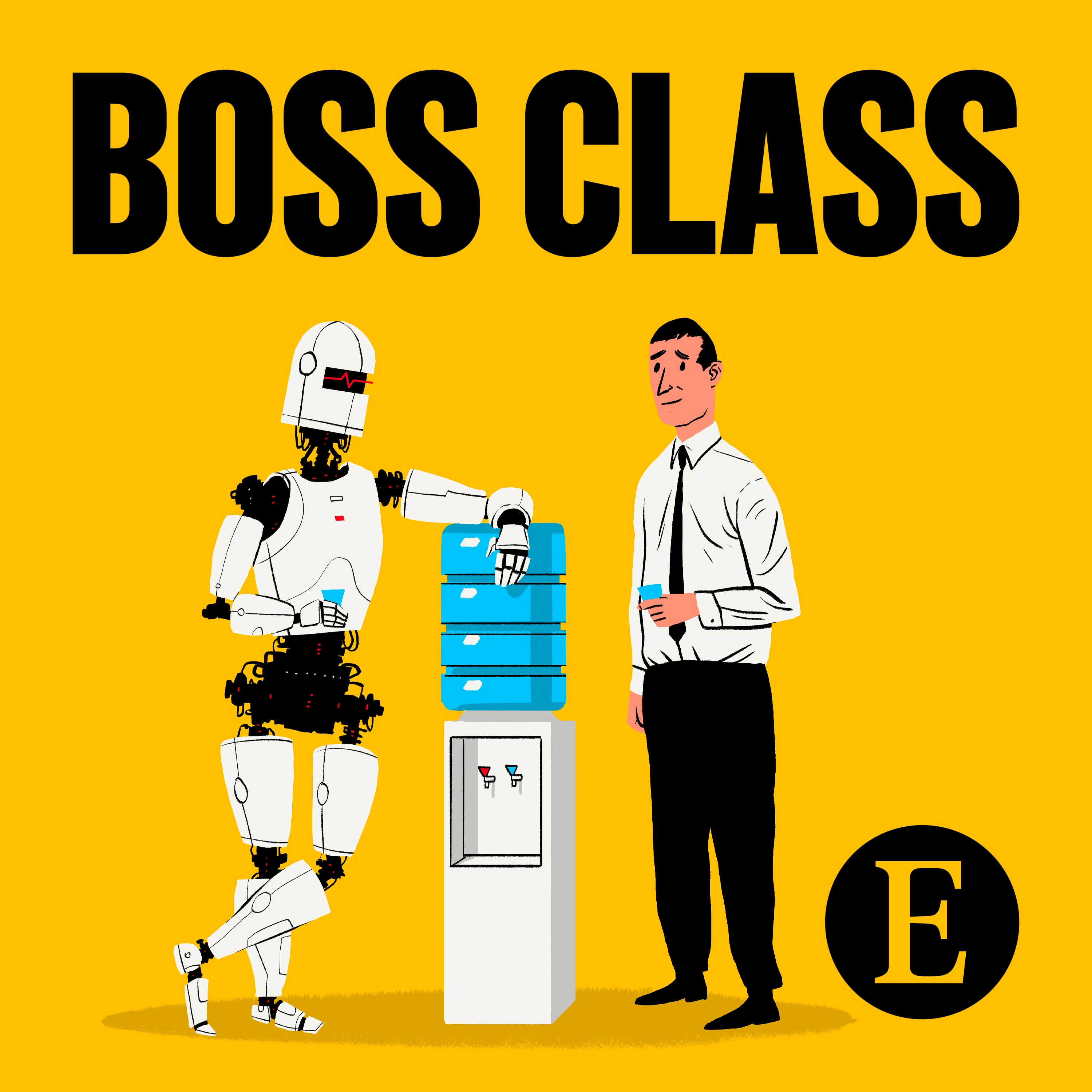
When AI automates a core task like content writing, don't eliminate the role. Instead, reframe it to leverage human judgment. A "content writer" can be transformed into a "content curator" who guides, edits, and validates AI-generated output. This shifts the focus from replacement to augmentation.
