Get your free personalized podcast brief
We scan new podcasts and send you the top 5 insights daily.
With over half of new startup pitches focusing on AI automating existing jobs, the primary solution to this massive displacement is not retraining, but fostering an ecosystem that aggressively creates new companies, new industries, and consequently, new roles.

Related Insights
Unlike past industrial shifts, AI's impact won't be contained to specific industries. Once AI can perfectly replicate a human worker behind a keyboard, video, and mouse, it will trigger a simultaneous displacement wave across all remote-capable jobs.

Beyond displacing current workers, AI will lead to hiring "abatement," where companies proactively eliminate roles from their hiring plans altogether. This is a subtle but profound workforce shift, as entire job categories may vanish from the market before employees can be retrained.

AI's ability to generate ideas and initial drafts for a few dollars removes the high cost of entry for new projects. This "ideation" phase, once proven successful, often justifies hiring human experts for full execution, creating net-new work that was previously unaffordable.

The primary economic incentive driving AI development is not replacing software, but automating the vastly larger human labor market. This includes high-skill jobs like accountants, lawyers, and auditors, representing a multi-trillion dollar opportunity that dwarfs the SaaS industry and dictates where investment will flow.
The economic incentive for VCs funding AI is replacing human labor, a $13 trillion market in the US alone. This dwarfs the $300 billion SaaS market, revealing the ultimate goal is automating knowledge work, not just building software.

Rather than just replacing jobs, AI is fostering the emergence of new, specialized roles. The "Content Automation Strategist," for example, is a position that merges creative oversight with the technical skill to use AI for scaling content production and personalization effectively.

The narrative of AI destroying jobs misses a key point: AI allows companies to 'hire software for a dollar' for tasks that were never economical to assign to humans. This will unlock new services and expand the economy, creating demand in areas that previously didn't exist.

While AI-driven efficiency is an obvious first step, it often results in workforce reduction if company growth is flat. True differentiation and sustainable advantage come from using AI for innovation—creating new products, markets, and business models to fuel growth.

Many engineers at large companies are cynical about AI's hype, hindering internal product development. This forces enterprises to seek external startups that can deliver functional AI solutions, creating an unprecedented opportunity for new ventures to win large customers.
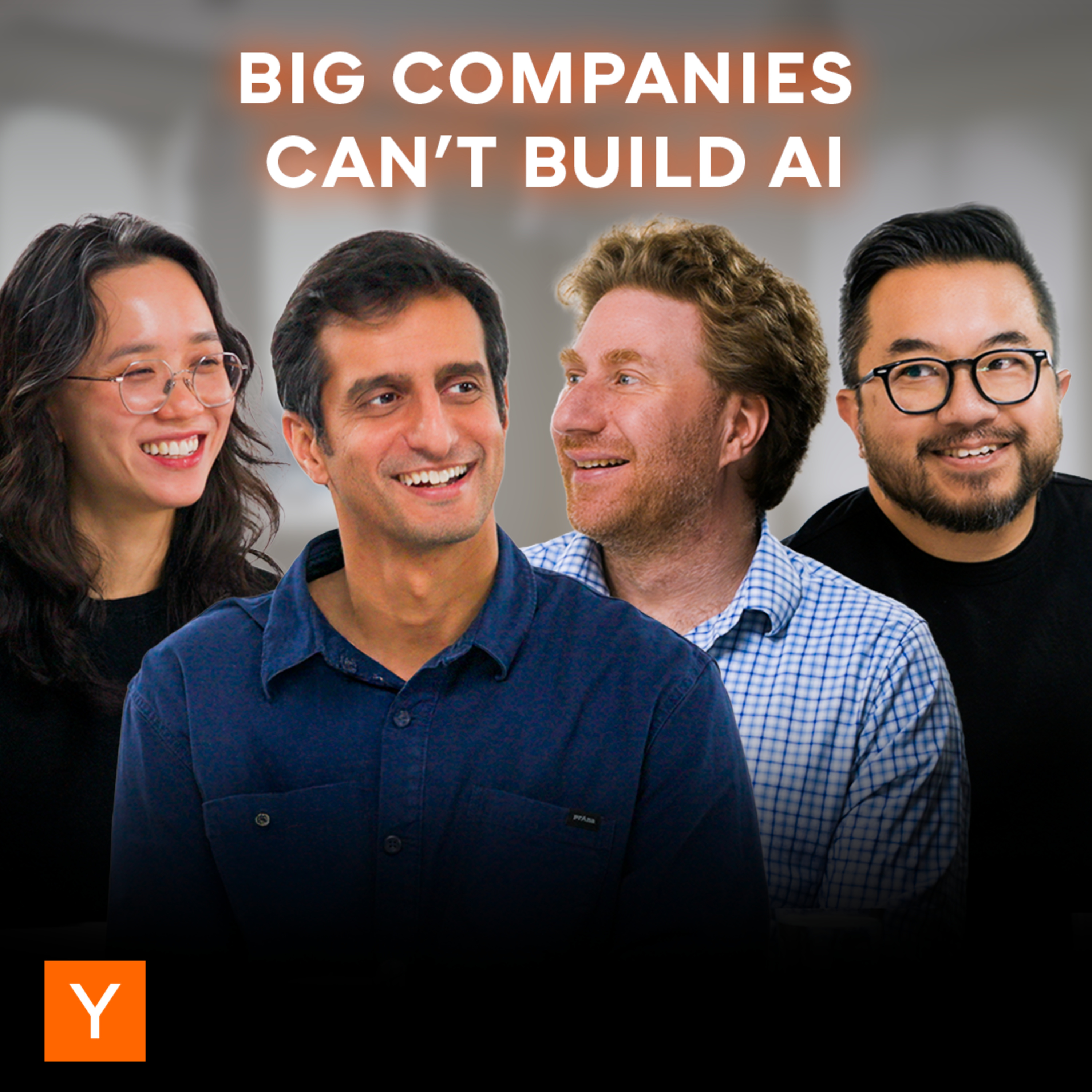
Periods of intense technological disruption, like the current AI wave, destabilize established hierarchies and biases. This creates a unique opportunity for founders from non-traditional backgrounds who may be more resilient and can identify market needs overlooked by incumbents.