Get your free personalized podcast brief
We scan new podcasts and send you the top 5 insights daily.
The potential rise in unemployment from AI will not happen in a vacuum. Central banks and governments are expected to use tools like interest rate cuts, unemployment benefits, and targeted spending to stimulate the economy, thereby shortening and reducing the severity of any labor disruption.

Related Insights
Fiscal incentives and monetary policy, such as suppressing long-term rates, have made it cheaper for AI companies to fund massive build-outs. This government-enabled environment accelerates the AI arms race, potentially exacerbating job displacement faster than natural market forces would allow.

Rapid AI productivity gains could overwhelm the economy, causing significant job loss before new roles are created. Moody's analysts don't view this as a remote tail risk, but as a substantial 1-in-5 possibility that requires serious consideration by policymakers and business leaders.

A rapid, significant (e.g., 5%) spike in unemployment over a short period (e.g., 6 months) due to AI would trigger an immediate and massive political and economic response. This would be comparable in speed and scale to the multi-trillion dollar stimulus packages passed during the COVID-19 pandemic.

Whether AI leads to a catastrophic 40% unemployment rate or a desirable three-day workweek is fundamentally the same in terms of total hours worked. The outcome depends entirely on policy and wealth distribution choices, such as creating more public holidays or an 'AI dividend,' rather than the technology's inherent effect.

AI challenges traditional monetary policy logic. Historically, lower interest rates spur capital investment that creates jobs. However, if lower rates now incentivize investment in job-reducing AI, the Fed's primary tool for boosting employment may become less effective or even have ambiguous effects, a new dynamic policymakers must understand.

Faced with mass job loss from AI, governments are unlikely to seize assets from the wealthy. The politically easier path is to print massive amounts of money for social support, preserving the existing capital structure while devaluing the currency.

Rather than just destroying jobs, AI could make starting a business dramatically easier, leading to a boom in entrepreneurship. Raimondo proposes policies like allowing laid-off workers to collect unemployment while starting their new venture to facilitate this transition.
Contrary to fears of mass unemployment, AI will create new industries and roles. While transitional unemployment will occur, the demand for more energy, AI-related regulation (e.g., government lawyers), and new leisure sectors will generate significant job growth, offsetting the displacement from automation.
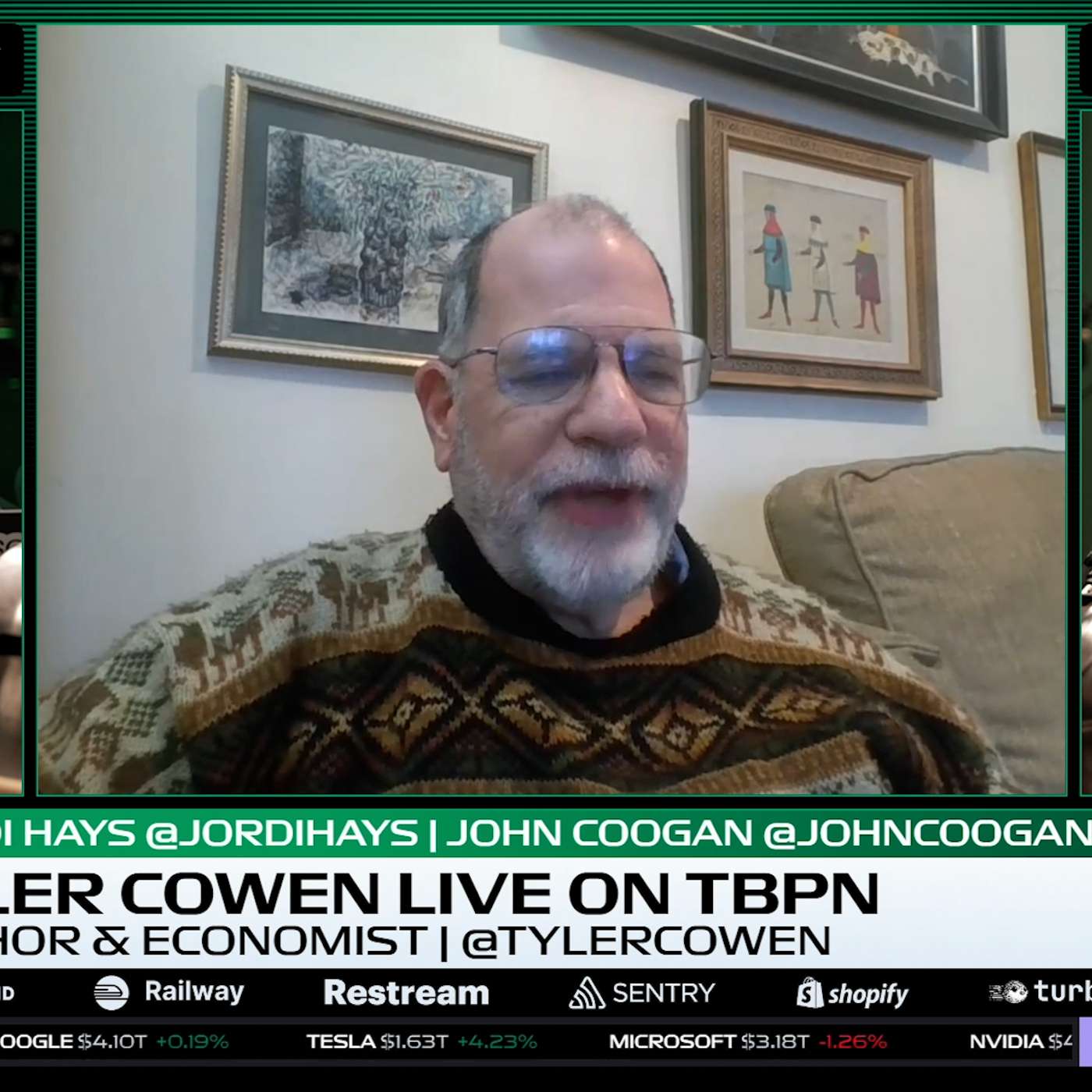
Recent events, including the Fed's interest rate cuts citing unemployment uncertainty and AI-driven corporate restructuring, show AI's economic impact is no longer theoretical. Top economists are now demanding the U.S. Labor Department track AI's effect on jobs in real-time.
AI is creating a secular trend of higher productivity but lower labor demand, leading to a 'jobless recovery' and structurally higher unemployment. This consistent threat to the Fed's maximum employment mandate will compel it to maintain dovish monetary policy long-term, irrespective of political pressures or short-term inflation data.
