Get your free personalized podcast brief
We scan new podcasts and send you the top 5 insights daily.
Long-term success in the AI race will be determined by superior user experience (UX) and seamless integration into daily workflows, not just raw model performance on technical benchmarks. The most valuable AI will be the one people use every day, making UX the key competitive differentiator.

Related Insights
As AI makes it easy to generate 'good enough' software, a functional product is no longer a moat. The new advantage is creating an experience so delightful that users prefer it over a custom-built alternative. This makes design the primary driver of value, setting premium software apart from the infinitely generated.

Simply offering the latest model is no longer a competitive advantage. True value is created in the system built around the model—the system prompts, tools, and overall scaffolding. This 'harness' is what optimizes a model's performance for specific tasks and delivers a superior user experience.

As frontier AI models reach a plateau of perceived intelligence, the key differentiator is shifting to user experience. Low-latency, reliable performance is becoming more critical than marginal gains on benchmarks, making speed the next major competitive vector for AI products like ChatGPT.

As foundational AI models become more accessible, the key to winning the market is shifting from having the most advanced model to creating the best user experience. This "age of productization" means skilled product managers who can effectively package AI capabilities are becoming as crucial as the researchers themselves.

A lesson from Dropbox's competition with Slack is that users gravitate towards a "center of gravity" or system of engagement, even if it's less optimal. AI tools that become the primary, easy-to-use interface for work will win over those built solely as backend workflow automation.

The ultimate winner in the AI race may not be the most advanced model, but the most seamless, low-friction user interface. Since most queries are simple, the battle is shifting to hardware that is 'closest to the person's face,' like glasses or ambient devices, where distribution is king.

Anthropic's Cowork isn't a technological leap over Claude Code; it's a UI and marketing shift. This demonstrates that the primary barrier to mass AI adoption isn't model power, but productization. An intuitive UI is critical to unlock powerful tools for the 99% of users who won't use a command line.

Sam Altman argues there is a massive "capability overhang" where models are far more powerful than current tools allow users to leverage. He believes the biggest gains will come from improving user interfaces and workflows, not just from increasing raw AI intelligence.
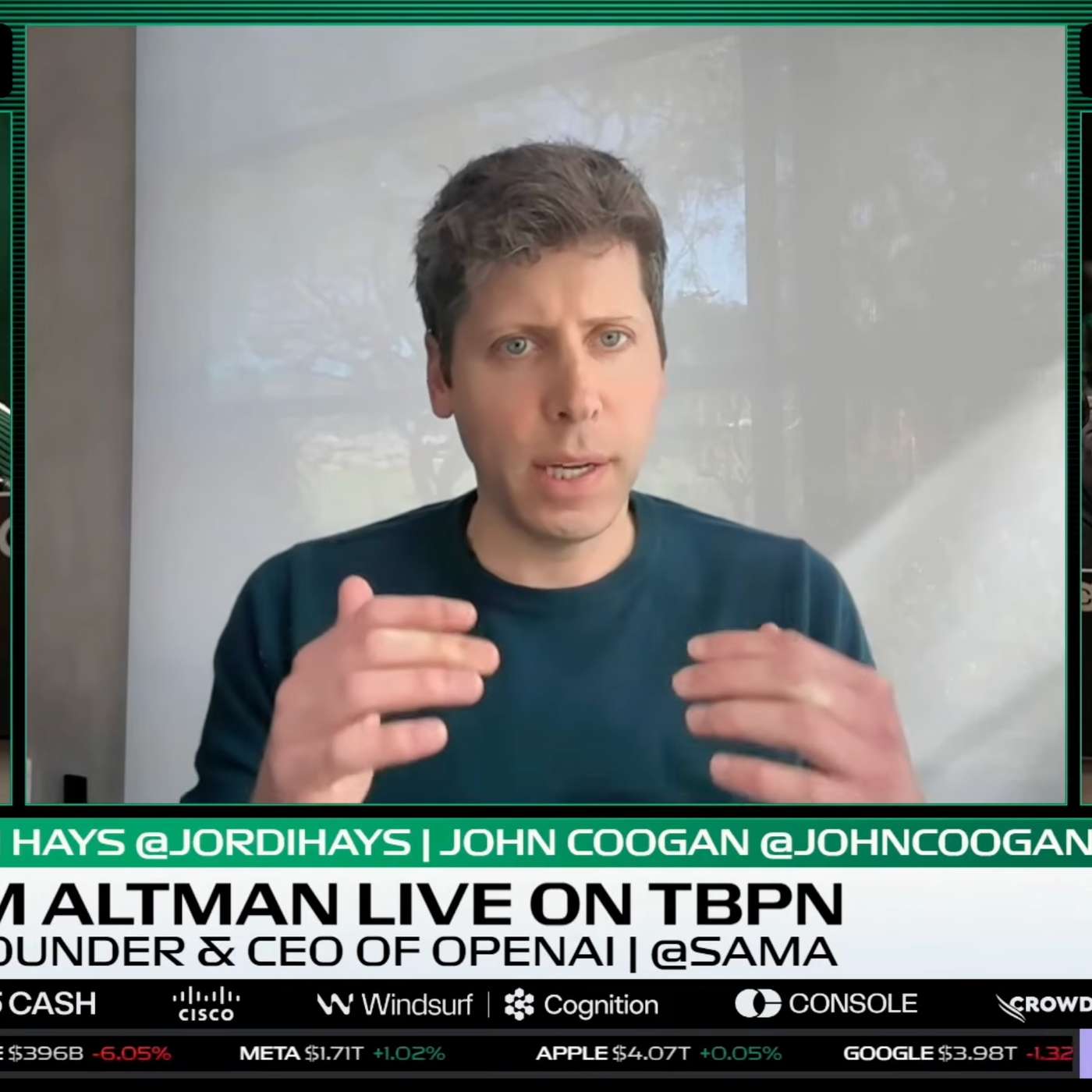
The novelty of new AI model capabilities is wearing off for consumers. The next competitive frontier is not about marginal gains in model performance but about creating superior products. The consensus is that current models are "good enough" for most applications, making product differentiation key.

As foundational AI models become commoditized, the key differentiator is shifting from marginal improvements in model capability to superior user experience and productization. Companies that focus on polish, ease of use, and thoughtful integration will win, making product managers the new heroes of the AI race.