Get your free personalized podcast brief
We scan new podcasts and send you the top 5 insights daily.
Normally, dopamine signals positive outcomes. However, in extreme survival states like starvation, its function inverts to signal punishment prediction errors. This powerfully reinforces learning about and avoiding threats rather than seeking rewards, ensuring survival takes precedence over all other goals.

Related Insights
Neuroscience shows pleasure and pain are co-located in the brain and work like a seesaw. When we experience pleasure, the brain immediately compensates by tilting towards pain to restore balance. This neurological 'come down' is why constant pleasure-seeking eventually leads to a state of chronic pain and craving.
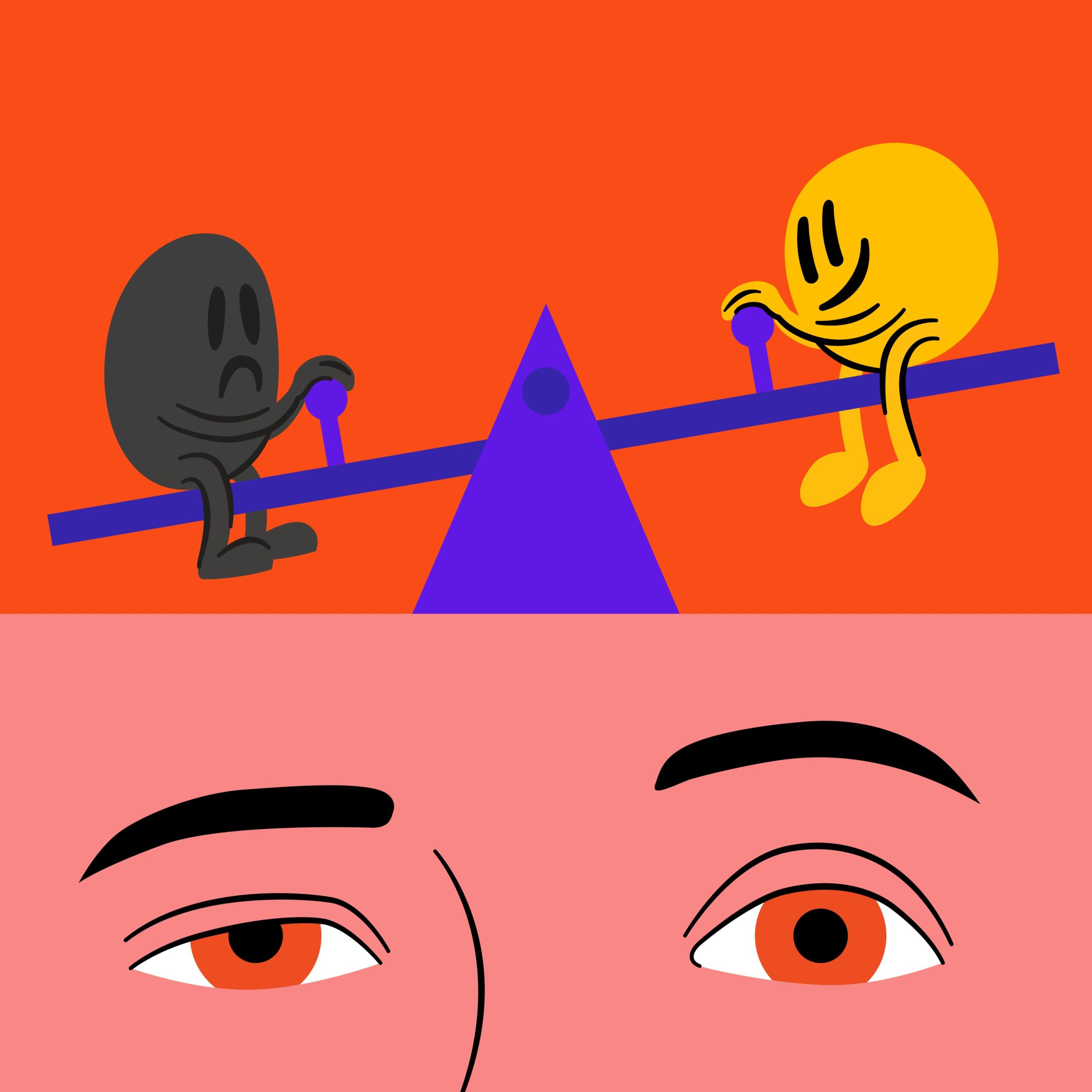
Dopamine is often misunderstood as a 'pleasure molecule.' Its more crucial role is in motivation—the drive to seek a reward. Experiments show rats without dopamine receptors enjoy food but won't move to get it, starving to death. This seeking behavior is often triggered by the brain's craving to escape a dopamine deficit state.
Reward isn't just about indulgence. The dopamine system can learn to value self-control and resistance. This is pathologically evident in anorexia but is also the mechanism behind healthy discipline. For athletes, the act of choosing training over socializing can itself become a dopaminergic reward, reinforcing difficult choices.
The brain's deliberative "Pause & Piece Together" system is suppressed by stress, which boosts the impulsive "Pursue" (reward) and "Protect" (threat) systems. This neurological process explains why we make rash choices when tired or under pressure.

An animal study shows a rat, when painfully shocked, will immediately try to get cocaine again even after the habit was extinguished. This models how humans under stress revert to high-dopamine rewards because the brain has encoded this as the fastest way out of any painful state.

Most believe dopamine spikes with rewards. In reality, it continuously tracks the difference between your current and next expectation, even without a final outcome. This "temporal difference error" is the brain's core learning mechanism, mirroring algorithms in advanced AI, which constantly updates your behavior as you move through the world.
Human brain recordings reveal a seesaw relationship between dopamine and serotonin. Dopamine levels rise with positive events or anticipation, while serotonin falls. Conversely, serotonin—the signal for negative outcomes or "active waiting"—rises in response to adversity, while dopamine falls. This opponent dynamic is crucial for learning and motivation.
The brain maintains a pain-pleasure balance. Constantly triggering pleasure (dopamine) causes the brain to overcompensate by activating pain pathways, leading to a chronic dopamine-deficient state that manifests as anxiety, irritability, and depression.

People will endure painful tasks if they are "reinforcing"—if the action leads to a deeply valued outcome (e.g., protecting family). This is different from a "reward," which is merely pleasant. True motivation is tied to the meaning behind the struggle, which can turn a negative stimulus into a positive driver.

The feeling of dissatisfaction after achieving a major goal is a feature, not a bug. The brain's dopamine system is designed to keep you moving forward. If any single achievement—a partner, a food, a drug—were permanently satisfying, the drive to live and procreate would cease. The system ensures you always have another place to go.