Get your free personalized podcast brief
We scan new podcasts and send you the top 5 insights daily.
The rapid release of ever-smarter AI models is outpacing the average developer's and business person's ability to leverage the incremental gains. This suggests future competition will shift from raw intelligence to speed, cost, and usability, as users have hit a saturation point for absorbing new capabilities.

Related Insights
As frontier AI models reach a plateau of perceived intelligence, the key differentiator is shifting to user experience. Low-latency, reliable performance is becoming more critical than marginal gains on benchmarks, making speed the next major competitive vector for AI products like ChatGPT.

The flattening of consumer AI usage is attributed to a "capabilities overhang." While models have become vastly more powerful, the majority of users still engage with them in basic, information-retrieval ways (e.g., checking sports scores), failing to leverage their more advanced, agentic capabilities.

As AI capabilities advance exponentially, the gap between what the technology can do and what organizations have actually deployed is increasing. This 'capability overhang' creates a compounding advantage for fast-adopting leaders and an existential risk for laggards.

A paradox of rapid AI progress is the widening "expectation gap." As users become accustomed to AI's power, their expectations for its capabilities grow even faster than the technology itself. This leads to a persistent feeling of frustration, even though the tools are objectively better than they were a year ago.

Sam Altman argues there is a massive "capability overhang" where models are far more powerful than current tools allow users to leverage. He believes the biggest gains will come from improving user interfaces and workflows, not just from increasing raw AI intelligence.

The novelty of new AI model capabilities is wearing off for consumers. The next competitive frontier is not about marginal gains in model performance but about creating superior products. The consensus is that current models are "good enough" for most applications, making product differentiation key.

As foundational AI models become commoditized, the key differentiator is shifting from marginal improvements in model capability to superior user experience and productization. Companies that focus on polish, ease of use, and thoughtful integration will win, making product managers the new heroes of the AI race.
The proliferation of AI has dramatically reduced development time, shifting the primary constraint in product delivery from engineering capacity to the customer's ability to learn and integrate new features into their workflow. More output no longer guarantees more value.

Don't assume that a "good enough" cheap model will satisfy all future needs. Jeff Dean argues that as AI models become more capable, users' expectations and the complexity of their requests grow in tandem. This creates a perpetual need for pushing the performance frontier, as today's complex tasks become tomorrow's standard expectations.
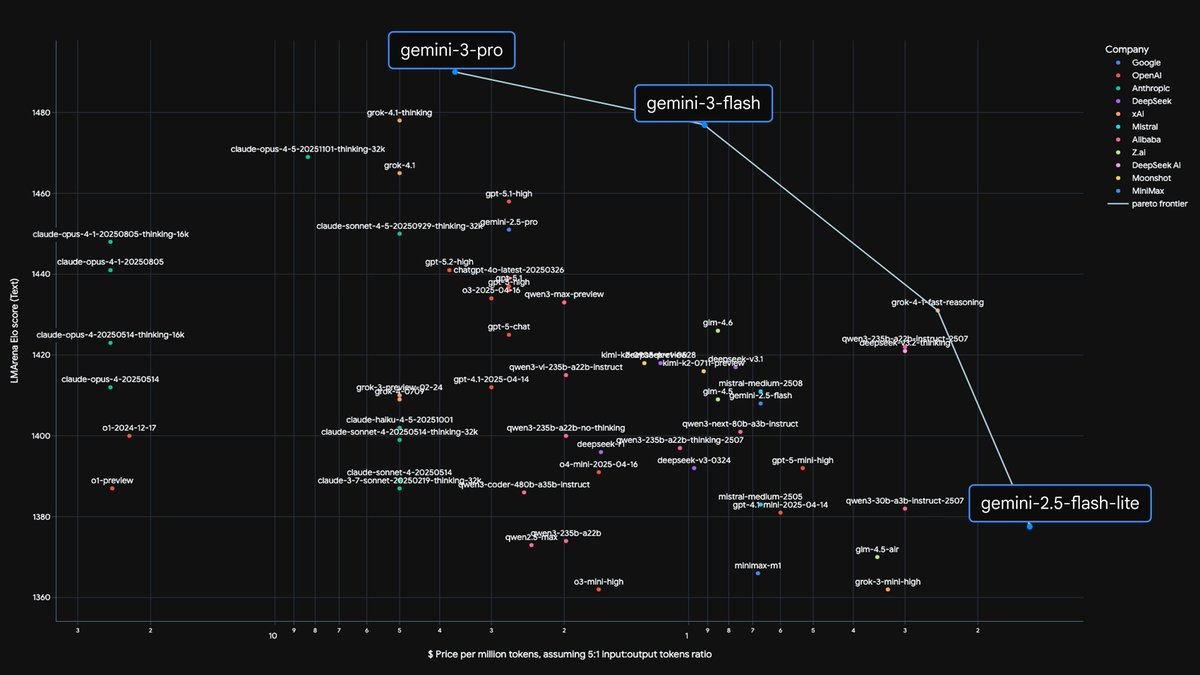
OpenAI's CEO believes a significant gap exists between what current AI models can do and how people actually use them. He calls this "overhang," suggesting most users still query powerful models with simple tasks, leaving immense economic value untapped because human workflows adapt slowly.
