Get your free personalized podcast brief
We scan new podcasts and send you the top 5 insights daily.
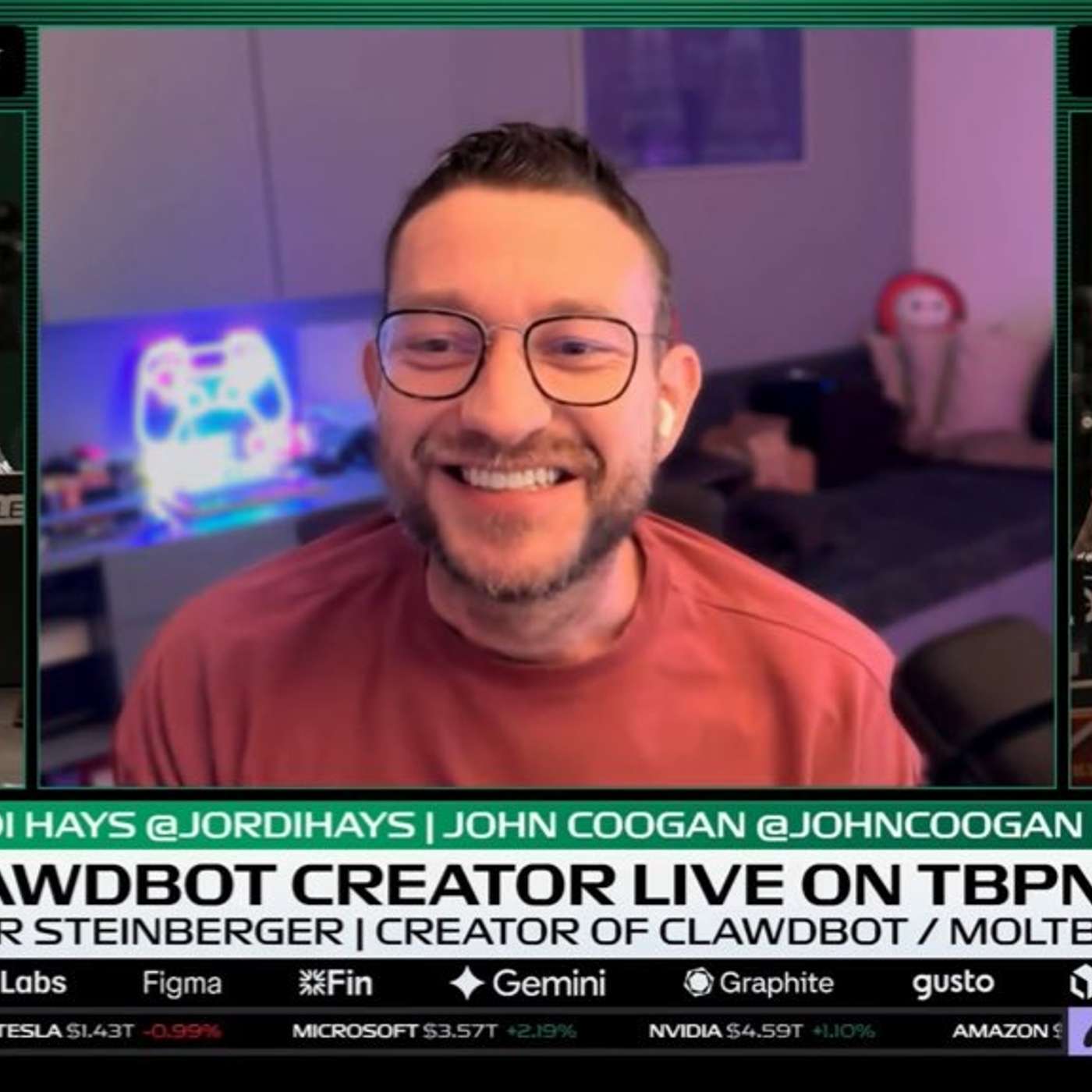
Instead of designing tools for human usability, the creator built command-line interfaces (CLIs) that align with how AI models process information. This "agentic-driven" approach allows an AI to easily understand and scale its capabilities across numerous small, single-purpose programs on a user's machine.
Related Insights
The new paradigm for building powerful tools is to design them for AI models. Instead of complex GUIs, developers should create simple, well-documented command-line interfaces (CLIs). Agents can easily understand and chain these CLIs together, exponentially increasing their capabilities far more effectively than trying to navigate a human-centric UI.

The power of tools like Claude Code comes from giving the AI access to fundamental command-line tools (e.g., `bash`, `grep`). This allows the AI to compose novel solutions and lets product teams define new features using simple English prompts rather than hard-coded logic.

The AI industry fixated on consumer agent demos like booking flights. Moltbot's viral adoption reveals the more impactful immediate use case is integrating with the operating system to perform fundamental computer tasks like research, file generation, and reporting. This OS-level utility is proving more valuable than single-purpose consumer actions.

The focus on browser automation for AI agents was misplaced. Tools like Moltbot demonstrate the real power lies in an OS-level agent that can interact with all applications, data, and CLIs on a user's machine, effectively bypassing the browser as the primary interface for tasks.
AI platforms using the same base model (e.g., Claude) can produce vastly different results. The key differentiator is the proprietary 'agent' layer built on top, which gives the model specific tools to interact with code (read, write, edit files). A superior agent leads to superior performance.

When building for AI-powered environments, design tools to be equally usable by humans and the AI model. An elegant, simple design for humans often translates directly into an effective tool for AI agents, simplifying development and promoting shared logic.
In this software paradigm, user actions (like button clicks) trigger prompts to a core AI agent rather than executing pre-written code. The application's behavior is emergent and flexible, defined by the agent's capabilities, not rigid, hard-coded rules.
The best UI for an AI tool is a direct function of the underlying model's power. A more capable model unlocks more autonomous 'form factors.' For example, the sudden rise of CLI agents was only possible once models like Claude 3 became capable enough to reliably handle multi-step tasks.
The terminal-first interface of Claude Code wasn't a deliberate design choice. It emerged organically from prototyping an API client in the terminal, which unexpectedly revealed the power of giving an AI model direct access to the same tools (like bash) that a developer uses.
A new software paradigm, "agent-native architecture," treats AI as a core component, not an add-on. This progresses in levels: the agent can do any UI action, trigger any backend code, and finally, perform any developer task like writing and deploying new code, enabling user-driven app customization.