Get your free personalized podcast brief
We scan new podcasts and send you the top 5 insights daily.
Trump builds a mental model of how an opponent should react to threats (i.e., capitulate). When they don't, he is genuinely shocked and escalates further, believing more pressure will force them into his pre-scripted role. This reveals a rigid pattern behind seemingly chaotic behavior.

Related Insights
Trump's erratic approach isn't random; it's a strategy to create chaos and uncertainty. This keeps adversaries off-balance, allowing him to exploit openings that emerge, much like a disruptive CEO. He is comfortable with instability and uses it as a tool for negotiation and advantage.

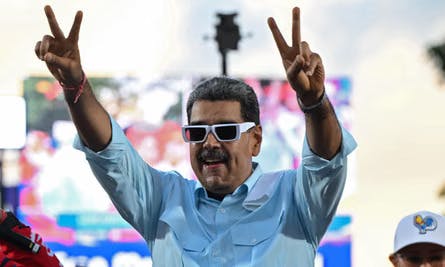
Authoritarian leaders who publicly mock or dismiss threats risk triggering a military response driven by personal pride. Venezuelan President Maduro's televised dancing was reportedly perceived by the Trump administration as calling their bluff, demonstrating how avoiding the appearance of being a 'chump' can become a primary motivator for military action.
In conflicts, a critical error is to believe that escalating pressure will automatically force an opponent to back down. This overlooks that for the adversary, the fight may be existential, leaving them no room to retreat and thus leading to a more dangerous conflict.

Much of the public conflict between powerful leaders isn't about substantive policy differences but about ego. The desire to avoid looking weak or like they are capitulating leads to political theater that prevents rational cooperation, even when both sides know the eventual outcome is inevitable.

Leaders often assume that applying pressure will force an opponent to the negotiating table. This strategy can fail when the adversary operates under a different logic or, as with Iran's decentralized military, when there is no single authority left to negotiate with, revealing a critical cognitive bias.

Trump's 'hokey pokey' with tariffs and threats isn't indecisiveness but a consistent strategy: make an agreement, threaten a severe and immediate penalty for breaking it, and actually follow through. This makes his threats credible and functions as a powerful deterrent that administrations lacking his perceived volatility cannot replicate.

The "TACO" acronym serves as a predictive model for Trump's foreign policy. It suggests a pattern of aggressive posturing and military action followed by a rapid search for a diplomatic "off-ramp" once resistance is met. Markets and adversaries can anticipate this behavior, expecting a short conflict despite initial escalation.
Trump's aggressive rhetoric, like threatening to bomb Iran, is a recurring negotiating tactic. Opponents misinterpret it as literal intent, but his failure to act after deadlines pass, as with the Strait of Hormuz, reveals it's a bluff to gain leverage.
Trump's strategy of escalating threats is based on the model that rational actors will capitulate to overwhelming force. This fails when adversaries, viewing conflict as existential, operate under a different calculus, leading to unpredictable and dangerous escalations.

Donald Trump's seemingly chaotic tariff policy functions as a 'mixed strategy' in game theory. By introducing randomness and forcing a response, he makes other nations reveal their true intentions, distinguishing allies willing to negotiate from rivals who default to immediate hostility, such as China.