Get your free personalized podcast brief
We scan new podcasts and send you the top 5 insights daily.
Using AI to generate generic content creates shallow thought leadership. The truly powerful application is using AI as an analytical engine. Feed it your entire body of work—transcripts, articles, notes—to uncover hidden themes, patterns, and core ideas that you've forgotten or couldn't see yourself.

Related Insights
Instead of using AI for basic content generation, leverage it as a strategic tool to challenge your thinking. Prompt it to poke holes in your arguments, identify unseen weaknesses, and act as a thought partner, not just a writer.

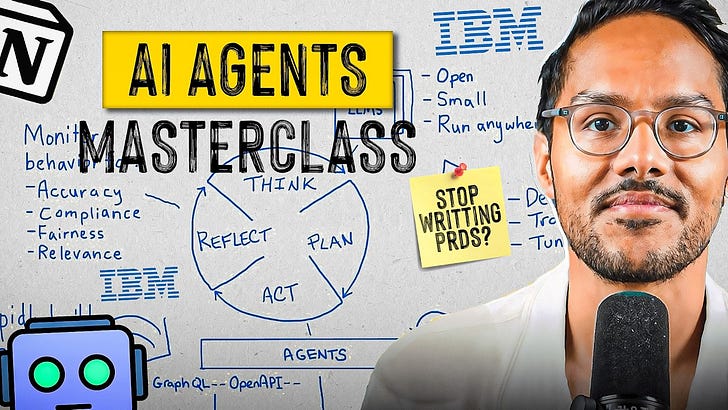
While AI tools once gave creators an edge, they now risk producing democratized, undifferentiated output. IBM's AI VP, who grew to 200k followers, now uses AI less. The new edge is spending more time on unique human thinking and using AI only for initial ideation, not final writing.
The true power of AI in content isn't generating text, which creates generic content. Instead, use AI as a research partner to analyze existing narratives, identify saturated topics, and generate unique, counter-intuitive angles. This shifts AI's role from a writer to a strategist, ensuring your content is differentiated from the start.

The most effective use of AI in content is not generating generic articles. Instead, feed it unique primary sources like expert interview transcripts or customer call recordings. Ask it to extract key highlights and structure a detailed outline, pairing human insight with AI's summarization power.
The 'generative' AI label is misleading. While its ability to write is powerful, its ability to read, analyze, and synthesize vast amounts of unstructured information is arguably more valuable for day-to-day knowledge work, supporting the critical thinking that precedes artifact creation.

The most effective way to use AI is not for initial research but for synthesis. After you've gathered and vetted high-quality sources, feed them to an AI to identify common themes, find gaps, and pinpoint outliers. This dramatically speeds up analysis without sacrificing quality.

The most valuable use of AI in content isn't generating generic copy. Instead, use it for high-leverage tasks like synthesizing long-form video into clips, analyzing performance data, and as a pre-publication check to flag potential misinterpretations or insensitive timing.

The most effective and authentic way to use AI is as an organizational tool. Feed it your own raw thoughts, opinions, and experiences, and ask it to structure them logically. This enhances clarity without sacrificing your unique voice.

Don't use AI to generate generic thought leadership, which often just regurgitates existing content. The real power is using AI as a 'steroid' for your own ideas. Architect the core content yourself, then use AI to turbocharge research and data integration to make it 10x better.
Top performers don't use AI to produce more mediocre documents. Instead, they use the time saved to go deeper—aggressively interrogating AI output, fixing underlying logic, and having critical strategic conversations they previously skipped. This transforms generated 'slop' into exceptional work.
