Get your free personalized podcast brief
We scan new podcasts and send you the top 5 insights daily.
Contrary to the belief that it has no current utility, quantum computing is already being used commercially and generating revenue. Major companies like HSBC and AstraZeneca are leveraging quantum machines via cloud platforms (AWS, Azure) for practical applications like financial modeling and drug discovery, proving its value today.

Related Insights
Digital computing, the standard for 80 years, is too power-hungry for scalable AI. Unconventional AI's Naveen Rao is betting on analog computing, which uses physics to perform calculations, as a more energy-efficient substrate for the unique demands of intelligent, stochastic workloads.

Focusing on AI for cost savings yields incremental gains. The transformative value comes from rethinking entire workflows to drive top-line growth. This is achieved by either delivering a service much faster or by expanding a high-touch service to a vastly larger audience ("do more").

In the current market, AI companies see explosive growth through two primary vectors: attaching to the massive AI compute spend or directly replacing human labor. Companies merely using AI to improve an existing product without hitting one of these drivers risk being discounted as they lack a clear, exponential growth narrative.

C-suites are more motivated to adopt AI for revenue-generating "front office" activities (like investment analysis) than for cost-saving "back office" automation. The direct, tangible impact on making more money overcomes the organizational inertia that often stalls efficiency-focused technology deployments.
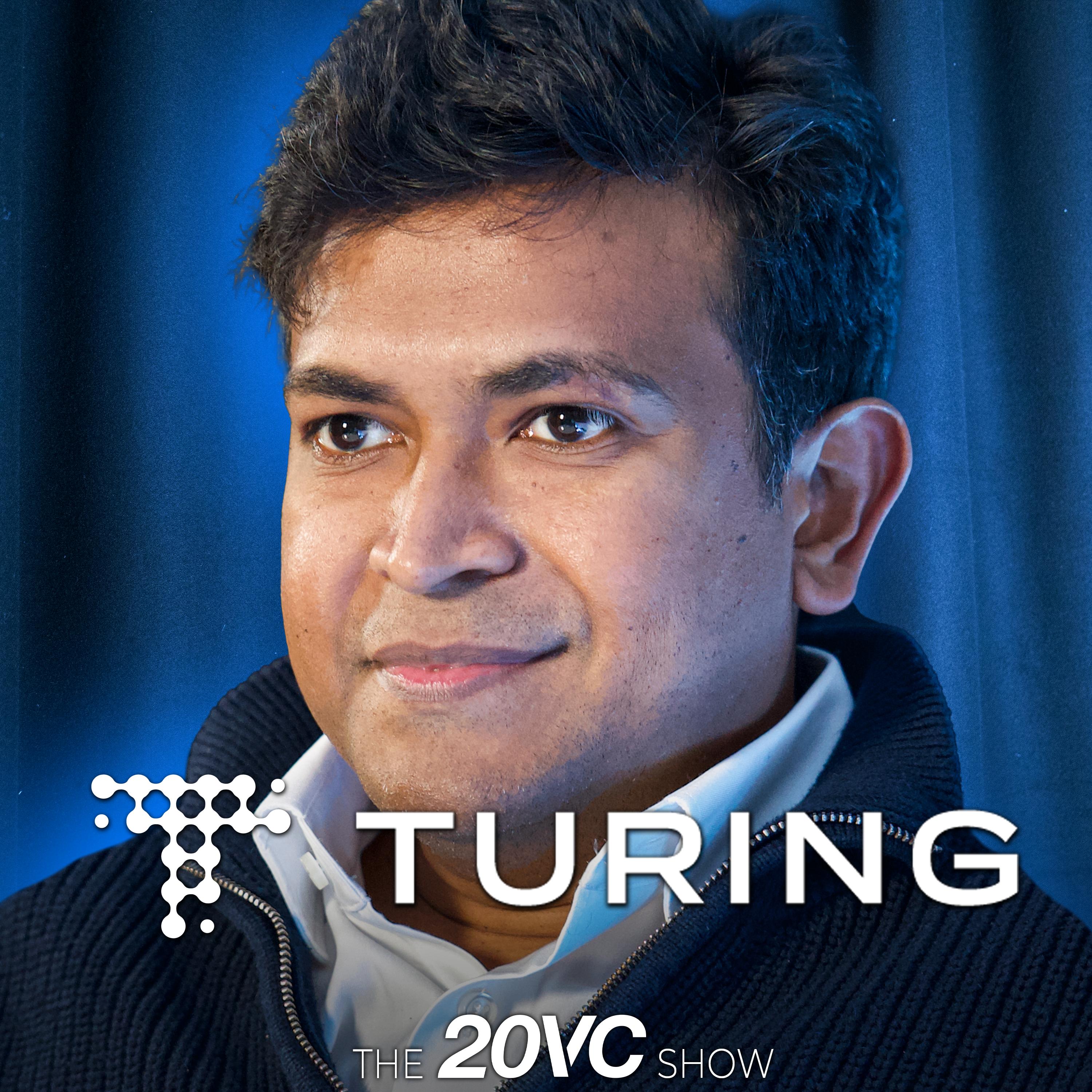
Scientific research is being transformed from a physical to a digital process. Like musicians using GarageBand, scientists will soon use cloud platforms to command remote robotic labs to run experiments. This decouples the scientist from the physical bench, turning a capital expense into a recurring operational expense.

Contrary to the view that useful AI agents are a decade away, Andrew Ng asserts that agentic workflows are already solving complex business problems. He cites examples from his portfolio in tariff compliance and legal document processing that would be impossible without current agentic AI systems.
Nvidia CEO Jensen Huang's public stance on quantum computing shifted dramatically within months, from a 15-30 year timeline to calling it an 'inflection point' and investing billions. This rapid reversal from a key leader in parallel processing suggests a significant, non-public breakthrough or acceleration is underway in the quantum field.
Public announcements about quantum computing progress often cite high numbers of 'physical qubits,' a misleading metric due to high error rates. The crucial, error-corrected 'logical qubits' are what matter for breaking encryption, and their number is orders of magnitude lower, providing a more realistic view of the technology's current state.
Anthropic is making its models available on AWS, Azure, and Google Cloud. This multi-cloud approach is a deliberate business strategy to position itself as a neutral infrastructure provider. Unlike competitors who might build competing apps, this signals to customers that Anthropic aims to be a partner, not a competitor.
A symbiotic relationship exists between AI and quantum computing, where AI is used to significantly speed up the optimization and calibration of quantum machines. By automating solutions to the critical 'noise' and error-rate problems, AI is shortening the development timeline for achieving stable, powerful quantum computers.