Get your free personalized podcast brief
We scan new podcasts and send you the top 5 insights daily.
As AI automates administrative and clinical tasks, the U.S. economy may shift from services to a model based on community and connection. Healthcare could lead this by creating roles like paid caregivers and companions, funded through programs like Medicare Advantage.

Related Insights
The new Medicare 'Access' code for AI in chronic care is priced too low to be profitable if humans are kept in the loop. This clever incentive design forces providers to adopt genuine AI-driven leverage rather than simply relabeling human effort, a first for healthcare technology.

While fears of AI-driven job loss are valid in some industries, healthcare faces a massive and growing supply-demand mismatch. With record shortages of clinicians and unlimited demand, AI is less a job destroyer and more a critical tool to augment existing workers.
Technological advancement creates a paradox: as machines automate more tasks, the economic value of uniquely human and social interaction increases. This structural shift helps explain why recent job growth is so concentrated in sectors like health, education, and hospitality.

As AI handles complex diagnoses and treatment data, the doctor's primary role will shift to the 'biopsychosocial' aspects of care—navigating family dynamics, patient psychology, and social support for life-and-death decisions that AI cannot replicate.

The future of healthcare will see AI handling initial patient consultations, effectively becoming the primary care doctor. This will streamline the process, sending patients directly to specialized clinics for diagnostic tests, bypassing traditional, inefficient doctor visits.
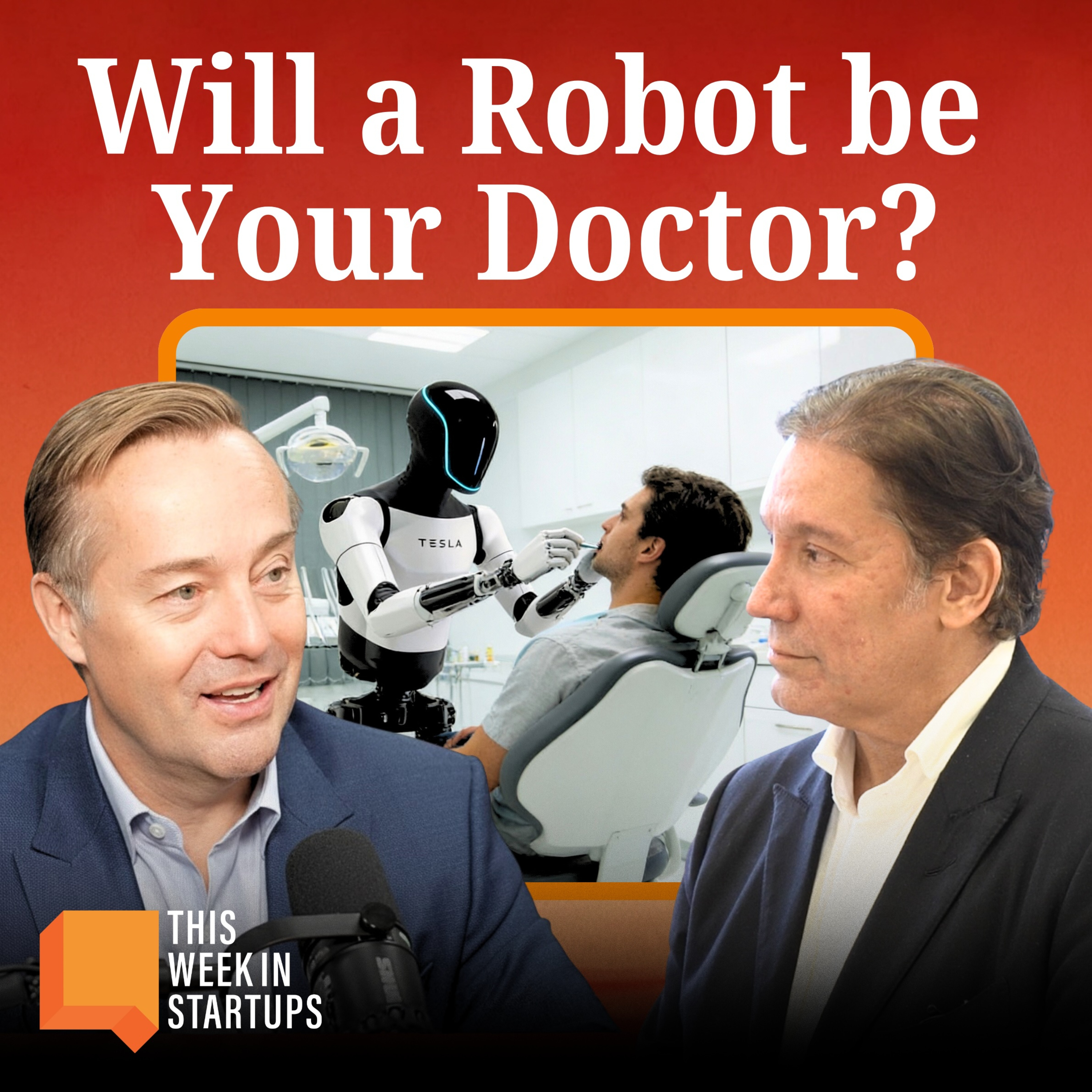
The most significant opportunity for AI in healthcare lies not in optimizing existing software, but in automating 'net new' areas that once required human judgment. Functions like patient engagement, scheduling, and symptom triage are seeing explosive growth as AI steps into roles previously held only by staff.

The immense regulatory complexity in U.S. healthcare creates an estimated $500 billion "tax" of administrative bloat. The non-obvious opportunity is that by using AI to eliminate this waste, the savings could be redirected to fund expanded patient care, rather than just being captured as profit.

As AI automates tasks and increases productivity, it also diminishes natural social interaction. This creates a new market for paid companionship, like "rent-a-friend" services, where people can hire others for social activities to fill the void left by technology-induced isolation.

While the caring economy is often cited as a future source of human jobs, AI's ability to be infinitely patient gives it an "unfair advantage" in roles like medicine and teaching. AI doctors already receive higher ratings for bedside manner, challenging the assumption that these roles are uniquely human.

Instead of replacing doctors, AI will serve as a force multiplier for scarce General Practitioners. By automating paperwork and answering repetitive patient questions, AI frees doctors to focus on high-value human interaction and complex diagnosis.
