Get your free personalized podcast brief
We scan new podcasts and send you the top 5 insights daily.
A rebrand should be viewed as building the fundamental foundation of a business. Without it, growth attempts are superficial and temporary. With a solid brand, the company has a stable base that can support significant scaling and prevent the business from hitting a growth ceiling.

Related Insights
A brand's history is a valuable asset. The most powerful ideas for future growth are often rooted in the brand's 'archaeology.' Reviving timeless concepts, like the Pepsi Taste Challenge, and making them culturally relevant today is often more effective than chasing novelty.

A successful rebrand doesn't create a new personality; it amplifies the company's true, existing identity. Just as money magnifies a person's character, a strong brand makes a company's core values—like community involvement—bigger, louder, and more public, forcing them to be more intentional.
Before scaling paid acquisition, invest in a robust brand system. A well-defined brand DNA (art direction, voice, tone) is not a vanity project; it's the necessary infrastructure to efficiently generate the thousands of cohesive creative assets required to test and scale performance marketing campaigns successfully.

Stop viewing brand as a top-of-funnel activity. For elite companies, brand isn't a precursor to selling; it is the selling. It creates inbound demand that bypasses traditional conversion tactics like search ads or affiliate marketing, making it the most powerful and sustainable growth engine.

Former AB InBev CMO Chris Burgrave argues that brand building is a financial activity, not just a marketing one. A brand's ultimate purpose is to de-risk a business by creating repeatable, predictable future cash flows. This reframes the conversation from soft metrics to tangible financial outcomes like growth, profit, and risk reduction.
Branding is not just about reflecting a company's past; it can be a forward-looking tool for change. By defining a new, aspirational identity, a rebrand provides a clear path and a public commitment, guiding the organization to evolve and actively become the company it wants to be.
David Aaker posits that true market growth comes only from disruptive innovation, not from "my brand is better than yours" incrementalism. He criticizes seminal works on innovation for ignoring that branding is essential to position the new category, build barriers to entry, and make the innovation successful.
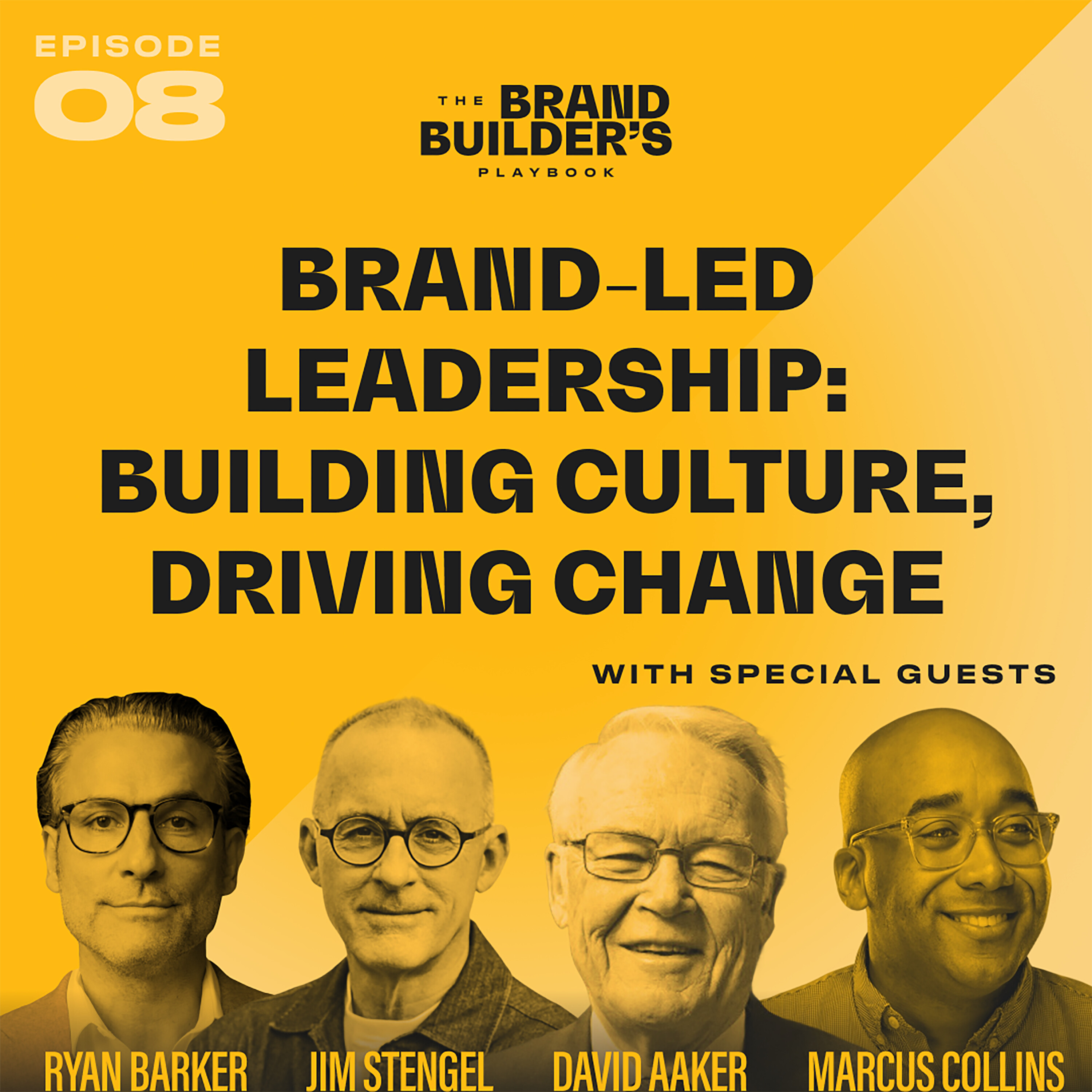
Reacting to a regression towards tactical performance marketing, branding expert David Aaker introduced his "Five Bs" framework (Relevance, Image, Loyalty, Portfolio, Equity). It reminds leaders that brand is a long-term asset and notably includes "Brand Portfolio" to emphasize that a strong brand rarely stands alone, requiring co-brands and endorsers.
In a crowded market, brand is defined by the product experience, not marketing campaigns. Every interaction must evoke the intended brand feeling (e.g., "lovable"). This transforms brand into a core product responsibility and creates a powerful, defensible moat that activates word-of-mouth and differentiates you from competitors.

LoveSack operated successfully for years based on product instinct alone. However, transformational growth occurred only after the company intentionally defined its core brand philosophy—'Designed for Life'—and then amplified that clear message with advertising. This shows that a well-defined brand story is a powerful, distinct growth lever, separate from initial product-market fit.