Get your free personalized podcast brief
We scan new podcasts and send you the top 5 insights daily.
Kalshi operates with roughly 130 employees reporting directly to the two co-founders. While admittedly "chaotic," the CEO argues this lack of hierarchy allows the company to constantly and frictionlessly reorient around new opportunities and threats.

Related Insights
Flat hierarchies are suboptimal. The ideal organization has a 'quantum' structure that can crystallize into the right shape to solve today's problem, then dissolve and reform for tomorrow's. This plasticity avoids the ossification seen in large companies that only reorg every five years when things are completely broken.
![Shyam Sankar - Celebrating Heretics - [Invest Like the Best, EP.462] thumbnail](https://megaphone.imgix.net/podcasts/9dee904c-1bbf-11f1-a1a6-0b200fdaa525/image/57910f03f82ede99259c53f5e5404f6a.jpg?ixlib=rails-4.3.1&max-w=3000&max-h=3000&fit=crop&auto=format,compress)
Kalshi's co-founders succeed with a semi-co-CEO model where one handles high-level strategy and low-level details (like marketing copy), while the other runs the company's core operations. This division creates a productive, balancing tension.
Ben Horowitz advises against the traditional CEO/COO 'Mr. Outside/Mr. Inside' structure in small companies. He argues it creates a flawed communication architecture, akin to having two people in charge, which hinders agility. A flatter structure is generally better for an early-stage tech company.

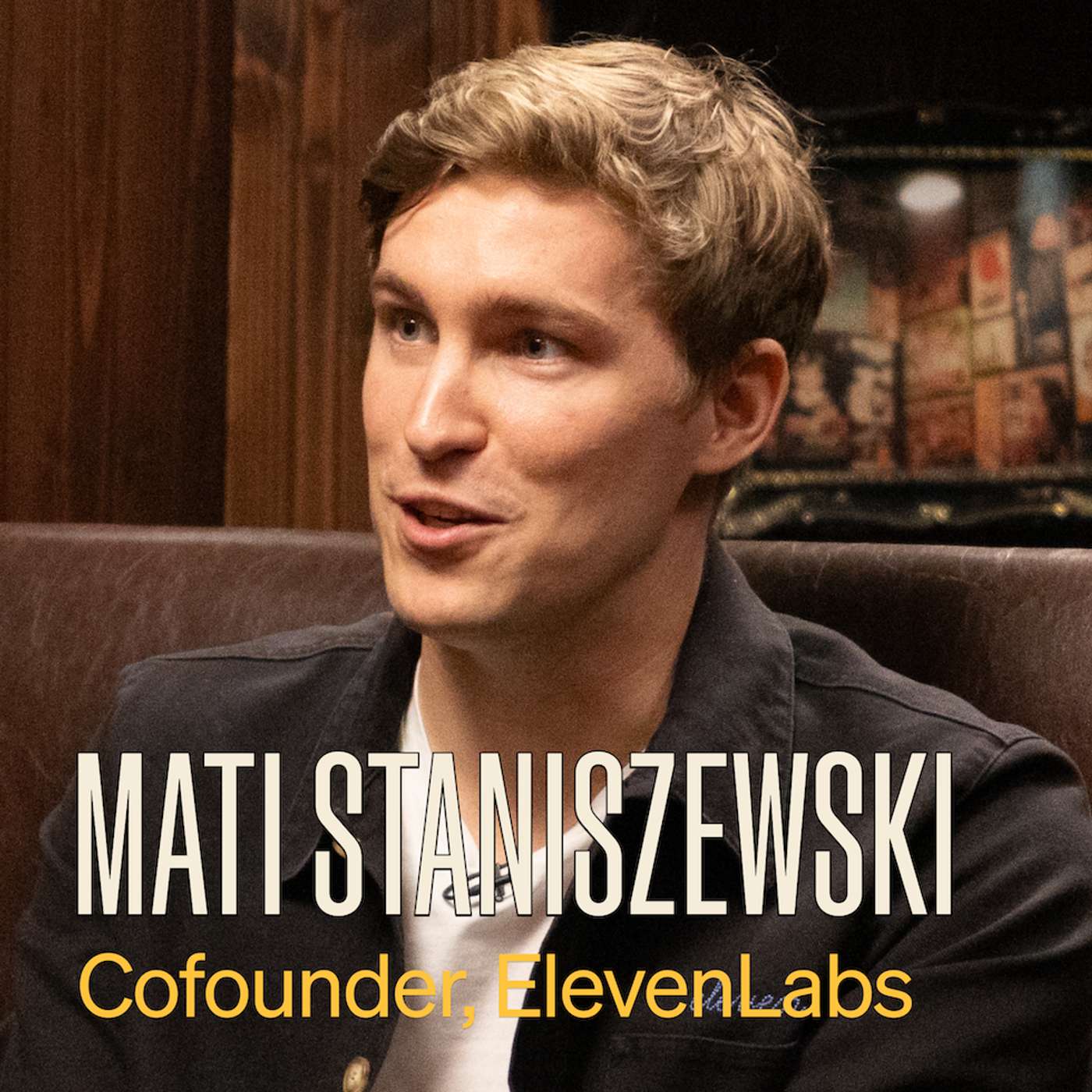
Traditional management suggests a span of control around 8. By leveraging AI and fostering high agency, ElevenLabs builds a much flatter organization where leaders, including the co-founders, manage over 15 direct reports each. This structure increases speed and reduces bureaucracy.
Huang eschews traditional hierarchy, engaging directly with employees at all levels and delivering feedback publicly. This "parallel processing" management style ensures rapid, simultaneous learning across the organization, mirroring the architecture of the GPUs his company builds and creating a uniquely flat structure for a company of its size.

A perfectly clean org chart suggests a rigid structure ill-suited for dynamic business needs. Axon's CPTO advocates for optimizing structure around the current people, mission, and moment, prioritizing effectiveness over a tidy PowerPoint slide. This embraces fluidity and adaptability as organizational strengths.

Gamma maintains a flat, high-impact organization by eschewing traditional managers. Instead, all leaders are "player-coaches"—they actively contribute as individual contributors while also mentoring their teams. This keeps leadership close to the work and empowers teams to adapt quickly without top-down commands.

The exponential increase in individual output from AI tools negates the need for traditional, multi-layered management structures. Cash App flattened its design org to just three layers from the CEO, enabling faster decision-making and adaptation to rapid technological change.

The true purpose of a flat organization is to enable rapid information flow and collaboration, preventing data silos. It allows any junior engineer to directly communicate with senior leadership, accelerating decision-making and problem-solving across the company without having to funnel information through managers.
To achieve massive output with a small team (~127 people), Kalshi relies on a few core principles. The founders set a relentless work pace, maintain a flat organization with many direct reports, and dynamically assign talent to the company's biggest problems rather than adhering to a rigid org chart.
