Get your free personalized podcast brief
We scan new podcasts and send you the top 5 insights daily.
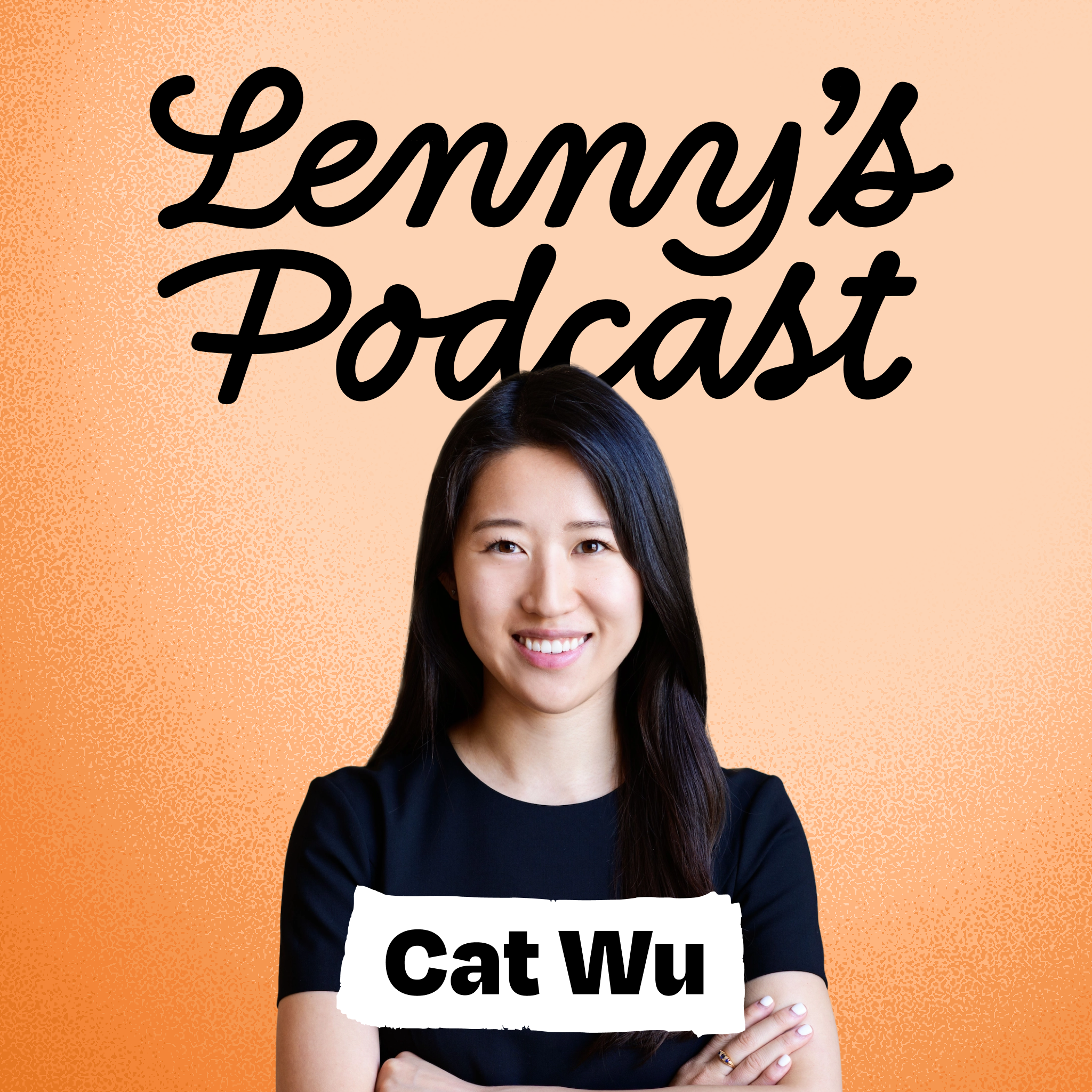
The Head of Product for Claude Code defines her role as creating the pragmatic path to the tech lead's long-term "AGI-pilled" vision. She focuses on cross-functional execution to clear the shipping path, creating a powerful visionary/executor leadership dynamic.
Related Insights
The traditional, linear handoff from product (PRDs) to design to dev is too slow for AI's rapid iteration cycles. Leading companies merge these roles into smaller, senior teams where design and product deliver functional prototypes directly to engineering, collapsing the feedback loop and accelerating development.

The most effective team structure for new AI products involves a "co-founder" pairing. One person is a designer who can also build and rapidly prototype ideas. The other is a traditional software engineer who follows behind, ensuring the underlying architecture is robust and scalable, effectively "paving the trail."

The core job of a Product Manager is not writing specs or talking to press; it's a leadership role. Success means getting a product to market that wins. This requires influencing engineering, marketing, and sales without any formal authority, making it the ultimate training ground for real leadership.

In today's fast-paced tech landscape, especially in AI, there is no room for leaders who only manage people. Every manager, up to the CPO, must be a "builder" capable of diving into the details—whether adjusting copy or pushing pixels—to effectively guide their teams.
To manage the strain on product managers from hyper-productive engineering teams, Anthropic has a rule: if a project is two engineering weeks or less, the engineer is the PM. They are responsible for stakeholder management (security, legal, etc.), with the official PM acting only as an advisor.

The traditional PM function, which builds sequential, multi-month roadmaps based on customer feedback, is ill-suited for AI. With core capabilities evolving weekly, AI companies must embed research teams directly with customer-facing teams to stay agile, rendering the classic PM role ineffective.
Instead of hiring more PMs to manage faster engineering cycles, Anthropic focuses on hiring engineers with strong product taste who can ship end-to-end. This reduces overhead and blurs traditional roles, as most PMs and designers also have engineering backgrounds.
AI tools reduce the communication overhead and lengthy handoffs that traditionally separated product and engineering. By streamlining the path from idea to code, AI makes the combined Chief Product and Technology Officer (CPTO) role more viable, enabling a single leader to manage both functions effectively.
With AI accelerating development from months to days, PMs must focus on unblocking engineers and launching weekly. This supersedes traditional emphasis on long-term, cross-team roadmap alignment, which was crucial when code was more expensive to produce.
Optimal product leadership structures separate the long-term, visionary role from the tactical, execution role. One person focuses on the big picture and selling the future ("the house"), while the other translates that chaos into immediate, actionable work ("fixing the walls").
