Get your free personalized podcast brief
We scan new podcasts and send you the top 5 insights daily.
After its overt sports investments failed to improve its reputation, Saudi Arabia's sovereign wealth fund is now seeking soft power through strategic investments in media, AI, and gaming. This "power washing" strategy aims for subtle influence rather than direct PR.

Related Insights
Sovereign wealth funds from the Gulf are investing heavily in the gaming industry, which is larger than film and TV combined. This is a deliberate, long-term strategy to diversify their economies away from oil by acquiring valuable, globally-relevant intellectual property and capturing a new generation of consumers.

China's promotion of open-weight models is a strategic maneuver to exert global influence. By controlling the underlying models that answer questions about history, borders, and values, a nation can shape global narratives and project soft power, much like Hollywood did for the U.S.

Meta's appointment of Dina Powell-McCormick as president is a strategic move to leverage her deep ties to both Middle Eastern sovereign wealth funds and the Trump administration. This positions Meta to fund its massive AI infrastructure buildout and navigate the critical intersection of global politics and business.

Leading sovereign funds like Saudi Arabia's PIF and New Mexico's SIC are evolving beyond generating returns. They are now the primary policy tools for ambitious national goals, such as transitioning to a net-zero economy or funding universal childcare, directly tying investment success to tangible societal outcomes.

Saudi Arabia's multi-billion dollar investment in sports like LIV Golf to improve its image backfired. The media consistently framed it as "sports washing," which kept the underlying human rights issues in the public conversation, ultimately defeating the campaign's purpose.
Beyond the US and China, Saudi Arabia is positioned to become the third-largest AI infrastructure country. The national strategy leverages its abundance of land and power not just for oil exports, but to lead the world in "energy exports via tokens," effectively selling compute power globally.
Unlike US industrial CEOs, who are often finance-focused and risk-averse, leaders in the UAE and Saudi Arabia see technological transformation as vital for national survival. This existential pressure drives them to make bigger, bolder bets on AI and robotics to future-proof their economies.
Middle Eastern countries are making massive sovereign AI investments to diversify their economies. They are leveraging their core advantage—cheap energy—to power massive compute infrastructure, aiming to shift from an economy based on exporting hydrocarbons to one based on exporting intelligence and tokens.

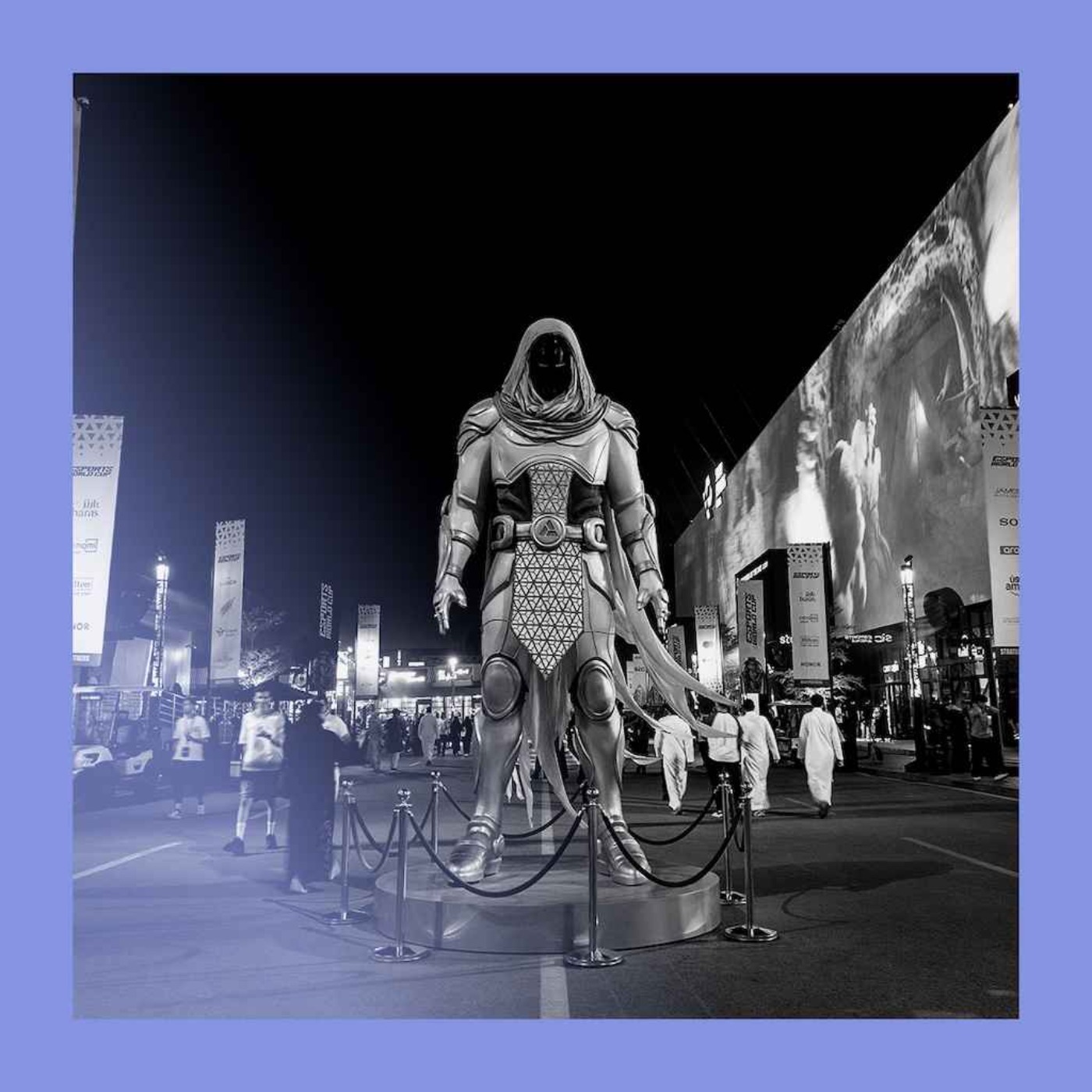
Beyond financial returns and 'game washing,' Saudi Arabia's push into the gaming industry is a long-term soft power strategy. The goal is to create games based on the region's myths and legends, similar to how China successfully exported its culture through games like 'Black Myth Wukong,' thereby shaping its global image.
LIV Golf's CEO reveals that its sovereign wealth fund backer evaluates the venture on two types of ROI: financial 'Return on Investment' and brand-enhancing 'Return on Image.' This dual-metric approach justifies investments that also drive economic impact, tourism, and global influence for the funding nation.