Get your free personalized podcast brief
We scan new podcasts and send you the top 5 insights daily.
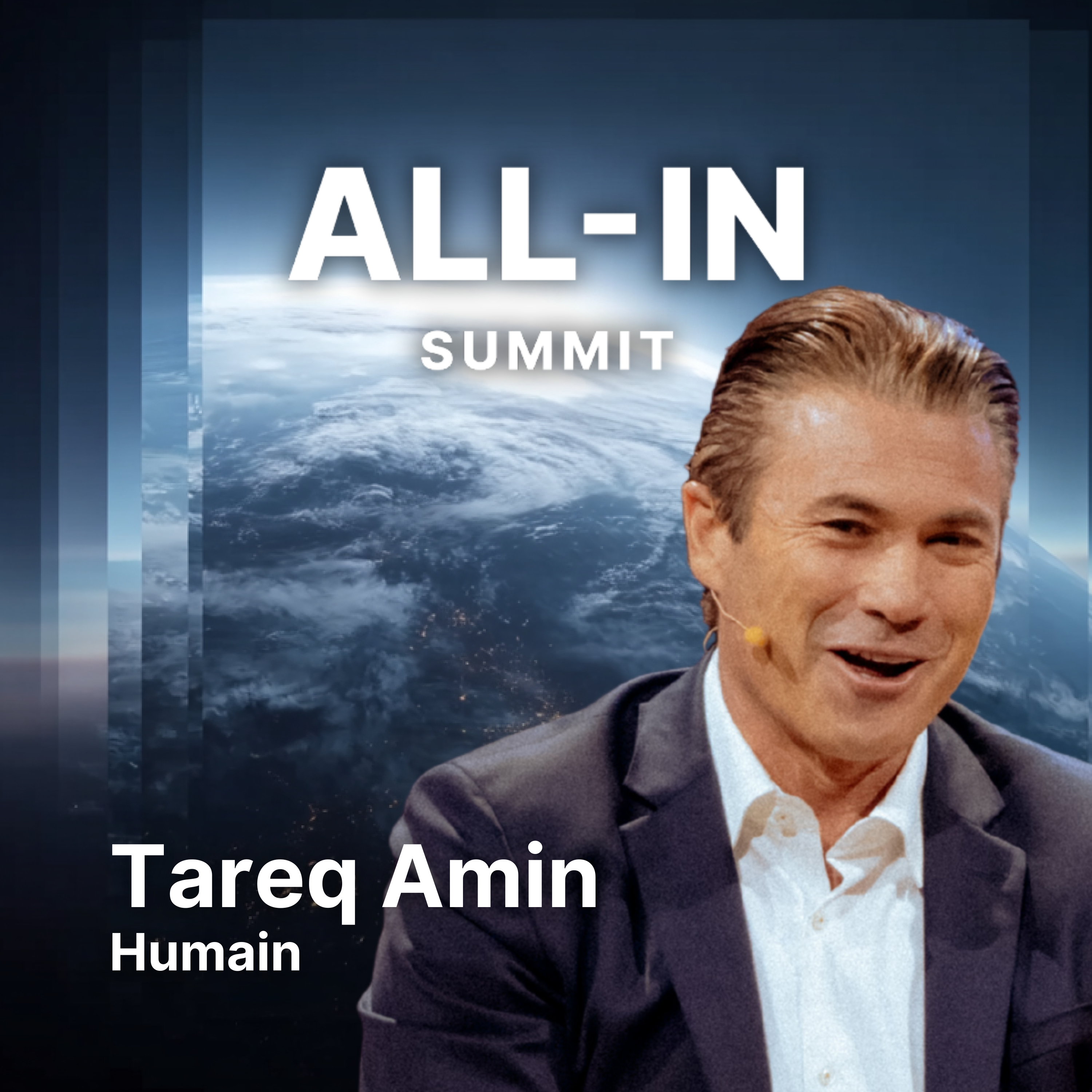
Beyond the US and China, Saudi Arabia is positioned to become the third-largest AI infrastructure country. The national strategy leverages its abundance of land and power not just for oil exports, but to lead the world in "energy exports via tokens," effectively selling compute power globally.
Related Insights
A key, often overlooked factor in Saudi Arabia's transformation is the return of its citizens educated at top Western universities like Stanford and MIT. This repatriated talent pool, driven by a sense of duty and opportunity, forms the skilled workforce needed to build the nation's digital future.
The growth of AI is constrained not by chip design but by inputs like energy and High Bandwidth Memory (HBM). This shifts power to component suppliers and energy providers, allowing them to gain leverage, demand equity, and influence the entire AI ecosystem, much like a central bank controls money.
Humane was founded after its CEO discovered it took oil giant Aramco nine months just to procure and deploy AI infrastructure. This massive delay, even for a well-resourced company, highlighted the foundational opportunity to build a national AI champion and regional digital hub for the Middle East.
xAI's 500-megawatt data center in Saudi Arabia likely isn't just for running its own models. It's a strategic move for Musk to enter the lucrative data center market, leveraging his expertise in large-scale infrastructure and capitalizing on cheap, co-located energy sources.

A nation's advantage is its "intelligent capital stock": its total GPU compute power multiplied by the quality of its AI models. This explains the US restricting GPU sales to China, which counters by excelling in open-source models to close the gap.

Beyond the well-known semiconductor race, the AI competition is shifting to energy. China's massive, cheaper electricity production is a significant, often overlooked strategic advantage. This redefines the AI landscape, suggesting that superiority in atoms (energy) may become as crucial as superiority in bytes (algorithms and chips).

While semiconductor access is a critical choke point, the long-term constraint on U.S. AI dominance is energy. Building massive data centers requires vast, stable power, but the U.S. faces supply chain issues for energy hardware and lacks a unified grid. China, in contrast, is strategically building out its energy infrastructure to support its AI ambitions.

The massive capital expenditure on AI infrastructure is not just a private sector trend; it's framed as an existential national security race against China's superior electricity generation capacity. This government backing makes it difficult to bet against and suggests the spending cycle is still in its early stages.

The primary factor for siting new AI hubs has shifted from network routes and cheap land to the availability of stable, large-scale electricity. This creates "strategic electricity advantages" where regions with reliable grids and generation capacity are becoming the new epicenters for AI infrastructure, regardless of their prior tech hub status.

As hyperscalers build massive new data centers for AI, the critical constraint is shifting from semiconductor supply to energy availability. The core challenge becomes sourcing enough power, raising new geopolitical and environmental questions that will define the next phase of the AI race.