Get your free personalized podcast brief
We scan new podcasts and send you the top 5 insights daily.
Saudi Arabia's multi-billion dollar investment in sports like LIV Golf to improve its image backfired. The media consistently framed it as "sports washing," which kept the underlying human rights issues in the public conversation, ultimately defeating the campaign's purpose.

Related Insights
After its overt sports investments failed to improve its reputation, Saudi Arabia's sovereign wealth fund is now seeking soft power through strategic investments in media, AI, and gaming. This "power washing" strategy aims for subtle influence rather than direct PR.
Comedians who build their brands on being 'free speech warriors' and criticizing censorship reveal their hypocrisy when they accept large payments from Saudi Arabia under contracts that explicitly forbid criticizing the kingdom. Their principles are abandoned for financial gain, exposing their activism as performative.

Research shows boycotts rarely cause significant stock price declines. Their primary power lies in generating media attention, which pressures corporate leaders to change behavior to protect the company's reputation, rather than its immediate shareholder value.

The true power of an economic boycott lies not in its direct revenue loss, which is often negligible (around a 1% stock decline). Its effectiveness comes from creating negative media attention that pressures corporate leaders to reverse decisions in order to quell the public relations crisis.
Media can manufacture scandal from harmless marketing stunts. While the public often recognizes this as nonsense, the resulting internal fear of controversy kills creativity and encourages boring, safe advertising, stifling breakthrough ideas.

The real leverage in consumer boycotts is not the direct financial hit from cancellations. It's the media narrative about potential impact that creates pressure on employees, partners, and executives, ultimately forcing a corporate response—as seen when Disney reversed course on Jimmy Kimmel.

Proponents of engaging with regimes like Saudi Arabia often pivot from specific moral criticisms (e.g., murdering journalists) to comparative flaws in Western democracies (e.g., gun violence). This "whataboutism" is a rhetorical strategy to reframe the debate and justify actions by implying moral equivalence.
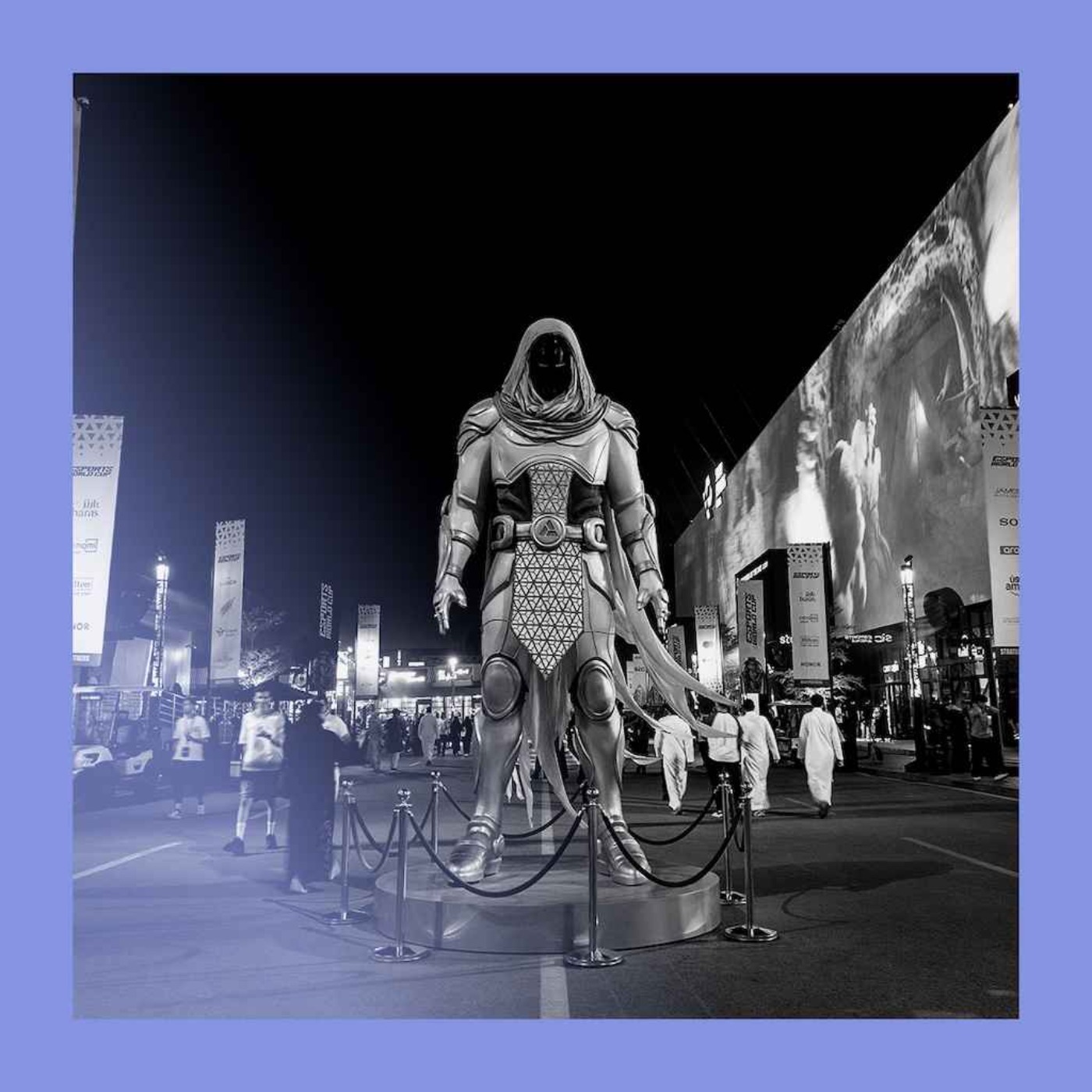
Beyond financial returns and 'game washing,' Saudi Arabia's push into the gaming industry is a long-term soft power strategy. The goal is to create games based on the region's myths and legends, similar to how China successfully exported its culture through games like 'Black Myth Wukong,' thereby shaping its global image.
A PR stunt for a milkshake gained international press, but it was not a success. The attention focused on the bizarre nature of the stunt itself, not the product, creating confusion. This demonstrates that if an idea is so complex it requires explanation, the resulting media attention is ineffective.

LIV Golf's CEO reveals that its sovereign wealth fund backer evaluates the venture on two types of ROI: financial 'Return on Investment' and brand-enhancing 'Return on Image.' This dual-metric approach justifies investments that also drive economic impact, tourism, and global influence for the funding nation.