Get your free personalized podcast brief
We scan new podcasts and send you the top 5 insights daily.
Enforcing a strict separation between an orchestration layer and a reusable service layer stops agents from writing redundant functions across files. This structured design pattern keeps LLM-generated code readable for human reviewers and easier for other agents to interpret.

Related Insights
Letting AI coding agents write raw code directly creates fragility and reinvents compliance logic. Instead, OutSystems directs agents to manipulate an intermediate abstraction representing application intent. Once the abstract model satisfies functional needs, deterministic code generation produces the application while automatically inheriting pre-configured enterprise control planes, security standards, and role-based access controls without breaking existing systems.

AI models often produce functional but sloppy code. To combat this, embed a specific software architecture, like a "service layer architecture," into the agent's instructions. This forces the AI to write clean, organized, and human-readable code crucial for long-term maintenance and collaboration.

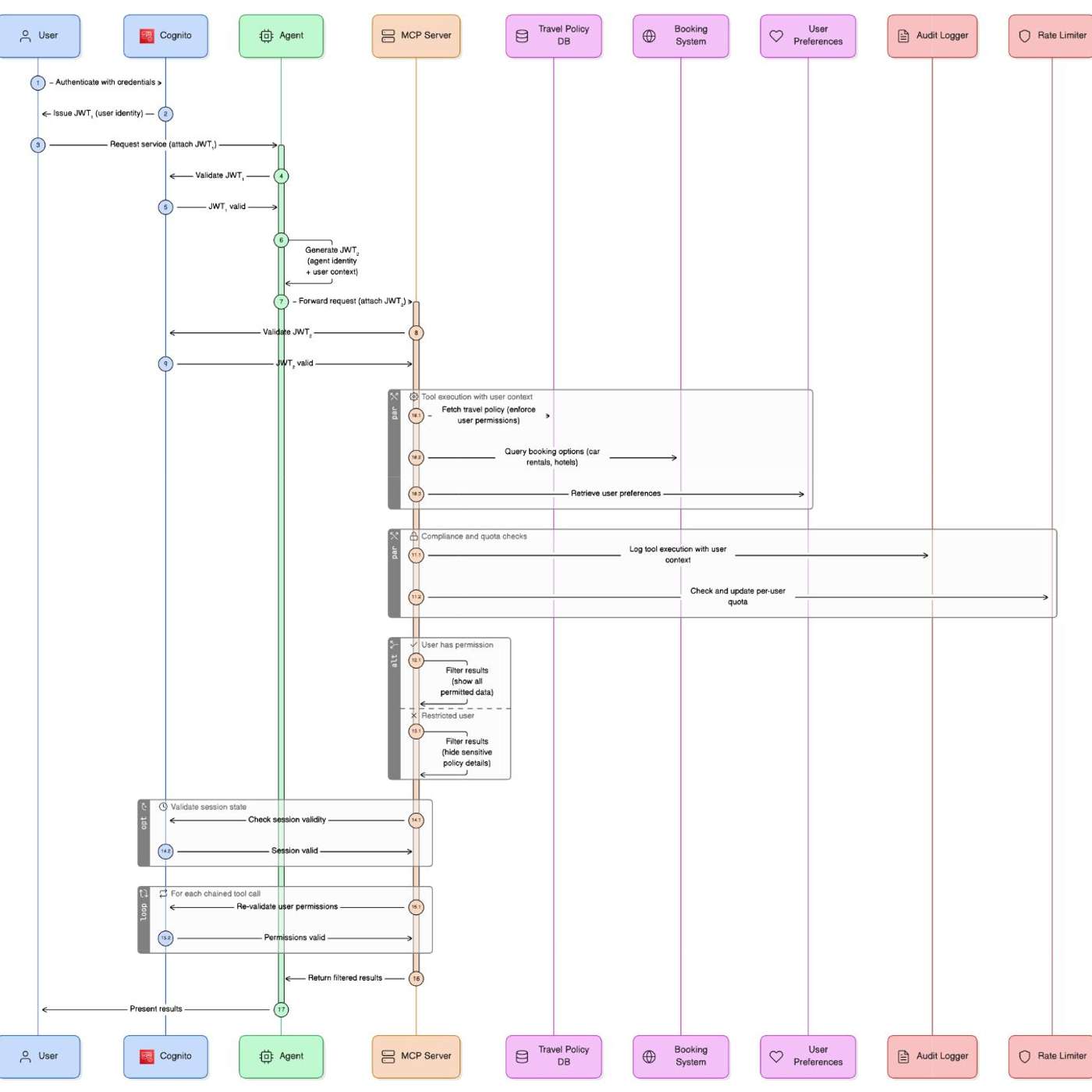
Instead of building one monolithic AI application, this architecture promotes creating smaller, specialized AI services. The Model Context Protocol (MCP) allows an AI agent to discover and use these tools on the fly, treating them like microservices rather than hardcoded functions, which enhances flexibility and scalability.
To prevent a "ball of mud" codebase, OpenAI's system defines strict architectural layers using package boundaries and folder structures. By convention and tooling, different roles are restricted to specific layers—designers to the UI, PMs to business logic—ensuring modularity and preventing architectural decay.

The 'Don't Repeat Yourself' (DRY) principle primarily helps humans manage complexity. Since an AI can easily identify and refactor all instances of duplicated code on demand, the need for perfect, upfront abstraction diminishes. Developers can commit 'minor heresies' and clean them up later.

Avoid building one AI agent to do everything. Instead, create a hierarchy with a 'manager' agent that delegates tasks to specialized sub-agents (e.g., for coding, research). This prevents context overload and performance degradation, mirroring an effective human team structure for scalable automation.

The 'Don't Repeat Yourself' (DRY) principle creates complex abstractions that are difficult for AI agents to navigate. A flatter, duplicated code structure is easier for an AI to parse and modify safely, as it contains the 'blast radius' of any changes, making it more efficient for machine maintenance.

To achieve autonomous software development, architect your codebase to be easily understood and manipulated by AI agents. This "agent-friendly" design builds enough trust in the AI's output to allow pull requests to be auto-merged without human review.
While developers leverage multiple AI agents to achieve massive productivity gains, this velocity can create incomprehensible and tightly coupled software architectures. The antidote is not less AI but more human-led structure, including modularity, rapid feedback loops, and clear specifications.

Rather than making software abstractions obsolete, AI assistants make them more important. Well-defined structures, like clear function signatures and naming conventions, act as a precise communication medium, enabling an AI "colleague" to better understand intent and generate correct code.