Get your free personalized podcast brief
We scan new podcasts and send you the top 5 insights daily.
Rather than making software abstractions obsolete, AI assistants make them more important. Well-defined structures, like clear function signatures and naming conventions, act as a precise communication medium, enabling an AI "colleague" to better understand intent and generate correct code.
Related Insights
Human developers may prefer longer files, but AI coding assistants process code in smaller chunks. App developer Terry Lynn intentionally keeps his files small (under 400 lines) to reduce the AI's context window usage, prevent it from getting lost, and improve the speed and accuracy of its code generation.

The structured, hierarchical nature of code (functions, libraries) provides a powerful training signal for AI models. This helps them infer structural cues applicable to broader reasoning and planning tasks, far beyond just code generation.

An internal OpenAI team maintains a codebase written entirely by AI. By removing the "escape hatch" of manual coding, they are forced to solve fundamental problems in providing better context and documentation to the AI, thus uncovering best practices for agent interaction.

Interacting with powerful coding agents requires a new skill: specifying requirements with extreme clarity. The creative process will be driven less by writing code line-by-line and more by crafting unambiguous natural language prompts. This elevates clear specification as a core competency for software engineers.
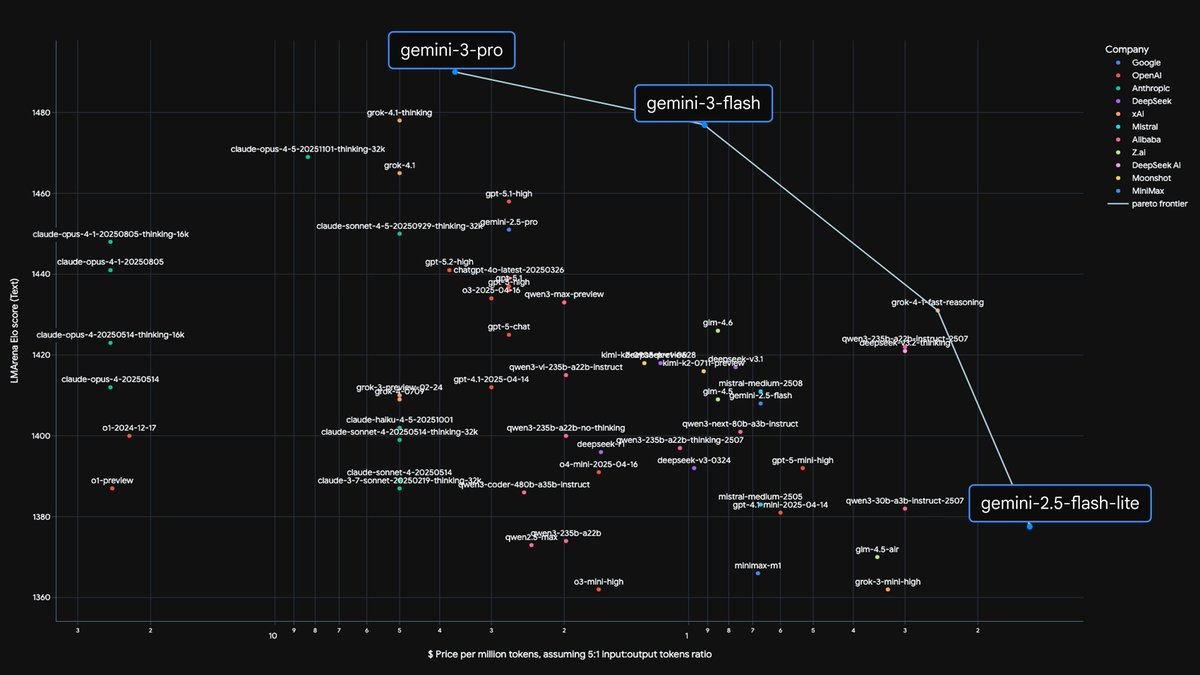
Unlike traditional programming, which demands extreme precision, modern AI agents operate from business-oriented prompts. Given a high-level goal and minimal context (like a single class name), an AI can infer intent and generate a complete, multi-file solution.
Instead of asking an AI to directly build something, the more effective approach is to instruct it on *how* to solve the problem: gather references, identify best-in-class libraries, and create a framework before implementation. This means working one level of abstraction higher than the code itself.

The next major advance for AI in software development is not just completing tasks, but deeply understanding entire codebases. This capability aims to "mind meld" the human with the AI, enabling them to collaboratively tackle problems that neither could solve alone.
![[State of Code Evals] After SWE-bench, Code Clash & SOTA Coding Benchmarks recap — John Yang thumbnail](https://assets.flightcast.com/V2Uploads/nvaja2542wefzb8rjg5f519m/01K4D8FB4MNA071BM5ZDSMH34N/square.jpg)
To maximize an AI agent's effectiveness, establish foundational software engineering practices like typed languages, linters, and tests. These tools provide the necessary context and feedback loops for the AI to identify, understand, and correct its own mistakes, making it more resilient.

The craft of software engineering is evolving away from precise code editing. Much like compilers abstracted away assembly language, modern AI coding tools are a new abstraction layer, turning engineers into directors who guide AI to write and edit code on their behalf.
Feed AI coding tools text-based Mermaid diagrams which compress complex application logic into a format AIs can parse much faster and more accurately than raw code. This improves the quality and speed of AI-generated work by providing compressed, robust context.