Get your free personalized podcast brief
We scan new podcasts and send you the top 5 insights daily.
Reed says ChatGPT can help you write faster, but thought leadership is about generating genuinely new ideas. In his view, the AI tool is “literally a bucket of old ideas,” so it should never entirely replace the strategic thinking that makes your content truly distinctive.

Related Insights
While AI tools once gave creators an edge, they now risk producing democratized, undifferentiated output. IBM's AI VP, who grew to 200k followers, now uses AI less. The new edge is spending more time on unique human thinking and using AI only for initial ideation, not final writing.
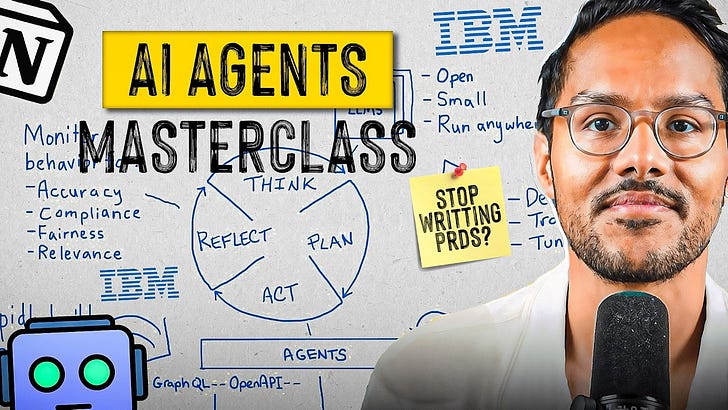
Generative AI is a powerful tool for accelerating the production and refinement of creative work, but it cannot replace human taste or generate a truly compelling core idea. The most effective use of AI is as a partner to execute a pre-existing, human-driven concept, not as the source of the idea itself.

AI is a force multiplier, not a magic bullet. If you have good ideas, AI helps execute them faster. If you have bad ideas, AI just helps you produce more bad content. Success still hinges on original, high-quality concepts, not just volume.

AI excels at analytical and information-gathering tasks (critical thinking) but cannot replicate the uniquely human process of creative thinking. True creativity—the ability to generate novel ideas that make people feel something—remains a fundamentally human skill.

The true power of AI in content isn't generating text, which creates generic content. Instead, use AI as a research partner to analyze existing narratives, identify saturated topics, and generate unique, counter-intuitive angles. This shifts AI's role from a writer to a strategist, ensuring your content is differentiated from the start.
Don't use AI to do your thinking. Instead, build a library of your own crystallized ideas and approved language. Then, deploy AI as a tool to repeat and remix this content, freeing you to focus on developing net-new, original insights for your audience.

Don't use AI to generate generic thought leadership, which often just regurgitates existing content. The real power is using AI as a 'steroid' for your own ideas. Architect the core content yourself, then use AI to turbocharge research and data integration to make it 10x better.
The best use of AI for content is not as a generator but as a tool to rephrase and repurpose your existing ideas and perspectives. It's an assistant for skilled creators who already have a point of view, not a replacement for the creative process or the creator's unique voice.
Don't mistake AI's output for true creativity. AI operates by regurgitating and reassembling what humans have already created. It can be a powerful tool for efficiency and innovation, but the origin of novel, possibility-driven creativity remains distinctly human.

Effective AI content strategy uses tools to handle first drafts and outlines, accelerating production and ensuring consistency. This frees up humans to perform the crucial roles of editing, shaping perspective, and injecting unique, lived experiences, which AI cannot replicate. The goal is amplification, not automation.