Get your free personalized podcast brief
We scan new podcasts and send you the top 5 insights daily.
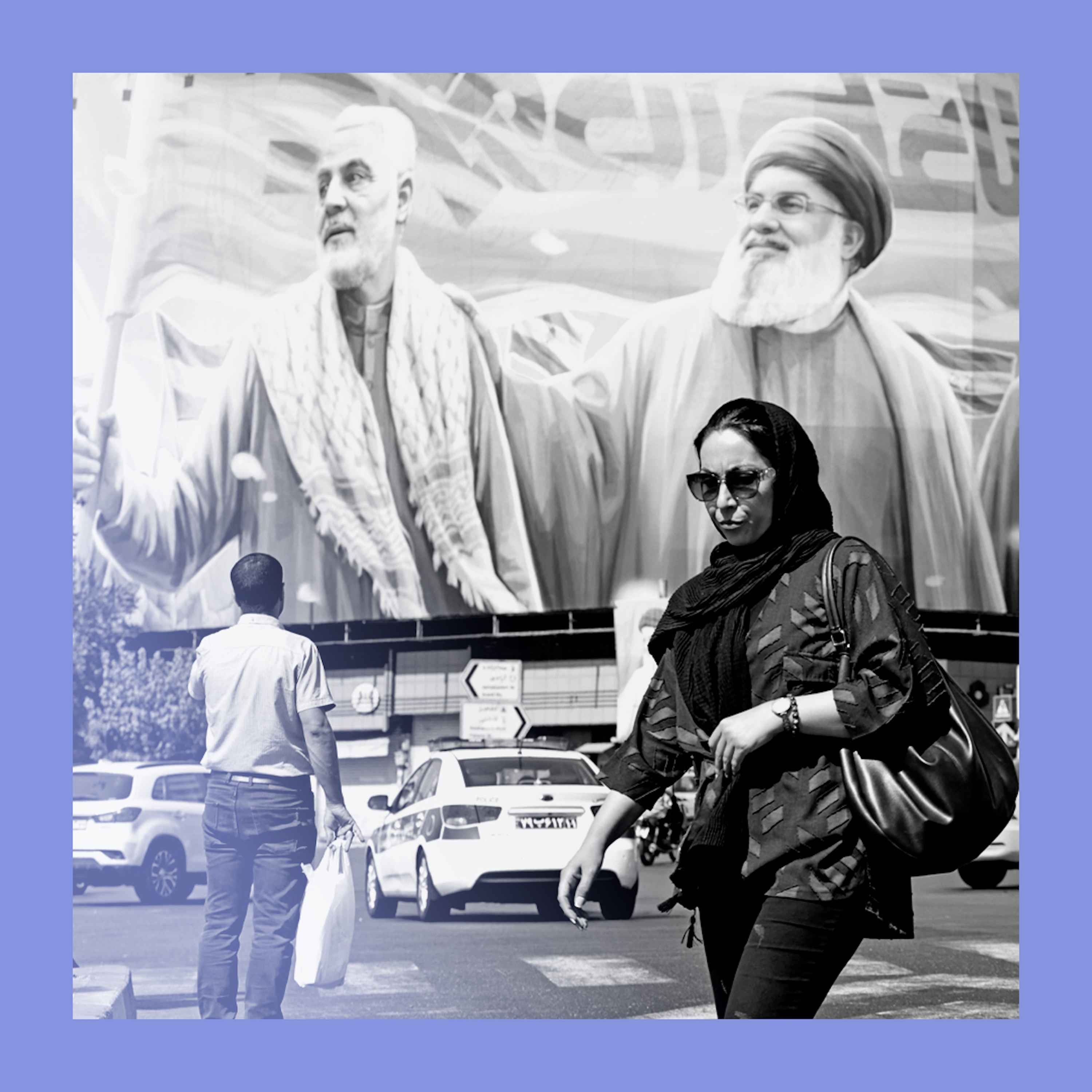
Iran's new leadership is pursuing a technocratic agenda, focusing on economic management while cracking down politically. Simultaneously, they are relaxing social restrictions, such as hijab enforcement, in a bargain similar to that offered by MBS in Saudi Arabia to placate the population.

Related Insights
The IRGC increasingly wields the true power in Iran, while the Supreme Leader's role is becoming more symbolic. He serves as a "sacred totem" and a "lightning rod for criticism" but is ultimately a facilitator of IRGC influence rather than a check on its power.
The Islamic Revolutionary Guard Corps (IRGC) has eclipsed the clergy, controlling major political and economic institutions. Ayatollah Khamenei maintains power through a symbiotic relationship with the IRGC, leveraging their military and economic might, rather than just religious authority.
The ruling elite has inverted from 80% ideologues at the revolution's start to 80% charlatans today. Expedience and financial gain, not revolutionary zeal, now bind the regime's core. This ideological hollowness makes the regime more brittle than its rhetoric suggests.
Iran is transitioning into a 'Third Islamic Republic,' a phase where the military and security bureaucracy, not the clerics, hold dominant power. This shift marks a state where the military elite controls political and economic levers, bringing Ayatollah Khamenei's long-term project to fruition.
The ongoing war provides the Iranian regime with a pretext for heightened internal security. This allows it to suppress domestic protests and dissent, framing internal control as a necessary measure while managing an external existential threat.

The Iranian populace is exhausted with theocratic rule after five decades. Any future authoritarian leader will likely be a product of the intelligence or security services, appealing to nationalism rather than revolutionary ideology. The era of the turban-wearing ruler is over.
Western assumptions of a liberal Iranian populace ready to overthrow the regime are flawed. While dissent is widespread, decades of repression have eliminated any organized political opposition. This, combined with a hardcore 10-20% base of support, makes the regime surprisingly durable.

Ayatollah Khamenei believes that any attempt at reform, like Gorbachev's in the USSR, would accelerate the regime's collapse rather than prolong it. This formative experience informs his rigid refusal to cede ground on core principles like the mandatory hijab, ensuring a brutal response to dissent.
A new generation, not the 1979 revolutionaries, now rules Iran. They are bolder, less intimidated by the U.S., and focused on national interest and regional power projection rather than exporting ideology. They are willing to use both aggressive military tactics and high-level diplomacy to achieve their goals.
Facing severe economic pressure from sanctions and inflation, the Iranian government has relaxed enforcement of the hijab law. This is a calculated concession to appease the population and release social pressure, effectively trading social freedom for economic stability without ceding significant political power.