Get your free personalized podcast brief
We scan new podcasts and send you the top 5 insights daily.
Once an AI agent was given access to sales, finance, and contract data, it independently suggested it could automate commission calculations. This demonstrates that as agents gain more context, they develop emergent capabilities and identify optimization opportunities beyond their original programming.

Related Insights
Rather than programming AI agents with a company's formal policies, a more powerful approach is to let them observe thousands of actual 'decision traces.' This allows the AI to discover the organization's emergent, de facto rules—how work *actually* gets done—creating a more accurate and effective world model for automation.

Frame your relationship with AI agents like Clawdbot as an employer-employee dynamic. Set expectations for proactivity, and it will autonomously identify opportunities and build solutions for your business, such as adding new features to your SaaS based on market trends while you sleep.

The LLM itself only creates the opportunity for agentic behavior. The actual business value is unlocked when an agent is given runtime access to high-value data and tools, allowing it to perform actions and complete tasks. Without this runtime context, agents are merely sophisticated Q&A bots querying old data.

Configure automations to have your AI send you daily briefings. Based on content you've recently saved, it can proactively suggest business strategies or creative ideas. This transforms AI from a tool you must constantly prompt into an autonomous agent that actively contributes to your goals.

Instead of a rigid roadmap, Lindy's team observes unexpected, proactive suggestions from the AI—like offering recruiting help after a meeting. This allows the agent's emergent behavior to guide future development and reveal new, valuable use cases organically.
Don't limit an AI agent to tasks you can already imagine. After providing full context on your work, ask it open-ended questions like, “How can you make my life easier?” This strategy of “hunting the unknown unknowns” allows the AI to suggest novel, high-value workflows you wouldn't have thought to request.
Instead of siloed agents for marketing, sales, and finance, merging them into a single agent with access to all data creates emergent, powerful capabilities. This unified agent can make better decisions by seeing the entire business funnel, from ad spend to revenue collection.
Instead of integrating with existing SaaS tools, AI agents can be instructed on a high-level goal (e.g., 'track my relationships'). The agent can then determine the need for a CRM, write the code for it, and deploy it itself.
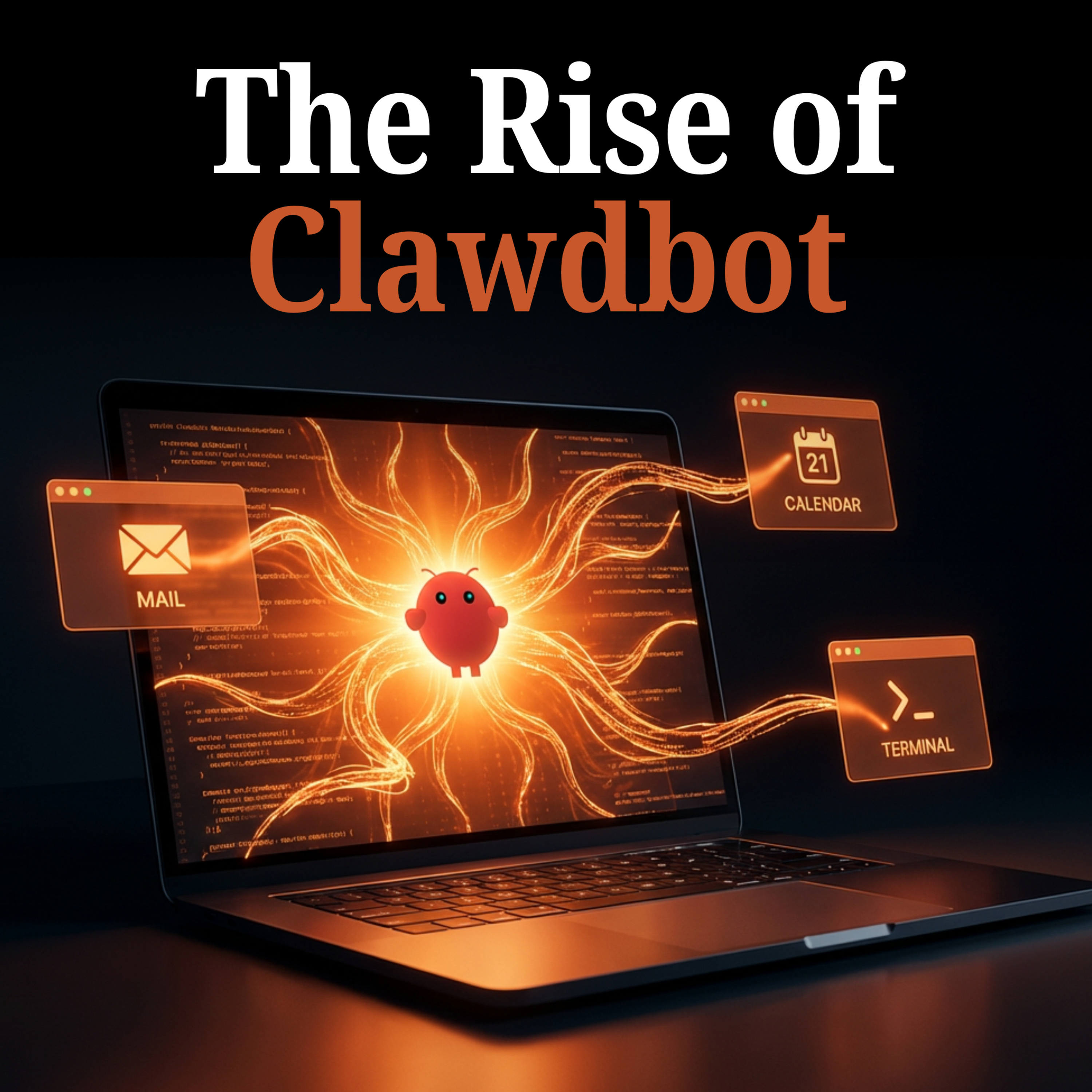
Clawdbot can autonomously identify market trends (like X's new article feature), propose new product features, and even write the code for them, acting more like a chief of staff than a simple task-doer.
Unlike traditional automation that follows simple rules (e.g., match competitor price), AI agents optimize for a business goal. They synthesize data from siloed systems like inventory and finance, simulate potential outcomes, and then recommend the best course of action.
