Get your free personalized podcast brief
We scan new podcasts and send you the top 5 insights daily.
True Ventures passed on Uber's seed round because it was a 'project' without a dedicated leader. This demonstrates how a disciplined investment thesis, in this case requiring a 'visionary leader,' can cause a pass on a massive winner but also provides a consistent framework for decisions and peace of mind.

Related Insights
Unlike in private equity, an early-stage venture investment is a bet on the founder. If an early advisor, IP holder, or previous investor holds significant control, it creates friction and hinders the CEO's ability to execute. QED's experience shows that these situations are untenable and should be avoided.

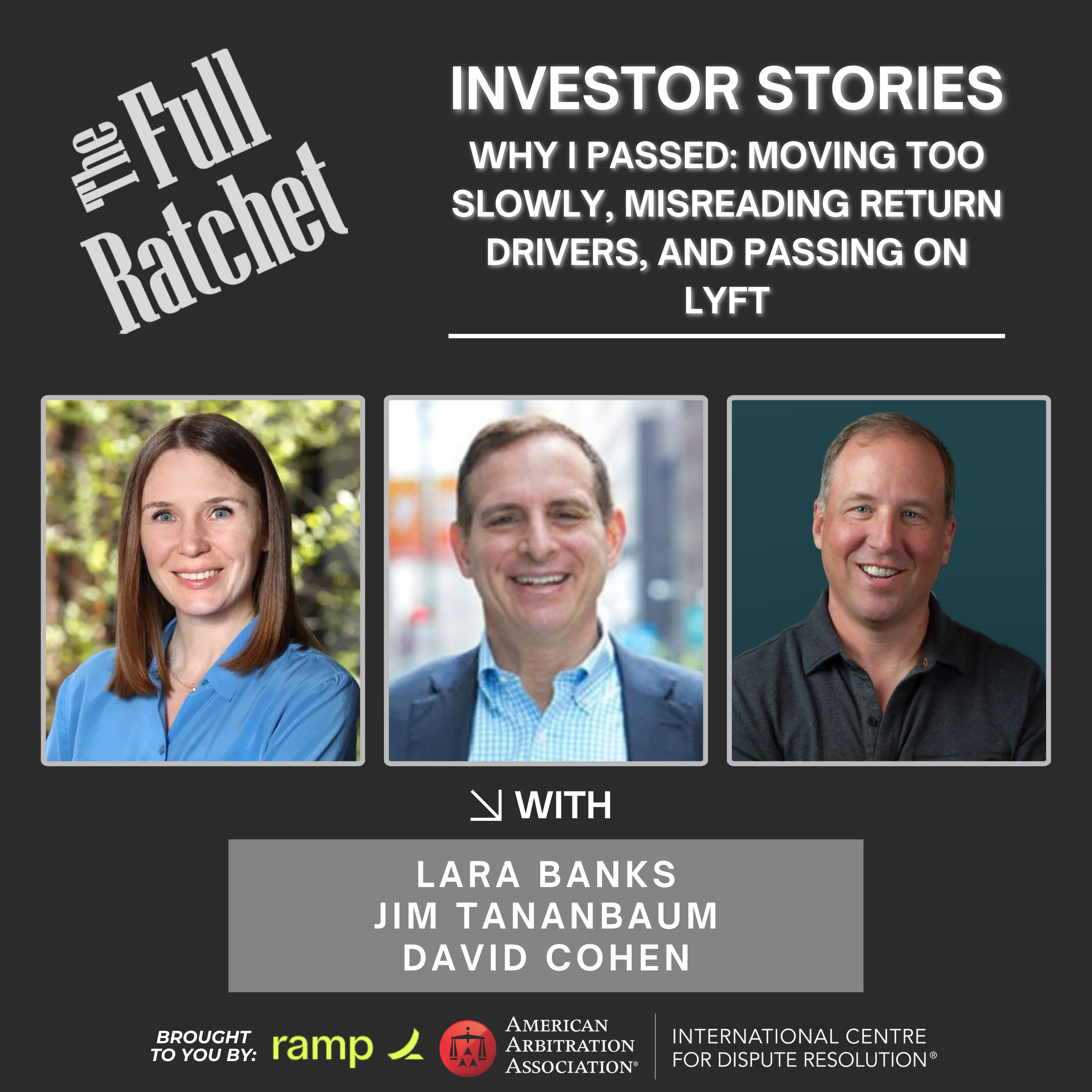
David Cohen missed investing in Lyft (then Zimride) because he was already an investor in Uber and thought Zimride's initial idea was flawed. He now advises early-stage investors to prioritize a strong team and their market belief over the specific initial product, as pivots are very common.
An investor's best career P&L winners are not immediate yeses. They often involve an initial pass by either the investor or the company. This shows that timing and building relationships over multiple rounds can be more crucial than a single early-stage decision, as a 'missed round' isn't a 'missed company'.

When evaluating investments, Danny Meyer prioritizes leadership quality over the initial concept. He believes a strong leader can pivot and improve a mediocre idea, whereas even a brilliant concept is doomed to fail under poor leadership. This highlights the primacy of execution over ideation for investors.

Uber's early, ambitious investment in autonomous vehicles faced opposition from a key investor. This investor preferred to protect existing gains rather than fund a long-term, capital-intensive project that could have transformed Uber into a trillion-dollar company, revealing a conflict between founder vision and investor risk aversion.

An investor passed on Chime's seed round despite a strong founding team. The reason: he personally thought the product "makes no sense" and couldn't see himself building it. This illustrates a common early-stage trap where VCs substitute their own product ideas for the founder's vision, rather than betting on the team.

Adhering to strict, dogmatic rules—such as fixed ownership targets or avoiding certain stages—is a primary cause of missing outlier investments. The podcast highlights passing on Cruise due to ownership concerns as a key example. True discipline requires adapting to market changes, not blindly following old rules.
Unlike many venture firms that bet primarily on the founder, Union Square Ventures (USV) has a differentiated approach. They focus first and foremost on the intellectual merit and network effects of an idea, believing a powerful concept is the primary driver of success.

The quality of the founder is the single most important variable. A great founder with a mediocre plan will outperform a mediocre founder with a great plan. The best investment strategy is to back exceptional people and give them leeway, as they will create upside that breaks all precedents.

VCs often correctly identify a special founder but then pass due to external factors like competition or perceived market size. Reflecting on missing Scale AI, Benchmark concludes this is a critical error; the person is the signal that should override other concerns.