Get your free personalized podcast brief
We scan new podcasts and send you the top 5 insights daily.
The distinctive taste of Reese's peanut butter wasn't a calculated formula but an accident. When H.B. Reese's first batch of peanuts for his new candy was over-roasted, he discovered that burned peanuts actually created a better-tasting peanut butter. This highlights how operational mistakes can lead to product breakthroughs.

Related Insights
The temperature-changing texture of Scrub Daddy foam was discovered by chance when Krause used an old, failed prototype to clean outdoor furniture with hot water. This highlights that a product's true value may be hidden and found only through serendipitous, real-world use.

Koch Industries encourages risk-taking by defining a "good experiment" not by its success, but by its learning outcome. A failure is considered valuable and is rewarded if what the company learns from it is worth more than the cost of the experiment itself, fostering a culture of true innovation.
Faced with 10,000 misprinted boxes, the company embraced the error instead of absorbing the cost. They launched a limited "Whoops Edition" with a campaign celebrating failure. This turned a potential financial loss into a PR win and a sales success, humanizing the brand.

The Reese's brand might not exist without Milton Hershey's unique management style. Instead of stifling an employee's side project, Hershey encouraged H.B. Reese to develop the peanut butter cup, with the only condition being that he use Hershey's chocolate, demonstrating a powerful model of fostering intrapreneurship.
In operations, failure is a problem to be eliminated. In innovation, where new ground is being broken, failures are expected and necessary. Instead of being viewed as mistakes, they must be reframed as valuable data points that provide crucial learnings to guide subsequent experiments and decisions.

Launched the same month as the 1929 stock market crash, the Reese's cup thrived in a downturn. It used less of the most expensive ingredient (chocolate) and more of the trendiest (peanut butter), making it a lower-cost, highly desirable treat perfectly suited for an economically strained consumer base.
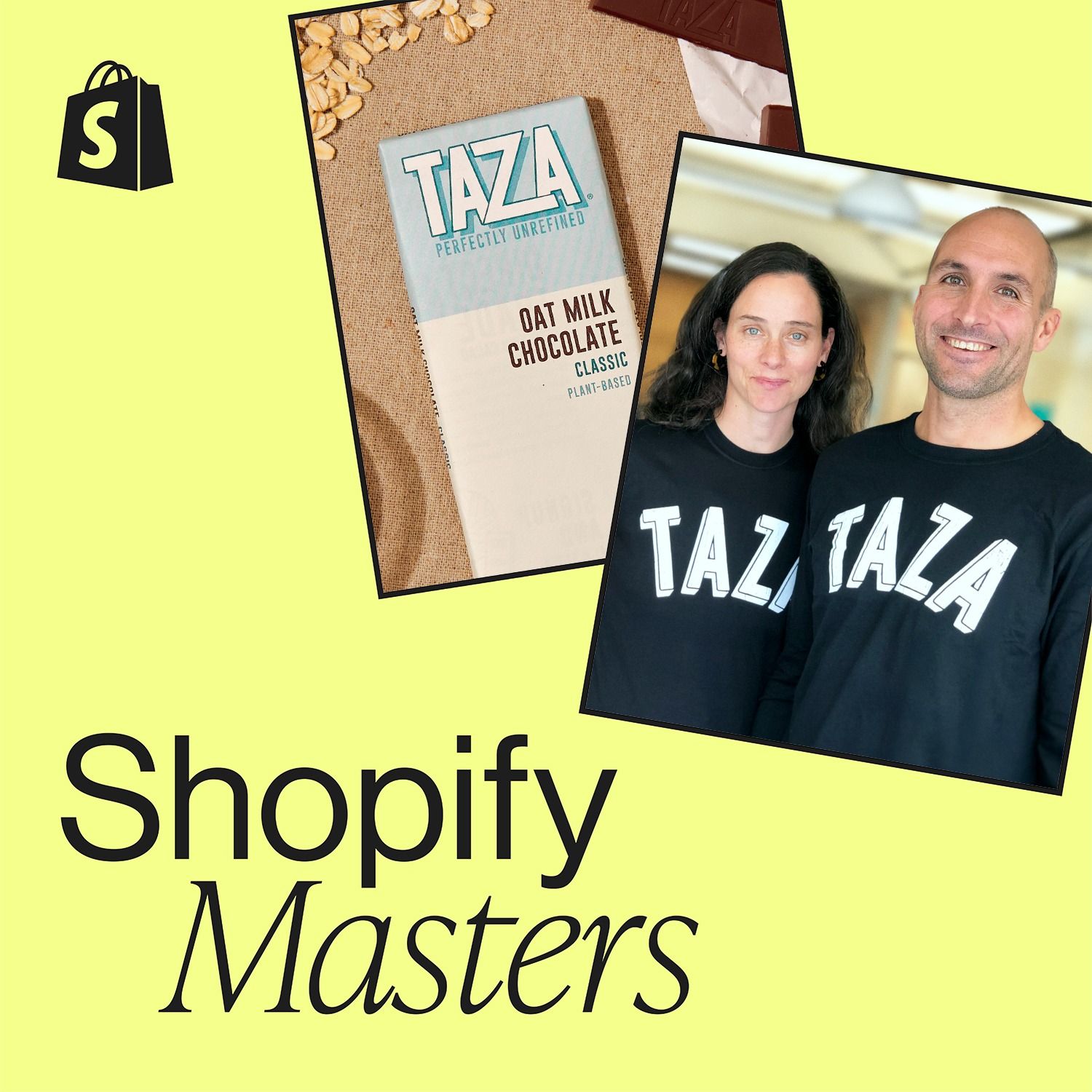
Taza avoided dairy and gluten not for a market trend, but to simplify a complex manufacturing process. This early operational decision inadvertently positioned them perfectly for the future rise of vegan and allergen-free consumer demands, creating a long-term competitive advantage they didn't foresee.
CEO Amin Zargar's initial proof-of-concept for Resvita's therapy worked due to a lucky moisturizer choice. A subsequent, different formulation failed completely. This highlights how early scientific breakthroughs can depend on serendipity and small, uncontrolled variables, not just rigorous planning.

Founder Justin Gold's strategy was to differentiate with flavored nut butters. However, customer requests for a simple, everyday option led him to create a "Classic" version. This plain peanut butter, which he initially resisted creating, quickly became his bestselling product.
Driscoll's had been discarding its best-tasting berries because they were too delicate for the standard supply chain. By reframing this flaw, they created a premium product line, charged more, and met a hidden consumer demand for superior flavor.
