Get your free personalized podcast brief
We scan new podcasts and send you the top 5 insights daily.
The Reese's brand might not exist without Milton Hershey's unique management style. Instead of stifling an employee's side project, Hershey encouraged H.B. Reese to develop the peanut butter cup, with the only condition being that he use Hershey's chocolate, demonstrating a powerful model of fostering intrapreneurship.

Related Insights
The distinctive taste of Reese's peanut butter wasn't a calculated formula but an accident. When H.B. Reese's first batch of peanuts for his new candy was over-roasted, he discovered that burned peanuts actually created a better-tasting peanut butter. This highlights how operational mistakes can lead to product breakthroughs.
To foster innovation, leaders should intentionally cultivate a distributed network of "rebels." These individuals are empowered to question norms across disparate functions like hardware and marketing, ensuring critical thinking is embedded throughout the organization, not siloed in specific departments.

Innovation isn't just for products; it applies to organizational design. Phil Burks used an innovation framework to rethink his company's structure and culture, focusing on the principle of "build the people, and they will build the company." This embeds innovative capacity deep within the organization.

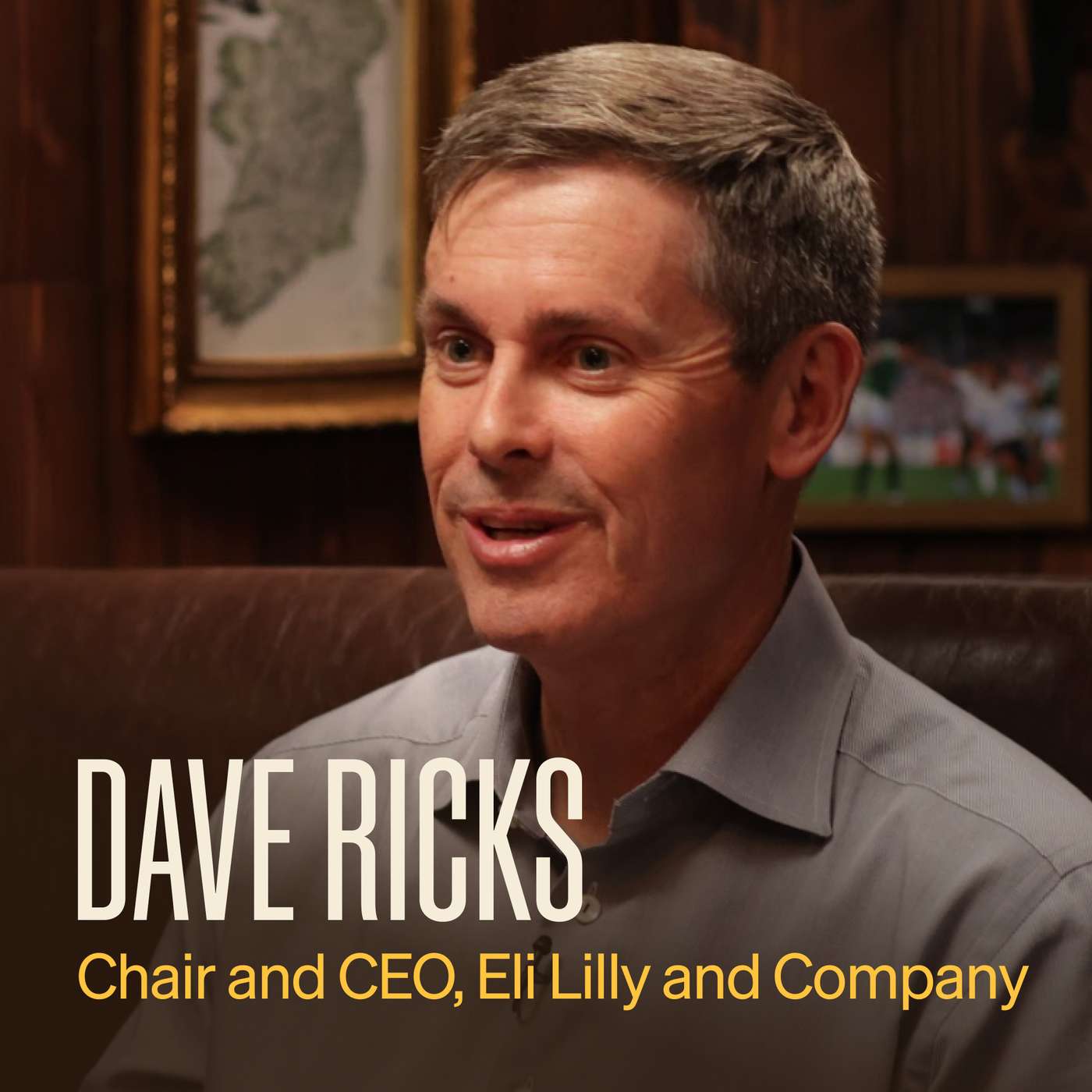
A significant number of Eli Lilly's compelling inventions came from unsanctioned projects. The company intentionally provides budget flexibility and avoids micromanagement at its R&D sites, allowing scientists to pursue their curiosity.
To prevent stagnation, large, stable institutions like Liberty Mutual must deliberately build a culture where employees are incentivized to be curious and take entrepreneurial risks. This requires a governance structure that supports, rather than punishes, such behavior, which is crucial for attracting novel opportunities.
![Vlad Barbalat - Investing $120 Billion in Permanent Capital - [Invest Like the Best, EP.479] thumbnail](https://megaphone.imgix.net/podcasts/2152d90e-6ea2-11f1-bf4e-975e0e419694/image/fcbbe05dc456cfb6040005d3f6424c41.jpg?ixlib=rails-4.3.1&max-w=3000&max-h=3000&fit=crop&auto=format,compress)
The Filet-O-Fish, Big Mac, and Egg McMuffin were all created by local operators solving specific customer problems in their markets. This demonstrates the immense power of a decentralized innovation model where the best ideas flow from the frontline, not just from the top down.
![How McDonald’s Took Over America | Ray Kroc [Outliers] thumbnail](https://megaphone.imgix.net/podcasts/d0322c9e-fafe-11f0-9d3a-33cd8954a249/image/b6e608ebb74a48e538e9a5b28089e4e7.png?ixlib=rails-4.3.1&max-w=3000&max-h=3000&fit=crop&auto=format,compress)
Despite successfully reviving Powerade, Coca-Cola layered management above Rohan Oza instead of promoting him. They viewed his entrepreneurial approach as 'high risk' and got nervous. This common corporate tendency to suppress intrapreneurship often drives top performers to leave and start their own ventures.

Les Schwab wasn't in the tire business; he was in the ownership business. He gave store managers 50% of the profits, requiring them to reinvest their share until they earned their stake. This turned employees into obsessed owners who consistently out-serviced and out-competed rivals.

Unlike structured, management-driven research, Bell Labs operated on a philosophy of hiring top talent and granting them autonomy. Stroustrup's initial job was simply "do something interesting" and report back in a year on a single sheet of paper, a model that produced breakthroughs like Unix and C++.

To combat enterprise stagnation, Toast launched "New Ventures," an internal incubator that isolates small, entrepreneurial teams. With dedicated comp plans, these teams focus on finding the next zero-to-one product, successfully launching initiatives like Toast Retail.
