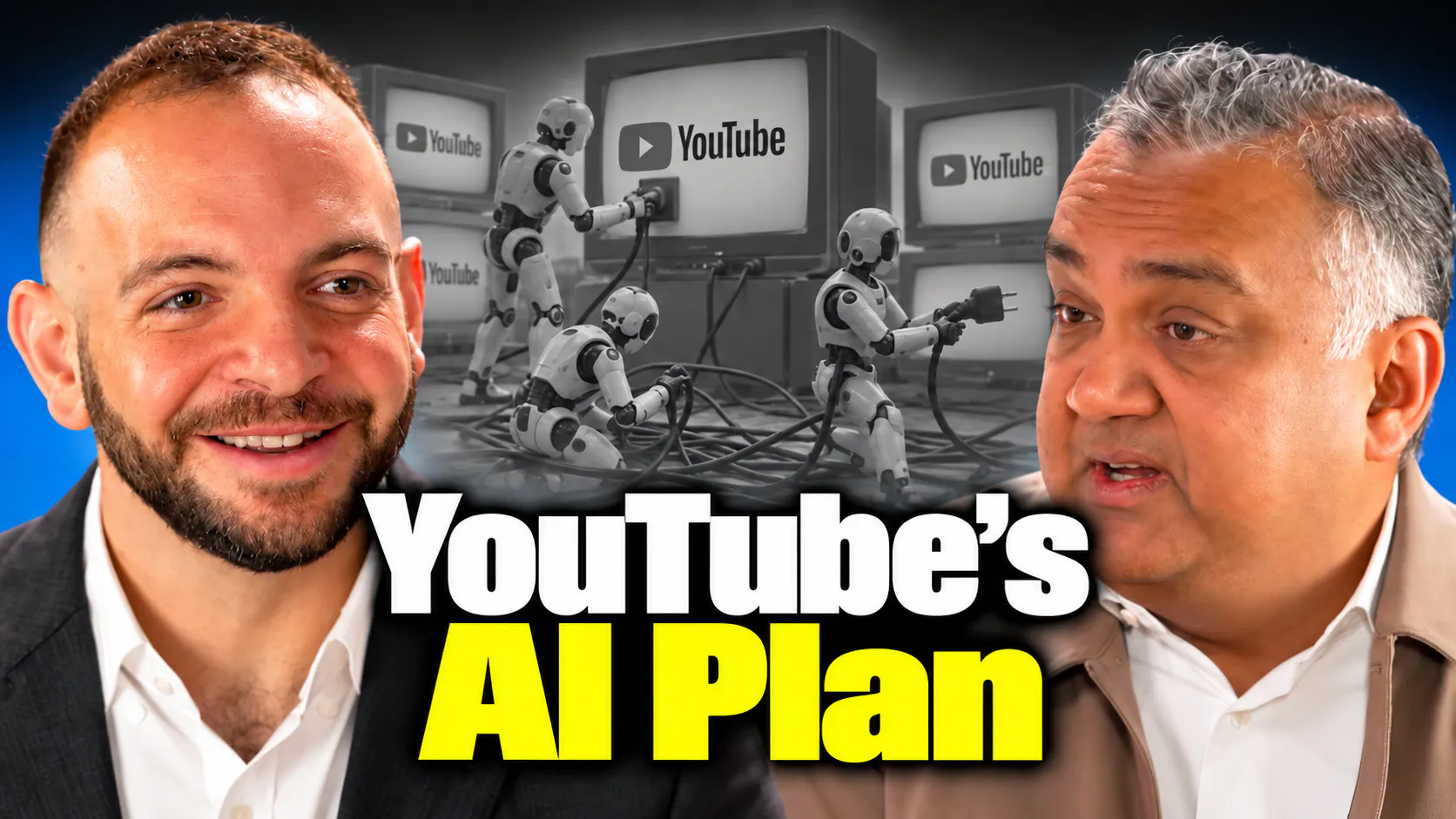
Mohan positions AI not as a tool that dictates creative choices, but as infrastructure that builds a better "stage" for creators. Its purpose is to help creators produce and distribute their work more efficiently, enhancing their capabilities rather than replacing their artistic vision.
Neal Mohan reframes YouTube's recommendation engine as a direct reflection of audience choice, not an opaque AI gatekeeper. He argues that what is often called the "algorithm" is simply the collective voice of 2 billion daily viewers giving feedback and deciding what content rises to the top.
In response to concerns that AI optimization leads to content sameness, CEO Neal Mohan argues the opposite. He claims YouTube's massive scale and lack of gatekeepers allow millions of hyper-specific, yet large, niche communities to flourish, thereby promoting content diversity rather than homogeneity.
CEO Neal Mohan clarifies that YouTube will not penalize content simply for being AI-generated. The platform's policies focus on whether the content is high-quality and connects with viewers. The primary concern is preventing low-effort, mass-produced "AI slop," not discouraging the creative use of AI tools.
When questioned about competing with AI chatbots for user attention, CEO Neal Mohan's strategy relies on a fundamental human need. He believes the enduring desire for human-to-human connection through storytelling is a durable moat that will keep viewers engaged with creators on YouTube, regardless of advances in conversational AI.
The "Ask" button, which enables conversational queries about a video's content, signifies a strategic pivot. YouTube is leveraging LLMs to unlock the vast, unstructured data within its videos, shifting the user experience from passive consumption to interactive knowledge discovery, competing more directly with search engines.
Neal Mohan explains that new AI search tools benefit creators by unearthing hyper-specific moments—"two minutes of gold"—from within longer videos. This allows older or less-viewed content to be resurfaced to answer niche queries, generating new value and viewership from a creator's existing back catalog.
Unlike rivals seeking exclusivity, YouTube views creators finding success elsewhere (e.g., books, merchandise) as a net positive. The strategy assumes that because YouTube is the "font" of their success, creators will continue to prioritize it as their primary home, creating a powerful, loyal flywheel.