Get your free personalized podcast brief
We scan new podcasts and send you the top 5 insights daily.
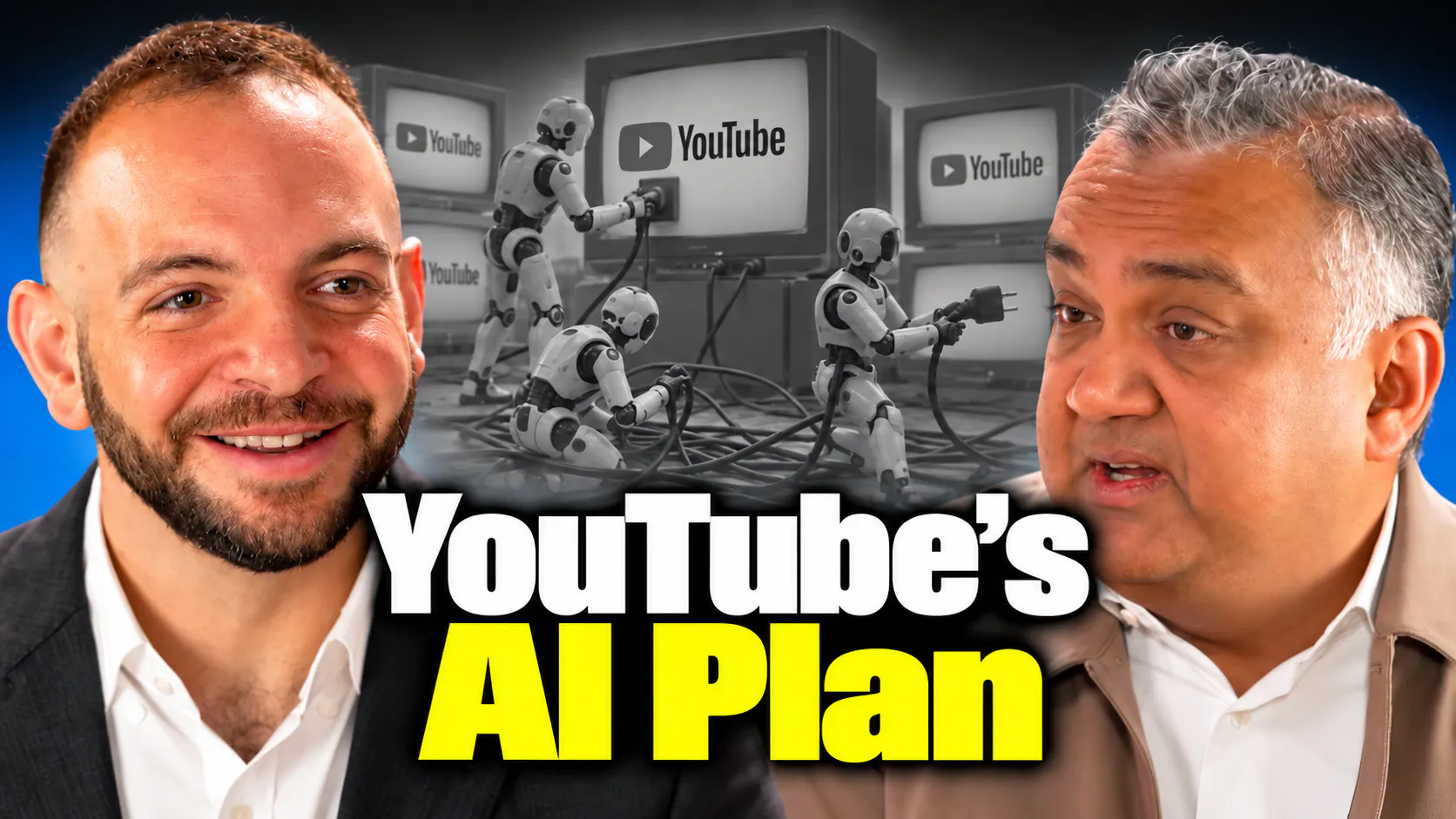
The "Ask" button, which enables conversational queries about a video's content, signifies a strategic pivot. YouTube is leveraging LLMs to unlock the vast, unstructured data within its videos, shifting the user experience from passive consumption to interactive knowledge discovery, competing more directly with search engines.
Related Insights
SEO has fundamentally changed with AI. Search engines now favor long-form, conversational queries and provide answers by indexing content like podcasts and YouTube videos. To improve visibility, companies must create content in these Q&A formats, as they directly match how users now search.

As AI-driven search provides answers directly, traditional website traffic is declining for many. However, YouTube usage is increasing. A robust video strategy on YouTube is no longer optional, as it is becoming the primary platform for discovery and trust-building in the AI era.

Large language models don't just process text; they effectively "watch" YouTube content. They analyze descriptions, likes, comments, and sentiment to understand brand reputation. This means organic creator content and community engagement on YouTube directly influence how AI perceives and recommends your brand.

The "Ask YouTube" feature allows viewers to search and ask questions about the video they are watching directly on the TV via their remote. This is a strategic move to keep attention on the main screen, preventing viewers from picking up their phones to look something up and getting distracted.

Instead of just optimizing titles, weave the exact questions your audience might type into an AI search directly into your on-camera script. This feeds the AI the precise phrasing it's looking for, increasing the likelihood that your video will be surfaced as the authoritative answer.
YouTube is introducing easy-to-use AI video creation tools for Shorts, likely as a strategic move to attract users from recently shut-down platforms like OpenAI's Sora. By offering similar functionality with its massive processing power, YouTube aims to become the go-to platform for AI-assisted short-form video creation.
When comparing data moats, Google's YouTube holds a strategic edge over social platforms. Its vast library of structured, task-oriented content (e.g., "how to fix a sink") is considered more valuable for training capable, agentic AI models than less-focused social media content.

Neal Mohan explains that new AI search tools benefit creators by unearthing hyper-specific moments—"two minutes of gold"—from within longer videos. This allows older or less-viewed content to be resurfaced to answer niche queries, generating new value and viewership from a creator's existing back catalog.
The evolution from keyword search to AI-driven discovery is not just a technological upgrade. It's a fundamental shift back to the way humans have interacted for millennia—through conversation—making digital interactions more intuitive and expressive after decades of clunky keyword interfaces.
Instead of being a standalone feature, LLMs provide the most value when subtly integrated into existing workflows. YouTube's AI summaries or its ability to extract a parts list from a DIY video are examples of enhancing the user experience without being disruptive.
