Get your free personalized podcast brief
We scan new podcasts and send you the top 5 insights daily.
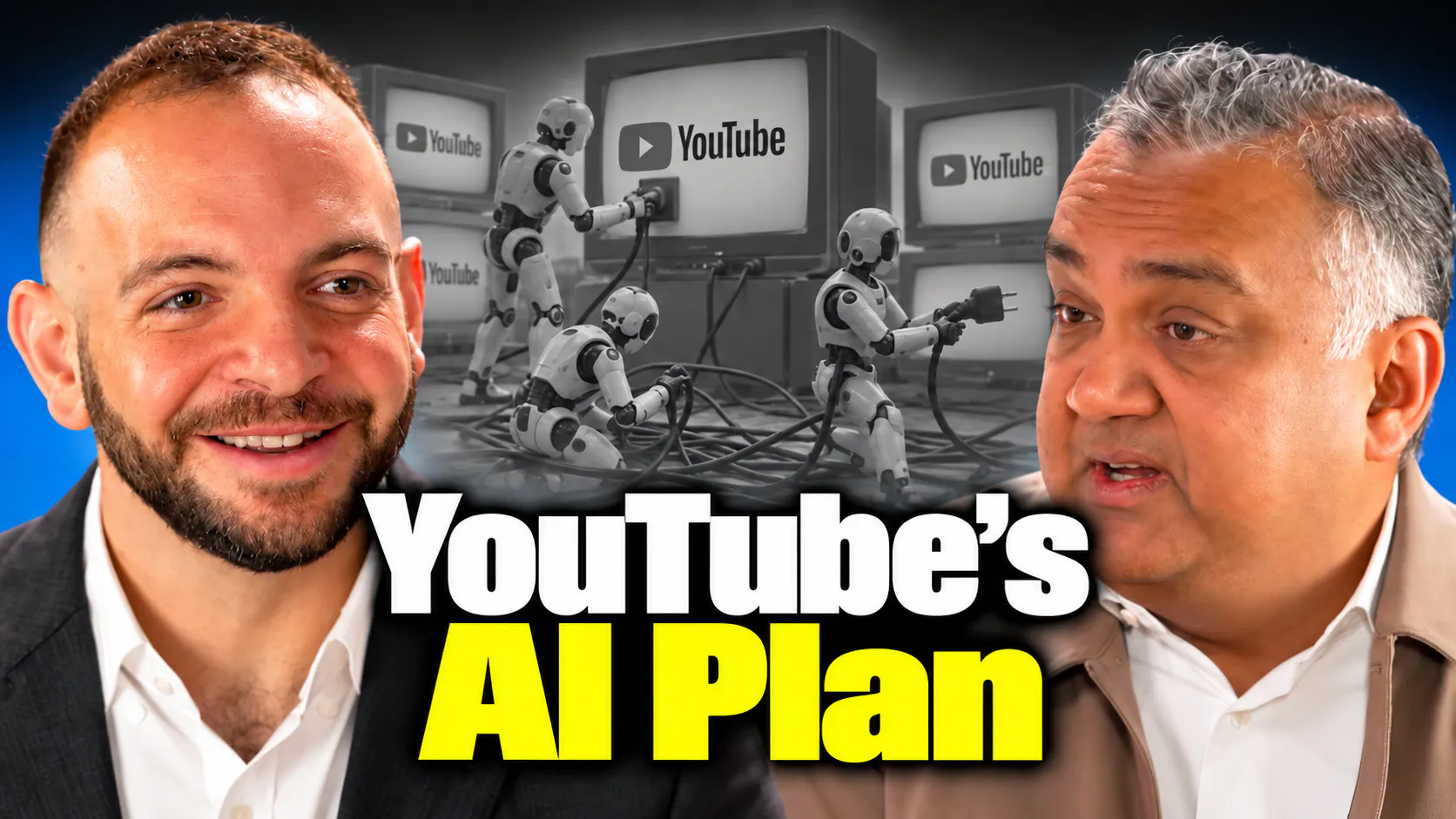
CEO Neal Mohan clarifies that YouTube will not penalize content simply for being AI-generated. The platform's policies focus on whether the content is high-quality and connects with viewers. The primary concern is preventing low-effort, mass-produced "AI slop," not discouraging the creative use of AI tools.
Related Insights
The fear of AI generating low-quality "slop" content is misplaced, as humans have been producing clickbait and low-brow entertainment for years. "Slop" is defined by the quality of the narrative and its effect on the viewer, not the tool used for its creation.

Creating reliable AI detectors is an endless arms race against ever-improving generative models, which often have detectors built into their training process (like GANs). A better approach is using algorithmic feeds to filter out low-quality "slop" content, regardless of its origin, based on user behavior.

Mohan positions AI not as a tool that dictates creative choices, but as infrastructure that builds a better "stage" for creators. Its purpose is to help creators produce and distribute their work more efficiently, enhancing their capabilities rather than replacing their artistic vision.
New AI tools make content creation easier than ever. However, this accessibility means the competitive advantage shifts from technical execution to the quality and originality of the core idea. Success now depends more on ideation, not just pressing a button.

The distinction between AI-assisted and purely human-created content is becoming impossible to draw. Rather than verifying origin, the focus will shift to holding the publisher accountable for the final product's quality and accuracy, regardless of the tools used in its creation.

Unlike text-based platforms, compelling video requires genuine on-camera expertise that AI cannot fake. This higher barrier to entry protects the channel’s value and makes it harder for competitors to copy, ensuring that quality, human-led content stands out.

The term "slop" is misattributed to AI. It actually describes any generic, undifferentiated output designed for mass appeal, a problem that existed in human-made media long before LLMs. AI is simply a new tool for scaling its creation.

Spotify is now labeling AI-generated music, following moves by YouTube and LinkedIn to police AI content. This signals a strategic shift for platforms, which must now balance encouraging AI-driven content creation with preventing low-quality "slop" that alienates users and degrades the experience.

The distinction between AI-generated content and 'slop' is the creator's intent. Slop is characterized by a fundamental contempt for its audience, created not for art or communication but purely to manipulate engagement for low-rent financial gain like ad arbitrage.

Major platforms like YouTube, Snapchat, and LinkedIn are actively removing or flagging low-effort AI-generated content. This backlash isn't against AI itself but against the sheer volume of "slop" that degrades user experience. This forces platforms to curate for quality and could steer AI use toward more valuable applications.
