Get your free personalized podcast brief
We scan new podcasts and send you the top 5 insights daily.
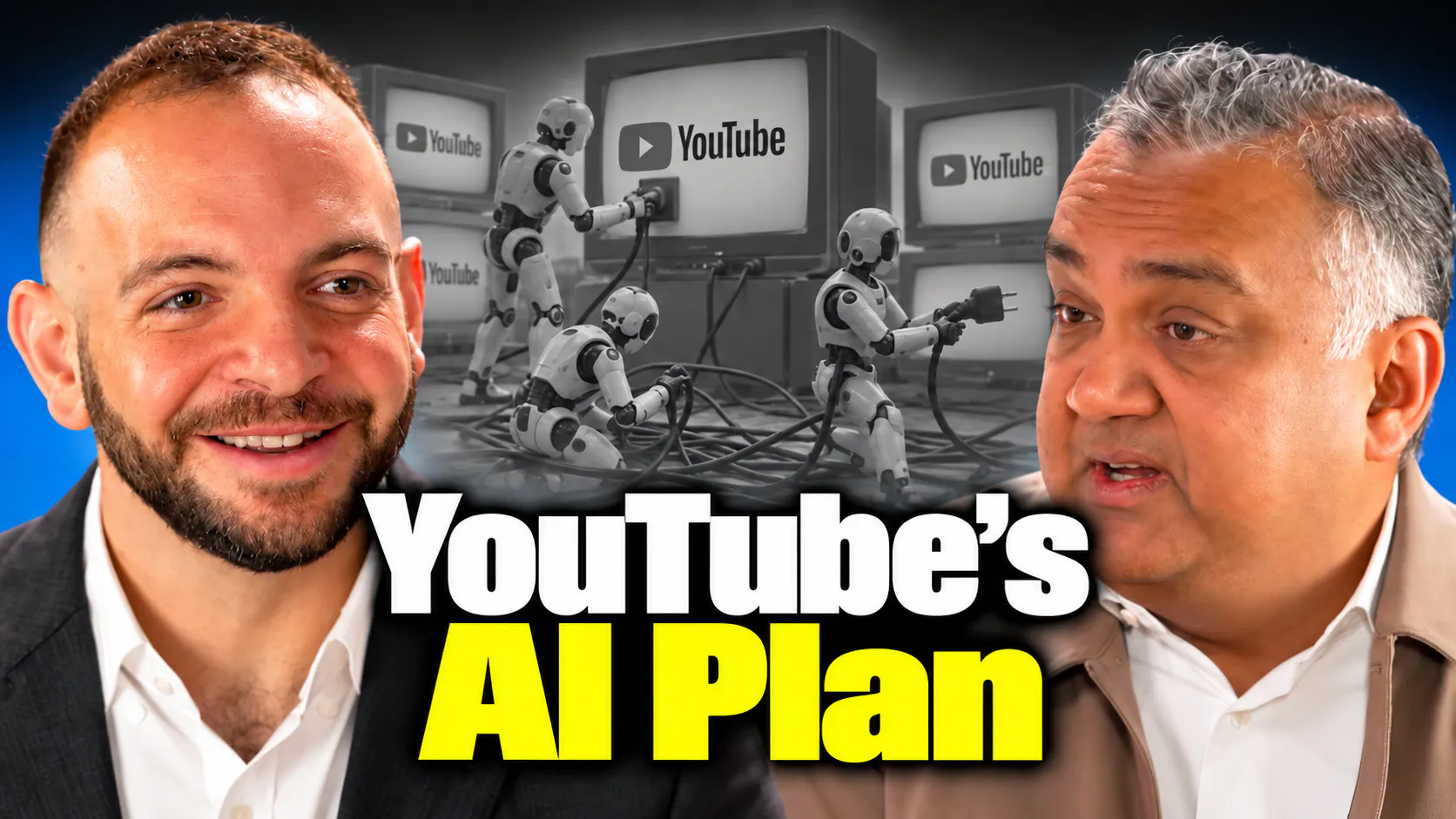
In response to concerns that AI optimization leads to content sameness, CEO Neal Mohan argues the opposite. He claims YouTube's massive scale and lack of gatekeepers allow millions of hyper-specific, yet large, niche communities to flourish, thereby promoting content diversity rather than homogeneity.
Related Insights
Neal Mohan reframes YouTube's recommendation engine as a direct reflection of audience choice, not an opaque AI gatekeeper. He argues that what is often called the "algorithm" is simply the collective voice of 2 billion daily viewers giving feedback and deciding what content rises to the top.
When questioned about competing with AI chatbots for user attention, CEO Neal Mohan's strategy relies on a fundamental human need. He believes the enduring desire for human-to-human connection through storytelling is a durable moat that will keep viewers engaged with creators on YouTube, regardless of advances in conversational AI.
Mohan positions AI not as a tool that dictates creative choices, but as infrastructure that builds a better "stage" for creators. Its purpose is to help creators produce and distribute their work more efficiently, enhancing their capabilities rather than replacing their artistic vision.
New AI tools make content creation easier than ever. However, this accessibility means the competitive advantage shifts from technical execution to the quality and originality of the core idea. Success now depends more on ideation, not just pressing a button.

Platforms like YouTube intentionally design their algorithms to foster a wide base of mid-tier creators rather than a few dominant mega-stars. This is a strategic defense mechanism to reduce the leverage of any single creator. By preventing individuals from overshadowing the platform, YouTube mitigates the risk of widespread advertiser boycotts stemming from a controversy with one top personality, as seen in past 'Adpocalypses'.

Unlike text-based platforms, compelling video requires genuine on-camera expertise that AI cannot fake. This higher barrier to entry protects the channel’s value and makes it harder for competitors to copy, ensuring that quality, human-led content stands out.

Resist the urge to create multiple niche YouTube channels. Modern algorithms, influenced by TikTok's interest-based discovery, prioritize content in user feeds over destination-based viewing. This shift allows a single channel with diverse topics to effectively reach different audience segments without fragmentation.

AI enables a future where YouTube could generate custom videos based on user interests on the fly. However, this move would directly compete with its human creators, who are the platform's lifeblood, potentially triggering a massive backlash or "creator strike."

YouTube's power isn't just its scale but its structure as 'infinite TV channels.' It can host countless, deeply specific content universes—like different sub-genres of gaming—on one platform. This ability to cater to every niche imaginable is what makes it an unassailable part of daily life for all demographics.
CEO Neal Mohan clarifies that YouTube will not penalize content simply for being AI-generated. The platform's policies focus on whether the content is high-quality and connects with viewers. The primary concern is preventing low-effort, mass-produced "AI slop," not discouraging the creative use of AI tools.