Get your free personalized podcast brief
We scan new podcasts and send you the top 5 insights daily.
Tesla's admission that 4 million cars need hardware upgrades to achieve self-driving pivots the company from software innovation to a massive, costly logistics operation. This "upgrading hell" introduces unforeseen operational risk, as they must now build micro-factories just to service existing customers' promised features.

Related Insights
A core step in Elon Musk's scaling algorithm is to 'Automate Last.' Tesla discovered that automating a process before it's manually optimized is a recipe for disaster. The Model 3 production crisis was only solved when they abandoned the over-automated line and started building cars by hand in a tent.

Relying on a traditional supply chain means inheriting its slow pace, costs, and outdated technology. By bringing core manufacturing in-house, Tesla controls its innovation speed, allowing it to move much faster and develop more integrated products than its competitors.

The seamless experience of an autonomous vehicle hides a complex backend. A subsidiary company, FlexDrive, manages a fleet for services like cleaning, charging, maintenance, and teleoperation. This "fleet management" layer represents a significant, often overlooked, part of the AV value chain and business model.

Traditional cars use a domain-based architecture with up to 150 separate control units (ECUs) from different suppliers, making software updates nearly impossible. This fragmented system, which evolved haphazardly from early fuel-injection computers, is a primary barrier for legacy automakers trying to compete with the software-defined, OTA-updatable vehicles from companies like Rivian.

Musk states that designing the custom AI5 and AI6 chips is his 'biggest time allocation.' This focus on silicon, promising a 40x performance increase, reveals that Tesla's core strategy relies on vertically integrated hardware to solve autonomy and robotics, not just software.

As tech giants like Google and Amazon assemble the key components of the autonomy stack (compute, software, connectivity), the real differentiator becomes the ability to manufacture cars at scale. Tesla's established manufacturing prowess is a massive advantage that others must acquire or build to compete.
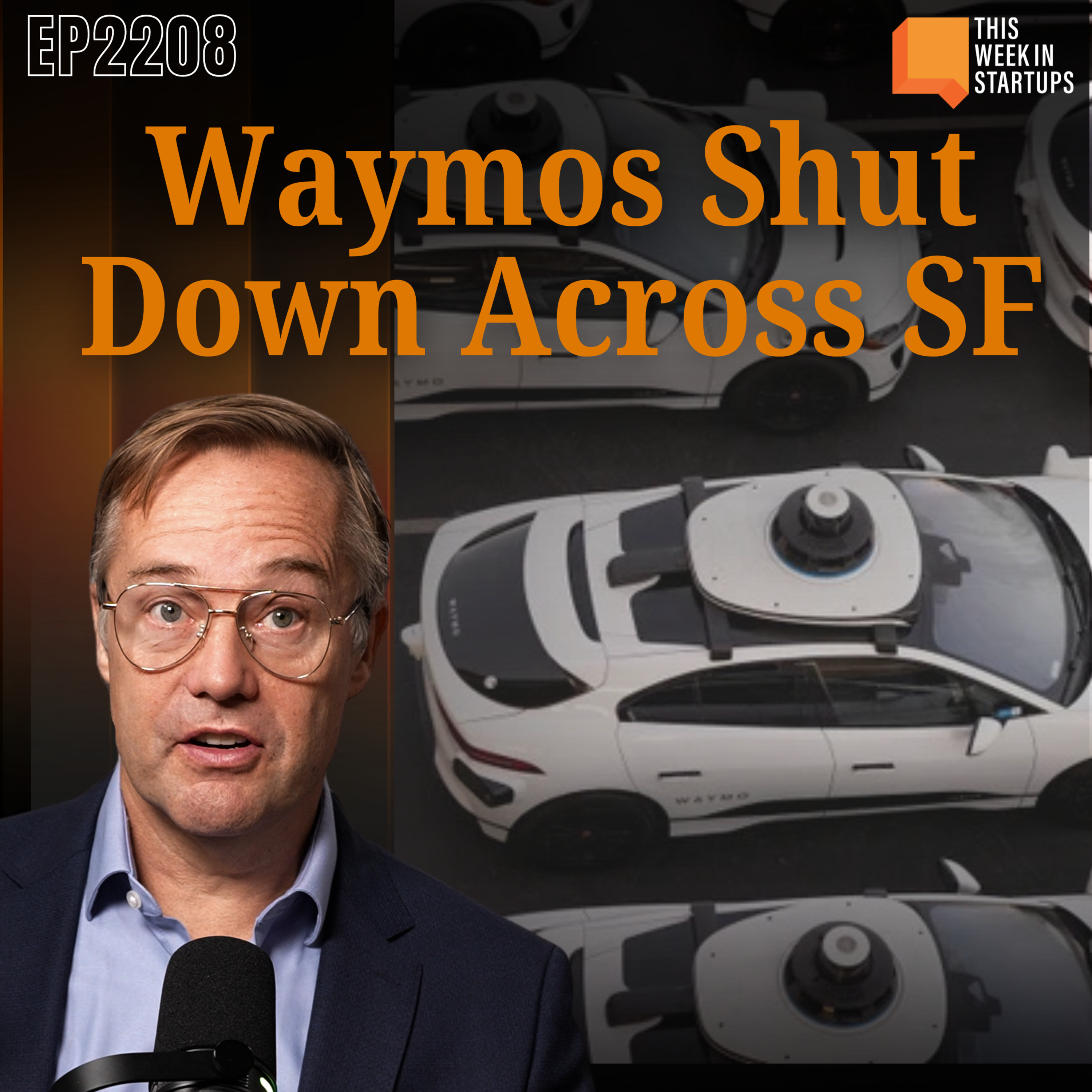
Waymo decouples major hardware and software upgrades. Its 6th generation platform introduces a new custom vehicle and a cheaper, simpler sensor stack, but runs the same proven 5th generation software. This "tick-tock" approach allows them to validate a new hardware platform while relying on a mature, generalizable software stack.
Tying Elon Musk's compensation to an astronomical $8.5 trillion market cap—a goal unreachable through car sales alone—is an explicit signal to investors. Tesla is no longer a car company; its future and valuation are now staked entirely on robotics and autonomous technology.

Whenever Tesla's core automotive business faces headwinds—like falling market share or intense competition—Elon Musk introduces a new, futuristic narrative, such as the Optimus robot. This strategy aims to reposition the company as an AI leader and distract investors from underwhelming auto industry fundamentals.

Tesla is moving Autopilot from a one-time purchase to a subscription. The value proposition is not a fixed feature but an ongoing 'research stream'—continuous safety and capability improvements fueled by fleet data. This frames the subscription as buying insurance against obsolescence and risk.
