Get your free personalized podcast brief
We scan new podcasts and send you the top 5 insights daily.
Tesla is moving Autopilot from a one-time purchase to a subscription. The value proposition is not a fixed feature but an ongoing 'research stream'—continuous safety and capability improvements fueled by fleet data. This frames the subscription as buying insurance against obsolescence and risk.

Related Insights
Tesla's camera-only system gives it a significant cost advantage over Waymo's LiDAR-equipped vehicles. However, current data shows a Waymo vehicle crashes every 400,000 miles, while Tesla's crashes every 50,000. Tesla's ability to scale hinges entirely on proving its cheaper technology can become as safe.

With a key government subsidy gone, Tesla is using a rental model as a 'try-before-you-buy' tactic. This shift indicates EV companies must now rely on creative sales funnels and direct product experience, rather than financial incentives, to convert hesitant customers.

The seamless experience of an autonomous vehicle hides a complex backend. A subsidiary company, FlexDrive, manages a fleet for services like cleaning, charging, maintenance, and teleoperation. This "fleet management" layer represents a significant, often overlooked, part of the AV value chain and business model.

Rivian's CEO explains that early autonomous systems, which were based on rigid rules-based "planners," have been superseded by end-to-end AI. This new approach uses a large "foundation model for driving" that can improve continuously with more data, breaking through the performance plateau of the older method.

By eschewing expensive LiDAR, Tesla lowers production costs, enabling massive fleet deployment. This scale generates exponentially more real-world driving data than competitors like Waymo, creating a data advantage that will likely lead to market dominance in autonomous intelligence.
As tech giants like Google and Amazon assemble the key components of the autonomy stack (compute, software, connectivity), the real differentiator becomes the ability to manufacture cars at scale. Tesla's established manufacturing prowess is a massive advantage that others must acquire or build to compete.
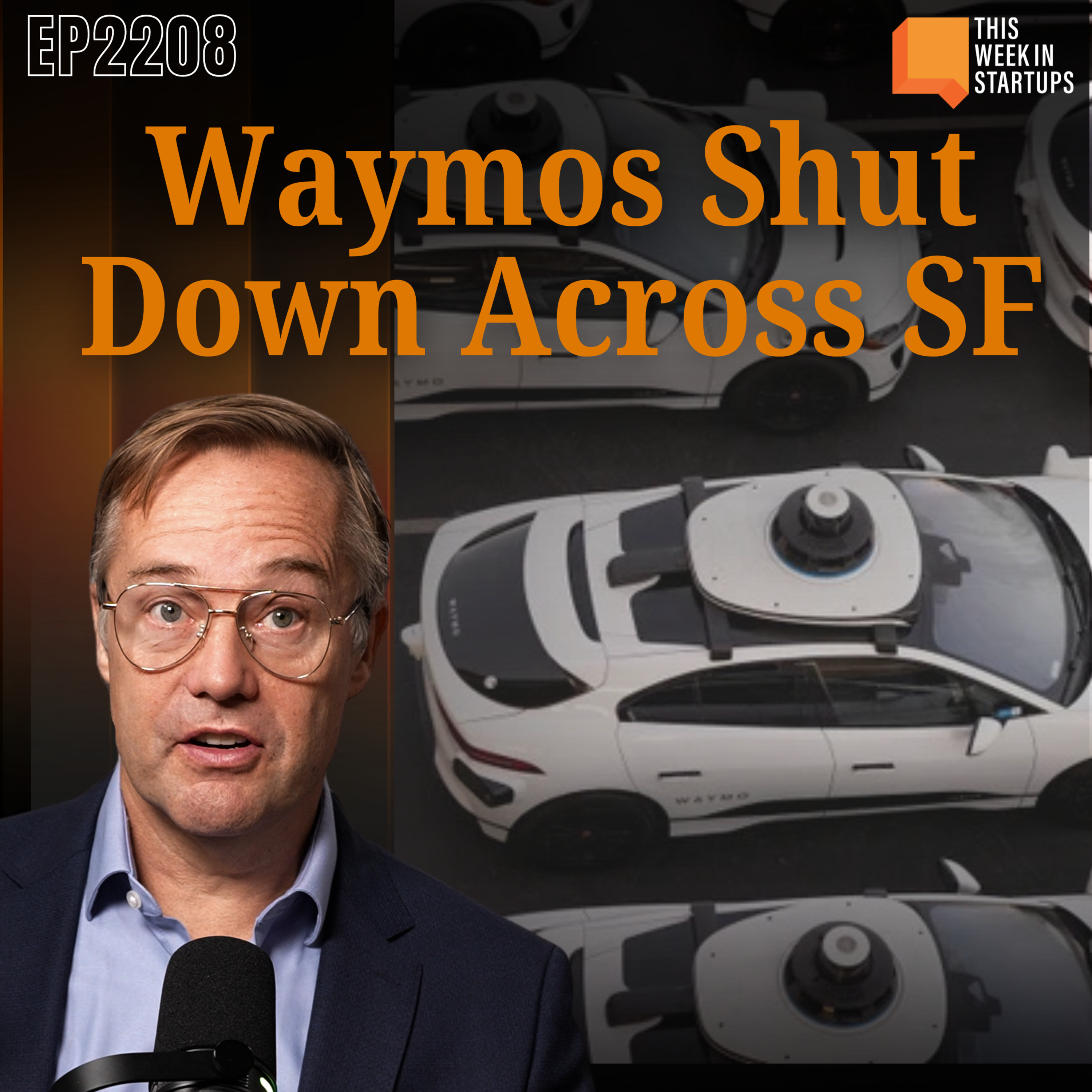
Initially criticized for forgoing expensive LIDAR, Tesla's vision-based self-driving system compelled it to solve the harder, more scalable problem of AI-based reasoning. This long-term bet on foundation models for driving is now converging with the direction competitors are also taking.

To achieve scalable autonomy, Flywheel AI avoids expensive, site-specific setups. Instead, they offer a valuable teleoperation service today. This service allows them to profitably collect the vast, diverse datasets required to train a generalizable autonomous system, mirroring Tesla's data collection strategy.

The transition from selling cars to operating a RoboTaxi network transforms Tesla's business model. A car sold for a one-time $4,000 profit could generate $200,000 in profit over a five-year period as an autonomous taxi. This 100x increase in lifetime value per unit represents a massive financial unlock for the company.

1X offers its robot for $20,000 to buy or $499/month to lease. Given the rapid pace of robotics development, leasing is the default choice for consumers. It avoids the risk of owning an expensive, quickly outdated piece of hardware, ensuring access to future upgrades.