Get your free personalized podcast brief
We scan new podcasts and send you the top 5 insights daily.
Barbara Liskov asserts that teaching and research are deeply connected. Good teaching requires breaking down complex topics into their first principles. Similarly, good research demands a complete understanding of fundamentals and an honest awareness of what you *don't* understand, which is precisely where new insights emerge.

Related Insights
When tackling a complex domain, telling the AI "I literally don't know what I'm doing here. You gotta explain it like I'm a five-year-old" is a powerful strategy. It forces the model to bypass jargon and assumptions, providing clear, first-principles explanations.

True learning requires "transcendent thinking"—the natural drive to find deeper meaning beyond surface details. This involves grappling with a subject's history, hidden intentions, values, and alternative future possibilities, connecting concrete information to bigger ideas and stories.

The strength of scientific progress comes from 'individual humility'—the constant process of questioning assumptions and actively searching for errors. This embrace of being wrong, or doubting one's own work, is not a weakness but a superpower that leads to breakthroughs.

Major scientific discoveries don't just solve problems; they empower us to ask deeper, more ambitious questions that were previously inconceivable. Our expanding knowledge creates a larger frontier of ignorance, turning yesterday's breakthroughs into tomorrow's foundational tools for asking what's next.

Solow believed that understanding complex topics, like macroeconomics, requires stripping away mathematical complexity to find the simple, underlying mechanism. This approach is key to true comprehension and effective teaching, giving one the belief that a simple core exists in any complex creation.

To make genuine scientific breakthroughs, an AI needs to learn the abstract reasoning strategies and mental models of expert scientists. This involves teaching it higher-level concepts, such as thinking in terms of symmetries, a core principle in physics that current models lack.

Experts often struggle to explain concepts to novices due to the "curse of knowledge." The best communicators actively combat this by cultivating empathy and adopting a beginner's mind. By remembering what it was like not to know, they can connect with their audience and ensure clarity.
True expertise in training is demonstrated by simplifying complex processes, not by showcasing complexity. Friedrich's Law states that while people tend to make simple things complex, genius lies in making complex concepts simple and accessible for others to execute successfully.

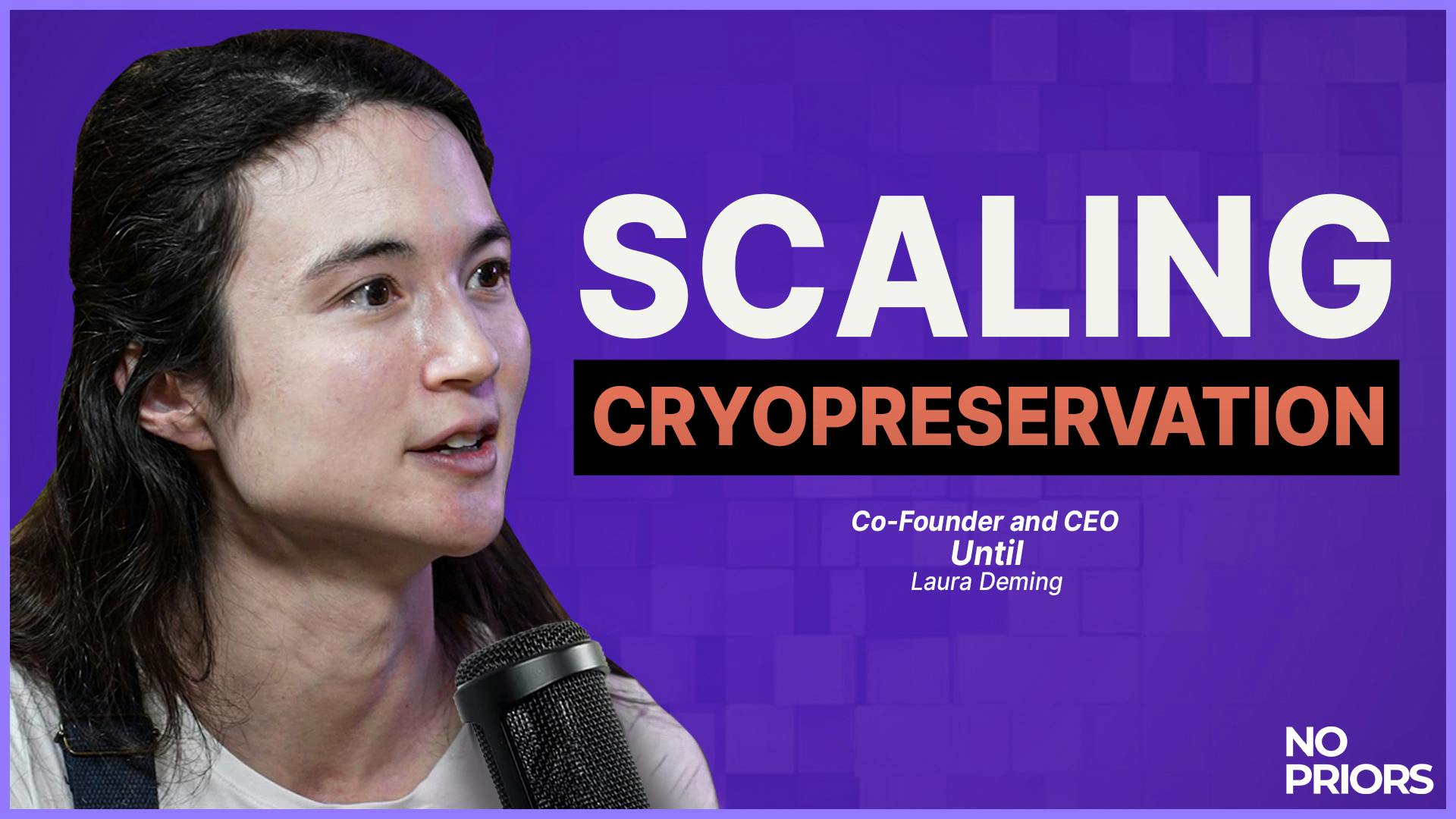
Laura Deming's co-founder, Hunter, wasn't swayed by existing research. His initial skepticism turned to conviction only after he independently re-derived the fundamental physics of ice formation from first principles. This illustrates the depth of technical diligence required to validate radical ideas and build a foundation for tackling seemingly sci-fi challenges.
There is a strong correlation between creating genuinely novel insights and being able to explain them clearly. Figures like Einstein, Claude Shannon, and Feynman wrote lucid, accessible papers. This suggests the same part of the brain that formulates a new way of thinking is also adept at communication, debunking the 'expert's curse' myth for true pioneers.